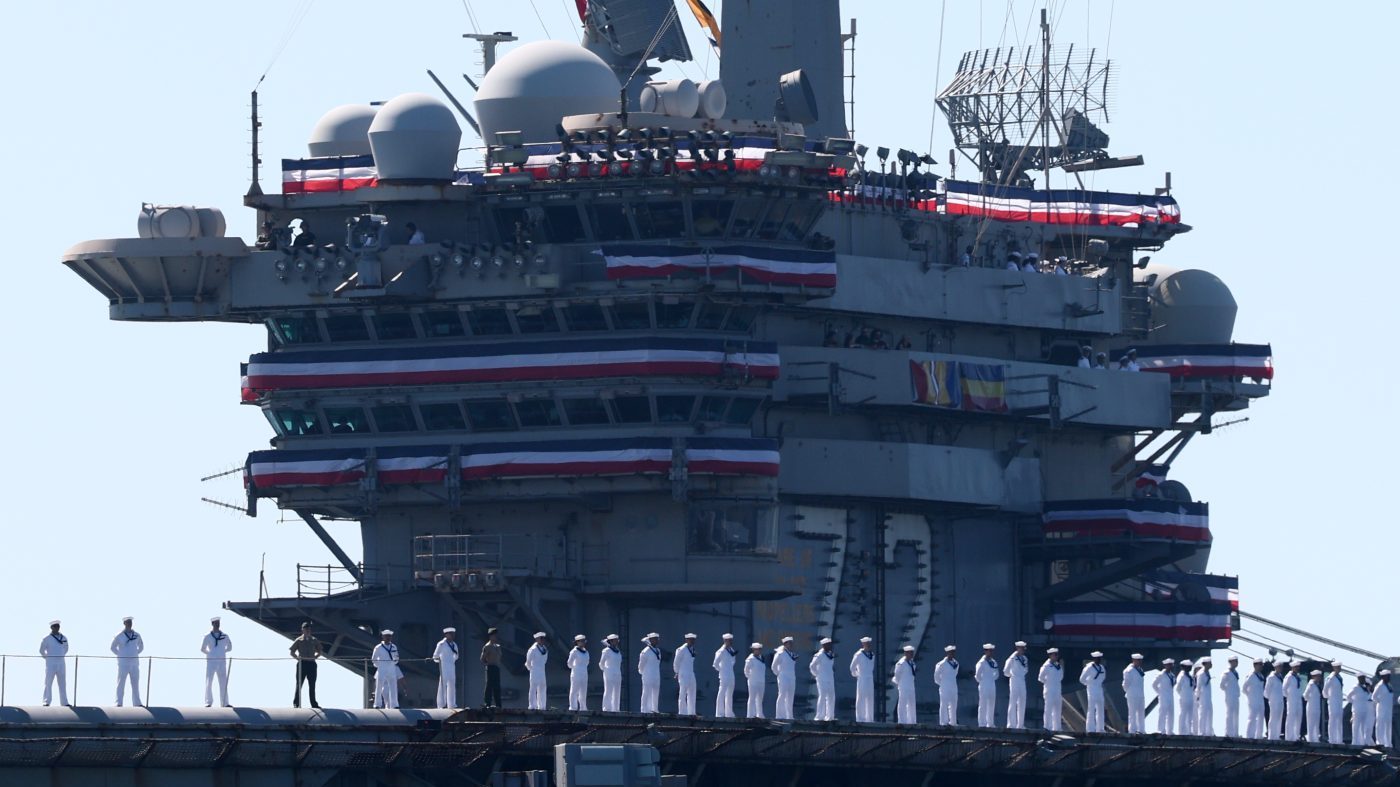
A 19-year-old Navy airman who was one of eight sailors to attempt suicide by jumping overboard during the grueling deployment of the USS Abraham Lincoln aircraft carrier strike group is speaking out after being effectively punished for the incident.
Nicholas McKelvey, an aviation mechanic assigned to a helicopter squadron, jumped into the Arabian Sea on Aug. 3, 255 days into the ship's deployment, according to a report by The New York Times. McKelvey told the outlet that he had been working 12-hour shifts on the flight deck in extreme heat with limited food, had missed the birth of his daughter, and was coping with in-laws battling cancer when he reached his breaking point.
U.S. Navy records reviewed by the Times indicate McKelvey was rescued by a helicopter crew and returned to the ship about 50 minutes later. The incident report acknowledged that it had been “a difficult deployment” and that “it is unsurprising that we might have a jumper,” but also noted that McKelvey's “motives are undetermined” and that “the conditions in which he jumped appear suspect,” pointing to the fact he wore his “float coat,” a vest that can be used as a flotation device.
“I didn’t want to be there anymore,” McKelvey told the Times. “If I was going to die because of it, then that’s just how it is.” He added, “Obviously, I was trying to get home. I kept my float coat on because if I wasn’t supposed to die then I was going to get saved, but it didn’t matter, and if I was supposed to die then I would have just been dead. It’s that simple.”
The Navy on Thursday moved to discharge McKelvey, accusing him of faking a mental health crisis to end his deployment, making him ineligible for education assistance under the GI Bill. The move comes as the Lincoln has returned to San Diego after a 322-day deployment that was extended as part of the U.S. campaign against Iran. The carrier helped enforce a naval blockade in the region.
The deployment has drawn intense scrutiny due to tight food supplies and degrading mental health on board. The Lincoln went 286 days without a port call until it briefly docked in Thailand last month. Acting Navy Secretary Hung Cao later revealed there had been eight suicide attempts during the lengthy mission.
Defense Secretary Pete Hegseth has acknowledged the crew operated in a tough environment but accused the news media of trying to “turn the USS Abraham Lincoln into some sort of a symbol of dysfunction or a symbol of low morale, or a symbol of a failed mission.” He recently awarded the Presidential Unit Citation to the crew.
McKelvey and his wife, Samantha Larry, are speaking out because they believe he received inadequate mental health care before and after his jump. McKelvey said he visited the ship’s medical unit in June seeking help but was directed to a chaplain, which he declined. The Lincoln had only six mental health specialists for more than 5,000 service members.
“They don’t want to take accountability for what happened to him, and to what happened to multiple sailors on the boat,” Larry said. “I don’t think that they care. They care more about how they’re pictured, how they’re viewed. They don’t want anyone to see the bad stuff.”
The Navy charged McKelvey with malingering and “absence without leave” for abandoning his post, according to charging papers reviewed by the Times. His case highlights broader concerns about the human cost of extended deployments in the Middle East.