Last week's Exercise Rummy, a first-ever Anglo-French airborne nuclear strike exercise, saw British Typhoon jets escorting French Rafale fighters. Notably absent were American forces. As London put it, the exercise marked a major step forward in UK-France defense cooperation under the 2025 Northwood Declaration, aimed at coordinating their nuclear deterrent strategies.
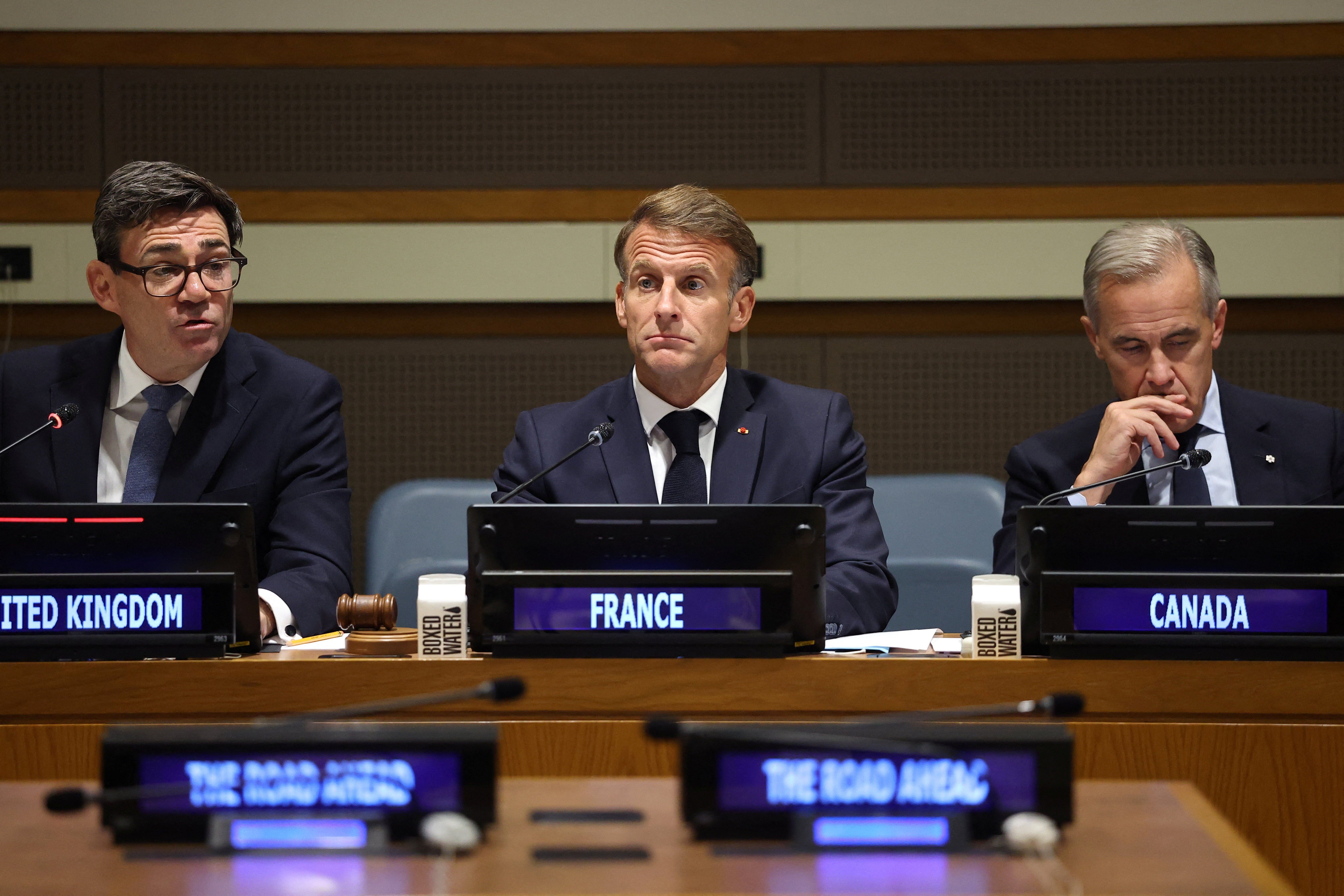
This joint effort is the latest sign of a growing trend: middle powers, as Canadian Prime Minister Mark Carney calls them, are increasingly hedging against the possibility that the United States might turn its back on its allies. France has extended its "forward deterrence" to ten European states, including nuclear-armed Britain, with which it now has a framework for nuclear cooperation. The arrangement includes joint exercises, potential short-term deployment of nuclear-capable assets on allied territory, and deeper consultation.
No participating state has openly admitted that this cooperation is a hedge against an American refusal to invoke NATO's Article Five in case of a Russian attack. Yet the intent is clear. Norwegian Prime Minister Jonas Gahr Stoere framed it as a response to Russia's massive rearmament and its full-scale war against another European country. If these nations had full confidence in US support, why would they align with a separate French nuclear deterrent?
The hedging extends beyond Europe. On the same day as the Anglo-French exercise, Pakistan, Turkey, Qatar, and Indonesia signed the "Badr Memorandum," which aims to deepen military cooperation through joint production, technology transfer, and integrated supply chains. While not a formal defense treaty, it could be a step toward one, especially given that Turkey and Pakistan recently signed the Mecca Defense Alliance with Saudi Arabia.
Saudi Arabia, facing persistent Houthi attacks on its military and petroleum infrastructure, has received support from these middle powers. The Mecca treaty formalizes existing aid: Pakistan has stationed aircraft and troops in the Kingdom, Turkey provides planning, logistics, intelligence, and drone support. London has also pledged Typhoon fighters to protect Saudi cities, and Paris will deploy troops and air defense systems to safeguard the port of Yanbu. Egypt's parliament has approved sending military support as well.
Washington, despite Saudi pleas for direct strikes on the Houthis, has limited its aid. This has not gone unnoticed. As a former Pakistani prime minister once told me, "The United States is a fair-weather friend, but China is an all-weather friend." By leaving allies to fend for themselves, Washington is not only pushing middle powers to hedge, but also widening the door for Chinese influence.
Even South Korea, traditionally a staunch US ally, is questioning its reliance on Washington. President Trump's threats of up to 300 percent tariffs on foreign companies that don't build factories in the US have caused friction. More tellingly, over three-fourths of South Koreans now support developing their own nuclear weapons capability—a sentiment Seoul may not be able to ignore.
Winston Churchill once said, "There is only one thing worse than fighting with allies, and that is fighting without them." Washington should heed this warning before its middle-power allies conclude that there is no point in remaining allies tomorrow.