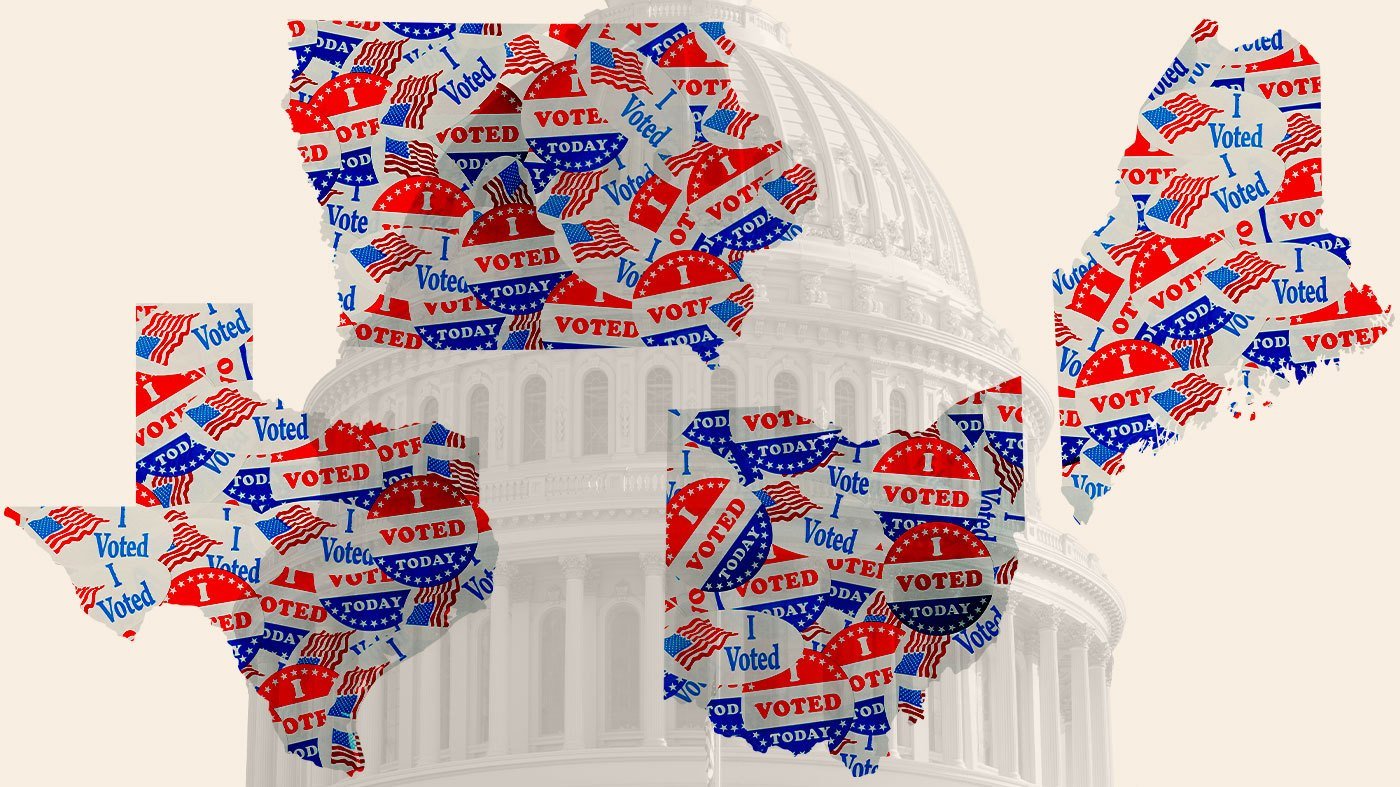
The battle for Senate control in this year's midterms will be decided by a handful of razor-thin contests, with both parties still harboring realistic paths to the majority. All six races rated as pure toss-ups by DDHQ—Texas, Maine, Alaska, Ohio, Iowa, and Kansas—are currently held by Republicans, giving Democrats a clear offensive opportunity. The GOP's most plausible pickup is in Michigan, where Democrats are favored with a 73% probability of holding the seat, according to DDHQ's latest forecasts.
As of the Friday before Election Day, DDHQ's models showed Democrats with the edge in both chambers—though their Senate prospects were far less certain than in the House. In the upper chamber, Democrats were given a 60% chance of flipping control; in the House, that figure stood at 82%. The six toss-up races will ultimately determine which party holds the gavel.

Texas: A High-Stakes Showdown in the Lone Star State
The Texas Senate race has emerged as one of the most expensive non-presidential contests in U.S. history, with over half a billion dollars in spending. Democrat James Talarico, a rising star in the party, is challenging Republican Ken Paxton, who upset incumbent Sen. John Cornyn in a bruising primary runoff. Paxton's campaign has been mired in controversy, while Talarico has sought to project a unity-focused, faith-driven message.
Polling averages from DDHQ showed Talarico leading by just under four points, with a 60% probability of flipping the seat. An Emerson College poll found the race in a statistical dead heat, noting that Libertarian candidate Ted Brown could siphon votes on Election Day, potentially tipping the outcome. The Hispanic and Latino electorate, roughly a third of Texas voters, could prove decisive. After shifting toward President Trump in 2024, this bloc appears to be swinging back to Democrats, frustrated by the administration's handling of the economy and immigration.
Iowa: A Tough Climb for Democrats
Democrats face an uphill battle in Iowa, where Republican Rep. Ashley Hinson is trying to hold the seat being vacated by retiring Sen. Joni Ernst. Hinson faces Democratic state Rep. Josh Turek. DDHQ's Friday forecast gave Hinson a 55% chance of holding the seat, with her leading by a single point in polling averages.
Cook Political Report's Jessica Taylor noted that both parties privately believe Iowa is the most likely GOP hold among the toss-ups, citing Hinson's "deftly distanced" positioning from Trump's unpopular policies. However, Taylor added that Trump remains "deeply underwater" in the state, and Democrat Rob Sand's gubernatorial bid could boost Democratic turnout for Turek. "Ultimately, Democrats are poised to capitalize on Trump's tumbling image and discouraged base," she wrote. "The true test may be whether even the best GOP candidates of the cycle—in Maine and Iowa—can survive a looming blue wave."
Ohio: Brown's Comeback Bid
In Ohio, former Sen. Sherrod Brown is attempting a political comeback, challenging Republican Sen. Jon Husted in a special election to complete Vice President Vance's term. Husted was appointed to the seat after Vance resigned. The race has become one of the priciest Senate contests ever, with Brown raising $23.1 million in the third quarter to Husted's $5 million, though GOP-aligned groups have poured over $100 million into the state to attack Brown.
Husted has Trump's endorsement, including viral comments about his physique, but Brown enjoys high name recognition and a record of winning in the red-leaning state. DDHQ gave Brown a 55% probability of flipping the seat, with him leading by roughly 3 points. Cook's Taylor called Ohio "the next most vulnerable GOP-held seat" after Texas, noting that Husted may have been hurt by Republican Vivek Ramaswamy's troubled gubernatorial campaign.
Maine: Collins Battles for a Sixth Term
Sen. Susan Collins is seeking a sixth term in blue-leaning Maine, leaning on her seniority and her distance from Trump—particularly on tariffs that have strained relations with Canada, a vital trading partner. Her challenger, Democrat Troy Jackson, a former state Senate president, replaced Graham Platner on the ballot after Platner's bid collapsed amid sexual misconduct allegations. Jackson is favored to win, according to DDHQ, despite Collins's long history of comfortable victories.
Collins's 2020 win was by just 9 points, a margin narrower than her previous races, following her controversial vote to confirm Justice Brett Kavanaugh. That vote has continued to resonate with voters, and Democrats see Maine as a prime pickup opportunity. However, Collins's cross-party appeal and the state's independent streak could keep the race close.
Alaska and Kansas: The Wildcards
In Alaska, Republican Sen. Dan Sullivan faces a challenge from Democrat Al Gross, who ran for Senate in 2020. The state's ranked-choice voting system could complicate the outcome, with independent and Libertarian candidates potentially playing spoiler. DDHQ rates the race as a toss-up, but Democrats are hopeful that Gross's moderate profile and the state's frustration with federal policies could yield an upset.
Kansas, meanwhile, has become a surprising battleground. Democratic state Sen. Tom Holland is challenging Republican Rep. Tracey Mann, and recent polls have shown a tight contest. The state's shifting demographics and the unpopularity of Trump's trade policies could give Democrats an opening, though Republicans remain confident in Mann's conservative credentials.
With all six toss-up races in GOP hands, the math is simple: Democrats need to win at least four of them to take the majority, assuming they hold all their other seats. The party's prospects have been bolstered by Democrats' broader midterm momentum, as well as recent polls showing Democratic leads in Kansas and Maine. However, the heating oil spike has become a flashpoint in several of these contests, and energy prices are fueling voter anxiety that could cut either way.
The outcome will likely hinge on turnout in the final hours, with both parties scrambling to get their bases to the polls. As the nation watches, the six toss-up states hold the keys to the Senate—and the future of the legislative agenda.