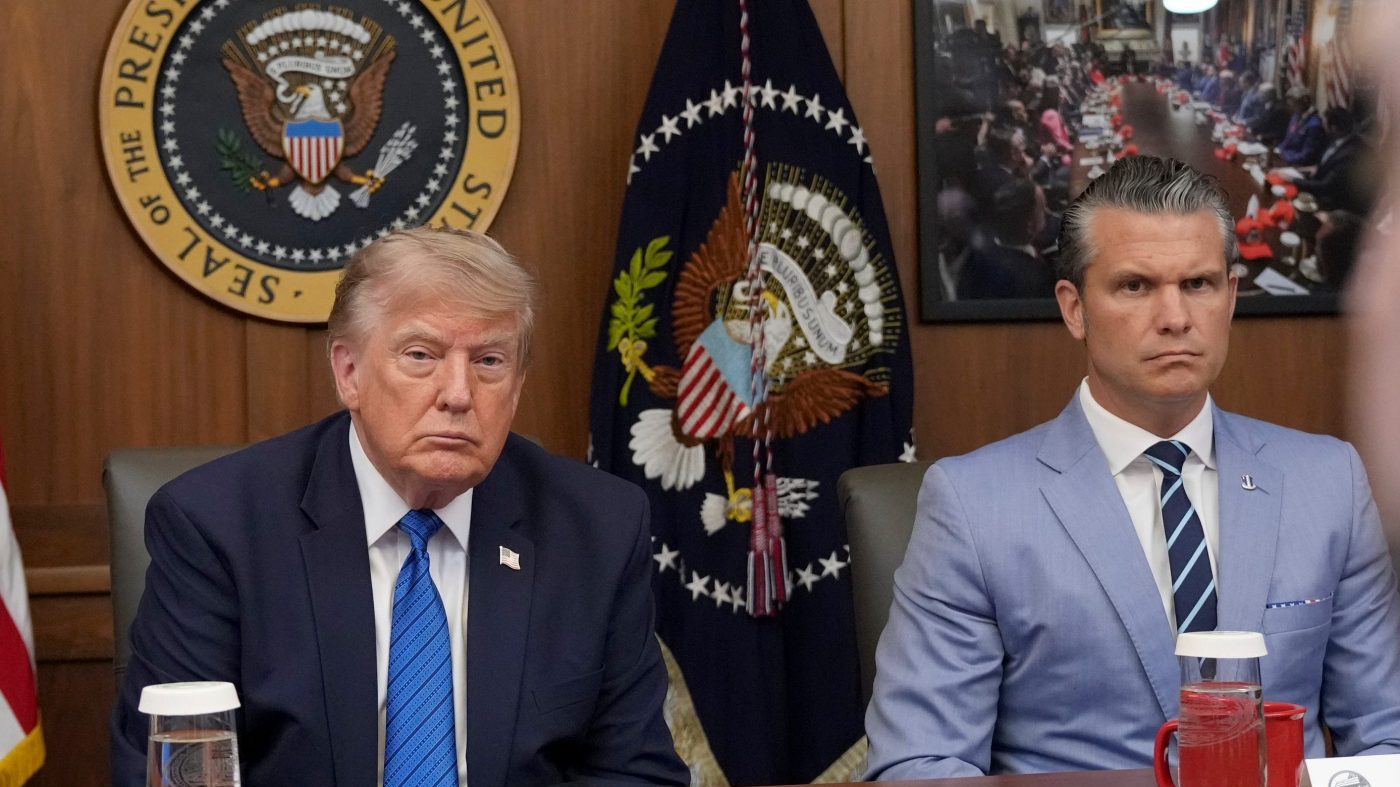
President Trump on Thursday publicly backed Defense Secretary Pete Hegseth, pushing back against reports that the two had a heated exchange at Camp David last week over the state of U.S. military ammunition reserves during the ongoing conflict with Iran.
In a post on Truth Social, Trump called the reports "false and completely unfounded rumors," adding that he is "extremely happy" with Hegseth's performance. He went on to praise the Pentagon chief for his role in the military operation that led to the capture of former Venezuelan leader Nicolás Maduro in January, describing the mission as "extraordinary" and accomplished in less than a day.
The president also asserted that Iran has been "decimated," insisting the war, which began in late February to prevent Tehran from developing a nuclear weapon, is going "very well." He lauded Hegseth's efforts to eliminate diversity, equity, and inclusion programs and boost recruitment to "historic levels."
Trump's remarks come after The Washington Post reported that he had demanded answers from Hegseth about why he was not fully informed of the extent of the munitions shortfall. The president dismissed the outlet's reporting as "fake" and suggested that such coverage could be considered "treasonous."
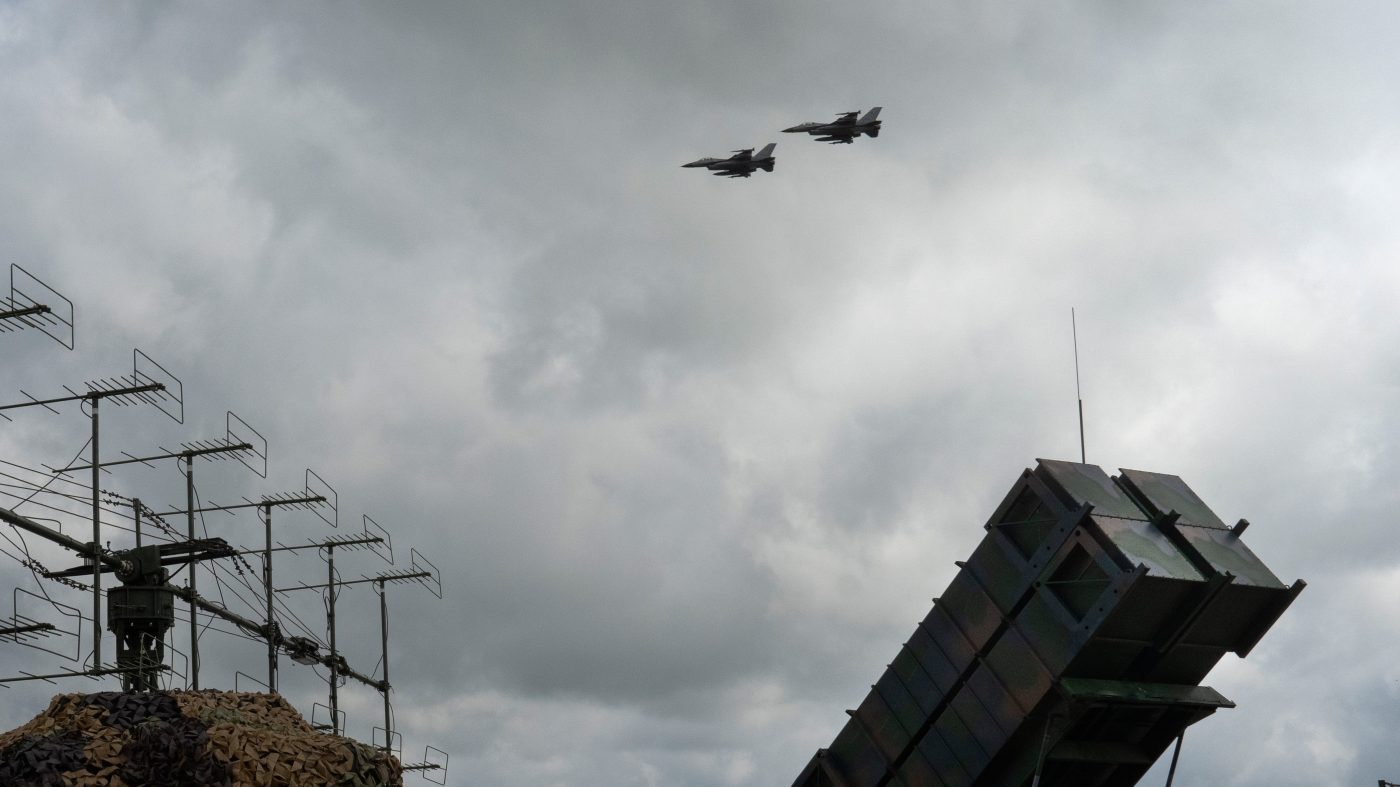
The reported dispute centers on the near-exhaustion of key long-range missiles and missile-defense interceptors during the six-month-old war with Iran. According to news reports, the military's stockpiles of Army Tactical Missile Systems (ATACMS) and Precision Strike Missiles (PrSM)—each costing around $1 million—have been critically depleted, raising concerns among defense officials and experts about U.S. readiness for potential conflicts elsewhere.
Earlier Thursday, Trump claimed the U.S. has "massive amounts" of munitions and that "large" quantities are being produced and shipped. He also warned that those who leaked information about the shortage are being "hunted down" and could face "long term jail sentences."
The munitions shortfall has reportedly influenced Trump's decision to order and then call off what he described as the "biggest attack since World War II" on Iran. Despite the friction, Trump has repeatedly expressed confidence in Hegseth. In late July, when asked about Hegseth's advice on Iran, Trump said the defense secretary had "done a great job." In March, Trump noted that Hegseth was the first senior official to advocate for military action against Iran, saying, "Pete, I think you were the first one to speak up and you said let's do it because you can't let them have a nuclear weapon."
On Monday, Trump signed an executive order establishing a commission to address the challenges faced by military spouses and families, chaired by Hegseth's wife, Jennifer Rauchet. The move underscores the administration's focus on military family issues amid broader defense policy debates.
The clash at Camp David, if confirmed, would mark a rare moment of tension between Trump and one of his most loyal Cabinet members. Hegseth has been a central figure in the administration's aggressive foreign policy posture, including the strikes on Iran and the capture of Maduro. However, the reported disagreement highlights growing concerns within the Pentagon about the sustainability of U.S. military operations and the need for increased defense production.
As the war with Iran grinds on, the munitions issue is likely to remain a flashpoint in Washington, with critics questioning whether the administration's strategy is sustainable in the long term. Trump's public defense of Hegseth may quell immediate speculation, but the underlying readiness concerns are unlikely to disappear.