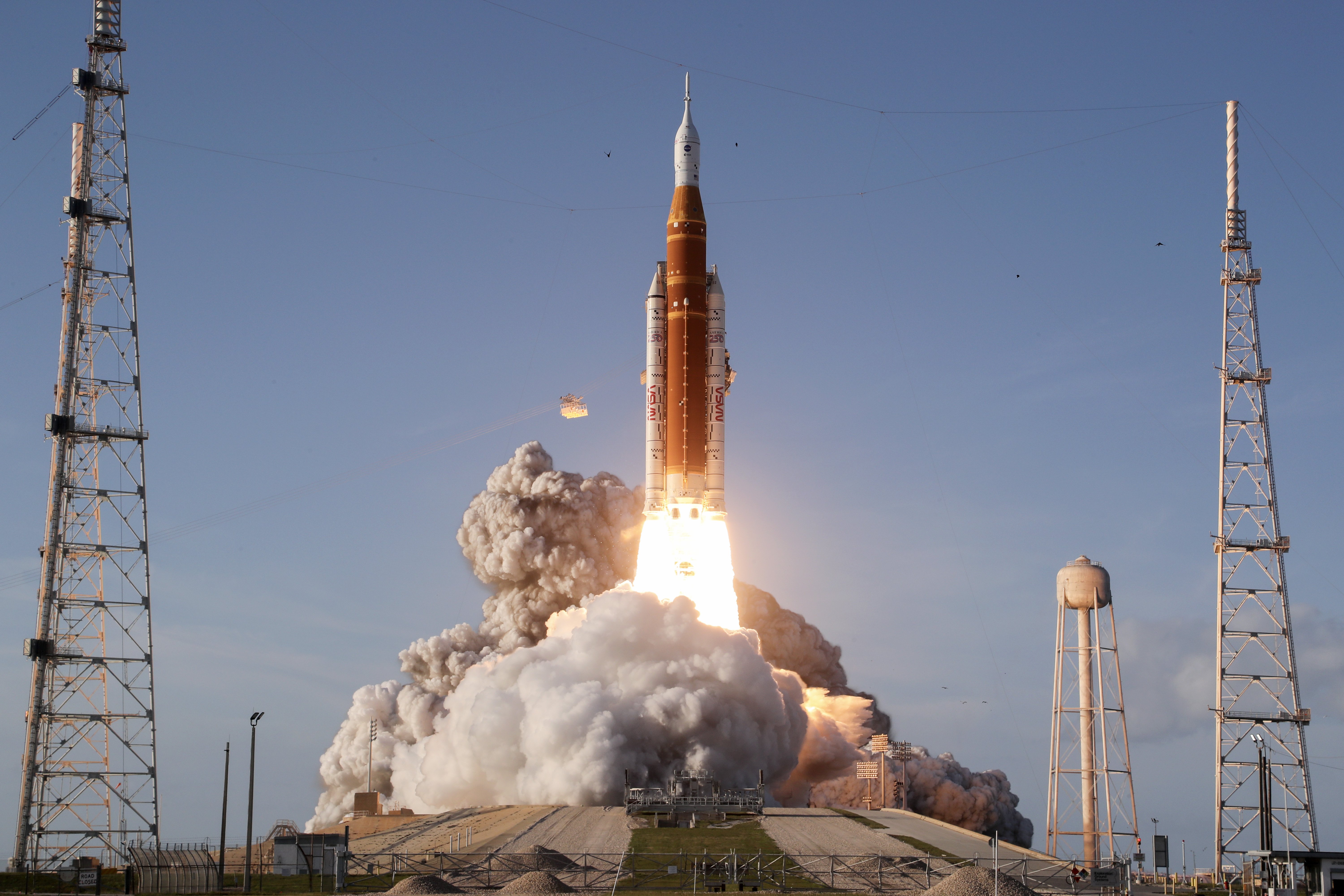
The triumphant return of the Artemis II astronauts serves as a powerful rebuke to scientific orthodoxy that dominated just a century ago, when mainstream consensus held that human spaceflight wasn't merely difficult but fundamentally impossible. This mission demonstrates how dramatically scientific understanding and technological ambition can evolve within generations.
The Battle Against Scientific Orthodoxy
In the 1930s, advocating for space exploration required confronting entrenched skepticism. David Lasser, president of the newly formed American Interplanetary Society, encountered such resistance when he published "The Conquest of Space" in 1931—the first English-language nonfiction work promoting interplanetary travel. The book was privately published because mainstream publishers and many scientists dismissed the concept as pure fantasy. The society, founded in April 1930 to discuss spaceflight possibilities and experiment with rocket fuels, even changed its name to the American Rocket Society in 1934 to attract those intrigued by rockets but skeptical of interplanetary ambitions.

The Newtonian Debate
The core scientific objection centered on Newton's Third Law of Motion. Many established scientists argued that a rocket engine's reaction required resistance—like air or ground—to produce thrust, meaning propulsion couldn't occur in the vacuum of space. Proponents countered that Newton's law applied regardless of environmental resistance. All three pre-war English books on spaceflight—Lasser's work, Chas G. Philp's "Stratosphere and Rocket Power" (1935), and British Interplanetary Society founder P.E. Cleator's "Rockets Through Space" (1936)—included detailed explanations defending Newton's Third Law's applicability in space. These visionaries understood that while traditional propeller-driven aircraft needed atmosphere, rocket "reaction motors" could generate thrust through controlled combustion.
Not all academics were skeptics. Professor Harold H. Shelton of New York University, who served as science editor for The New York Herald Tribune, wrote the introduction to Lasser's book. He acknowledged the prevailing attitude, noting that "most people do not take the rocket seriously" and many considered "the rocket as a mode of propulsion is ridiculous and that all rocket enthusiasts are mental defectives."
International Pioneers
While Lasser's work broke ground in English, earlier pioneers elsewhere laid crucial foundations. Russian theorist Konstantin Tsiolkovsky (1857-1935) developed astronautics principles while working in relative obscurity. German professor Hermann Oberth (1894-1989), who mentored Wernher von Braun and collaborated on the V-2 rocket program, authored perhaps the first detailed technical description of spaceflight rockets in his 1923 German work "The Rocket into Planetary Space." Oberth later consulted on Fritz Lang's 1929 silent film "Woman in the Moon." American professor Robert H. Goddard (1882-1945) conducted groundbreaking liquid fuel research, though he declined Lasser's invitation to join the American Rocket Society, preferring solitary work.
The book's publication faced resistance from U.S. publishers but found a home with London's Hurst and Blackett. Its impact was profound: a young Arthur C. Clarke discovered the book in a bookstore window in 1931 and later wrote that it "literally changed his life," transforming his understanding that space travel could become reality. This moment illustrates how space exploration continues to capture public imagination and bridge divides.
From Fantasy to Reality
The journey from theoretical debate to practical achievement required overcoming not just scientific skepticism but also political and funding challenges. Today's Artemis program achievements stand on the shoulders of these early advocates who persisted despite mainstream dismissal. Their work fundamentally altered humanity's perspective on what was possible, paving the way for programs that now operate with substantial bipartisan congressional support for scientific funding.
Artemis II's success provides more than a technological milestone—it offers a historical lesson in intellectual humility. The scientific consensus of 1924 proved entirely wrong by 2024. As private companies like SpaceX drive commercialization of space, the mission reminds us that today's impossibilities may become tomorrow's routine achievements. The pioneers who challenged orthodoxy changed perspectives not just for those who would travel to space, but for all humanity, expanding our collective sense of what ambition and perseverance can achieve.