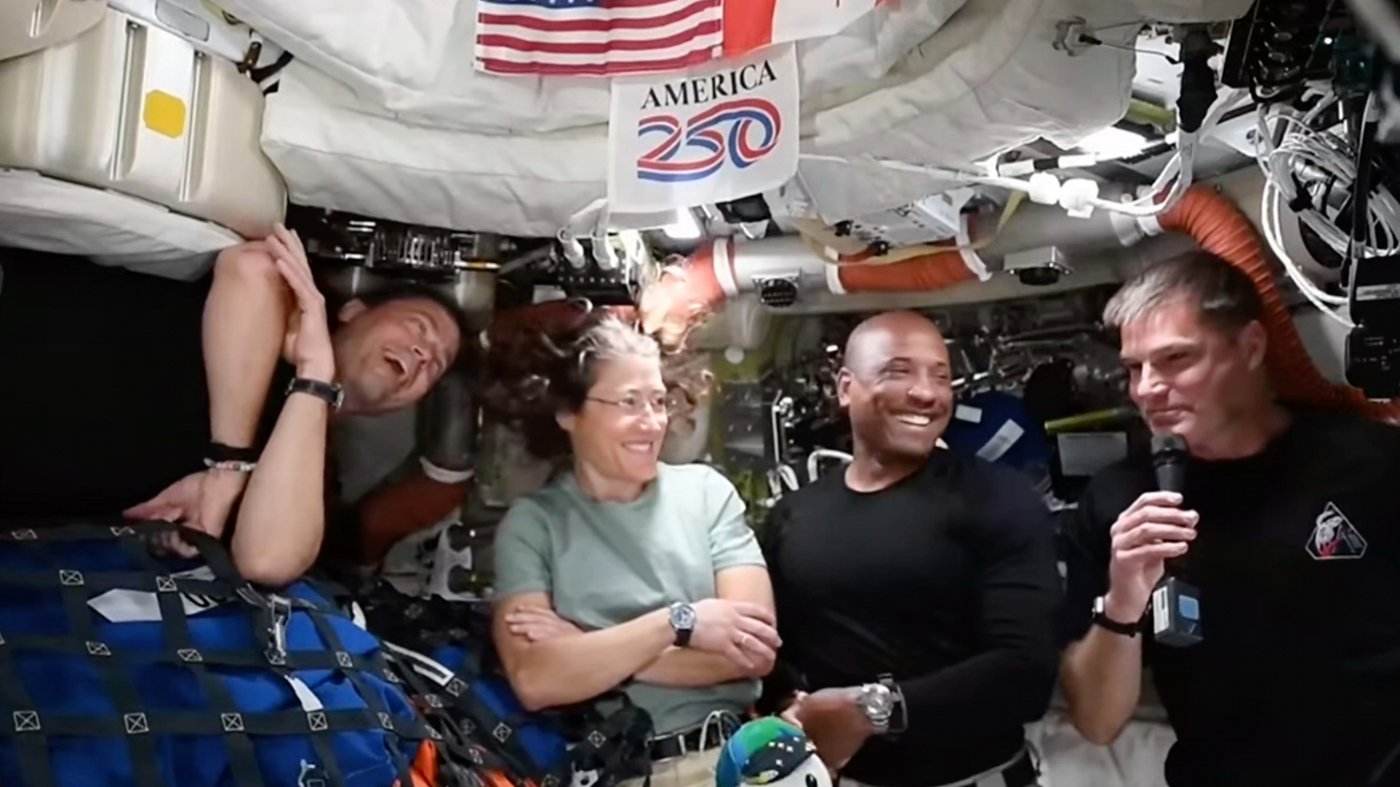
The Artemis II crew has returned to Earth, splashing down in the Pacific Ocean to a world marked by geopolitical conflict and domestic political fractures. Yet their historic journey around the Moon appears to have momentarily bridged those divides, generating widespread public awe and a rare show of bipartisan political support for a major national endeavor.
Political Unity in a Divided Era
Support for the mission crossed party lines in Washington. While former President Donald Trump, who initiated the Artemis program, celebrated the launch, he was joined by prominent Democrats including Senator Mark Kelly of Arizona, a former astronaut, and former President Barack Obama. This alignment is notable given that both Kelly and Obama had previously opposed or canceled earlier lunar return efforts. During the Trump administration, Kelly voiced opposition to the Artemis program, and Obama terminated the Constellation moon initiative in 2010, once questioning the value of returning to the lunar surface.

This convergence raises questions about political motivations—whether it represents a genuine evolution in perspective or an opportunistic embrace of a popular national achievement. Regardless of motive, the unified front from typically adversarial figures underscores the mission's symbolic power.
Overwhelming Public Approval
Beyond the political class, the American public rallied behind the astronauts. An Ipsos poll conducted before the mission found 76% of respondents agreed that the U.S. space program made them feel proud. Sixty-nine percent described themselves as excited about space exploration, and 80% held a favorable view of NASA. A significant 59% believed establishing a long-term presence on the Moon is strategically important for the United States.
Viewership numbers reflected this engagement. The official NASA livestream of the launch attracted over 10 million viewers, with Fox News leading cable news coverage. Combined with other networks and independent streams, the event became one of the most-watched live broadcasts in recent years. Local polling, such as a survey by KSNV News in Las Vegas, found 89% of respondents felt the mission made them prouder to be American.
A Unifying Cultural Moment
The mission tapped into a deep-seated American identity as a nation of pioneers, as noted by media analysis. The excitement also resonated internationally, with a BBC science editor's exuberant reaction at liftoff capturing global attention. The moment was perhaps best encapsulated by young Hilt Boling, who attended the launch at Kennedy Space Center. When asked why he was there, he exclaimed, "Because we're going back to the freaking moon, that's why!" He later expressed aspirations to become an astronaut or found an aerospace company, inspired by figures like crew member Reid Wiseman and entrepreneur Elon Musk.
Crew Messages of Perspective and Unity
From deep space, the crew themselves broadcast messages emphasizing unity and a renewed perspective on Earth. Pilot Victor Glover, speaking from his religious faith just before Easter, reflected on the planet as a unique oasis. "You are on a spaceship called Earth that was created to give us a place to live in the universe, in the cosmos," he said in a CBS News interview. "You are special, in all this emptiness... You have this oasis, this beautiful place that we get to exist together."
As the spacecraft emerged from behind the Moon, mission specialist Christina Koch outlined an ambitious future. "We will explore, we will build, we will build ships, we will visit again," she declared. "We will construct science outposts, we will drive rovers, we will do radio astronomy, we will found companies, we will bolster industry, we will inspire, but — ultimately — we will always choose Earth, we will always choose each other."
The record-breaking flight has set the stage for future lunar landings. As NASA detailed the mission's progress, the return marks more than a technical success; it represents a potent, if temporary, national unifier. The mission's legacy may be measured not only in the unprecedented views of the Moon it provided, but in its demonstration that ambitious national projects can still command broad admiration across a fractured political landscape, inspiring the next generation to look toward the stars.