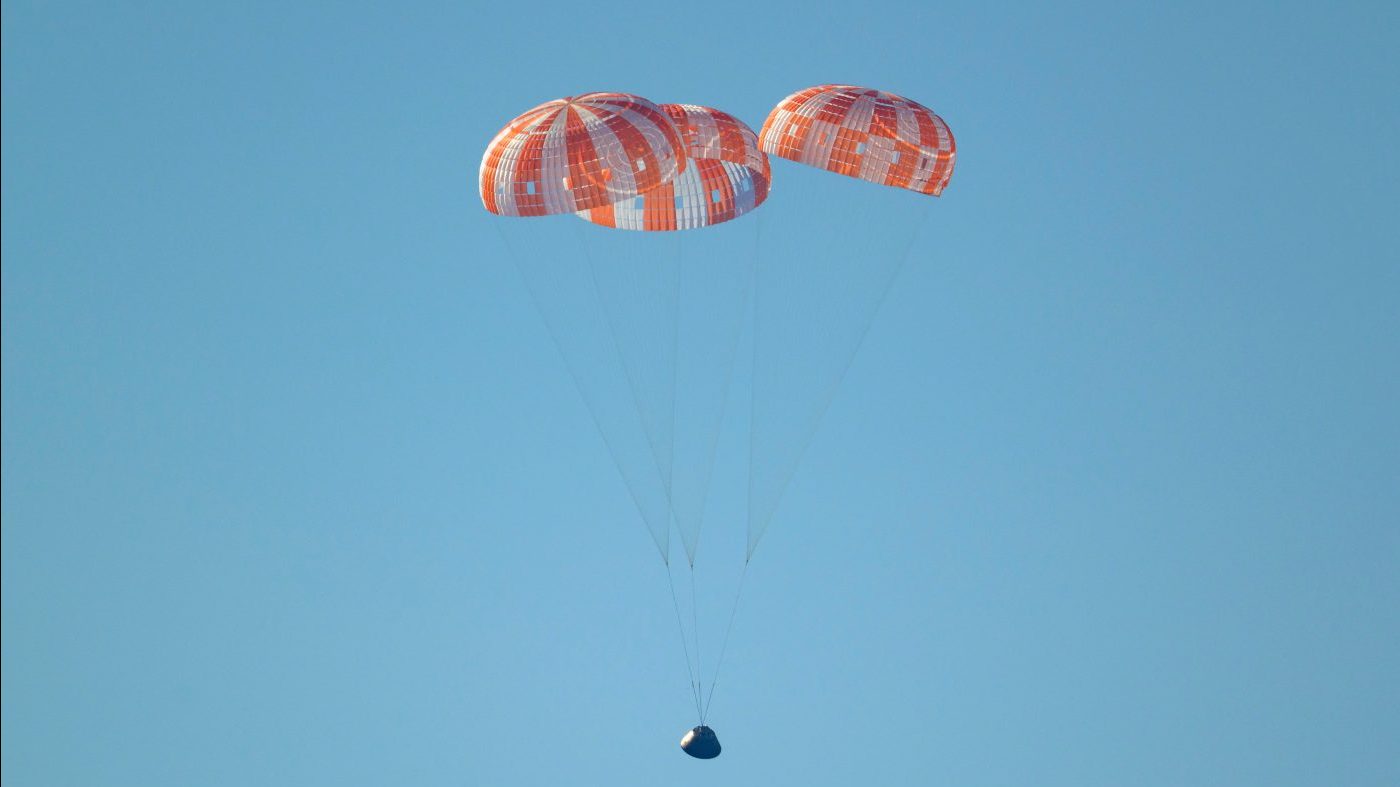
The four astronauts of NASA's Artemis II mission returned safely to Earth Friday evening, concluding a historic 10-day journey that took them around the far side of the moon. The Orion spacecraft splashed down in the Pacific Ocean near San Diego at 8:07 p.m. Eastern Time, marking the successful completion of the first crewed mission beyond low Earth orbit since the Apollo era ended in 1972.
Commander Reid Wiseman, Pilot Victor Glover, and Mission Specialists Christina Koch and Jeremy Hansen were recovered by U.S. Navy personnel and transported to the USS John P. Murtha for initial medical evaluations. Their return caps a critical test flight for NASA's deep space exploration systems, which are central to the agency's plans to return humans to the lunar surface by the end of this decade.

A Test Mission With Real Risks
NASA Administrator Jared Isaacman emphasized the experimental nature of the flight in a statement posted to social media platform X. "This was a test mission, the first crewed flight of SLS and Orion, pushing farther into the unforgiving environment of space than ever before, and it carried real risk," Isaacman wrote. "They accepted that risk for all we stood to learn and for the exciting missions that follow, as we return to the lunar surface, build a Moon base, and prepare for what comes next." He concluded with a simple declaration: "Artemis II, mission accomplished."
The mission achieved a significant milestone on Monday when the crew broke the longstanding record for the farthest distance humans have traveled from Earth. At 1:56 p.m. Eastern Time, Orion reached 248,655 miles from our planet, surpassing the record set by the Apollo 13 mission in 1970. The spacecraft's total journey covered more than 690,000 miles, according to NASA data.
Scientific Returns and Public Engagement
Beyond testing spacecraft systems, the crew gathered substantial scientific data during their lunar fly-by. They documented new craters on the moon's surface and conducted observations of the sun's corona, the outermost layer of the solar atmosphere. Former NASA astronaut José Hernández confirmed these scientific activities provided valuable information about both lunar and solar phenomena.
The mission maintained strong public engagement throughout its duration. NASA released high-resolution images last week showing Earth as viewed from Orion's window, while the crew captured additional photographs of the moon, the Milky Way galaxy, and a solar eclipse from their unique vantage point. The agency continued its long tradition of cultural connection with spaceflight, as seen when NASA and Spotify released an official wake-up playlist for the mission, maintaining a practice that dates back more than fifty years.
Political recognition followed the successful splashdown. President Trump congratulated the crew in a post on Truth Social, stating he had watched their return and looked forward to hosting them at the White House. "The entire trip was spectacular, the landing was perfect, and as President of the United States I could not be more proud!" Trump wrote. "We'll be doing it again and then, next step, Mars!" The President's statement comes amid broader geopolitical tensions, including his administration's approach to Iran that has drawn comparisons to historical foreign policy strategies.
Context and Next Steps
Artemis II represents the initial crewed phase of NASA's broader lunar exploration program, which aims to establish a sustainable human presence on the moon as a precursor to eventual missions to Mars. The successful test of the Space Launch System rocket and Orion capsule under actual flight conditions provides critical data for the planned Artemis III lunar landing mission, currently scheduled for 2028.
The mission's completion occurs against a complex backdrop on Earth, where economic indicators show consumer confidence at historic lows amid international conflict and energy price volatility. Meanwhile, the commercial space sector continues to evolve, with SpaceX preparing for a landmark public offering that could value the company at unprecedented levels. NASA's continued success with Artemis demonstrates sustained government capability in human spaceflight even as private sector participation expands.
With the crew safely recovered, NASA will now conduct detailed analysis of spacecraft performance and crew health data. The information gathered during Artemis II will directly inform preparations for subsequent missions, moving the agency closer to its goal of returning humans to the lunar surface for the first time in more than half a century.