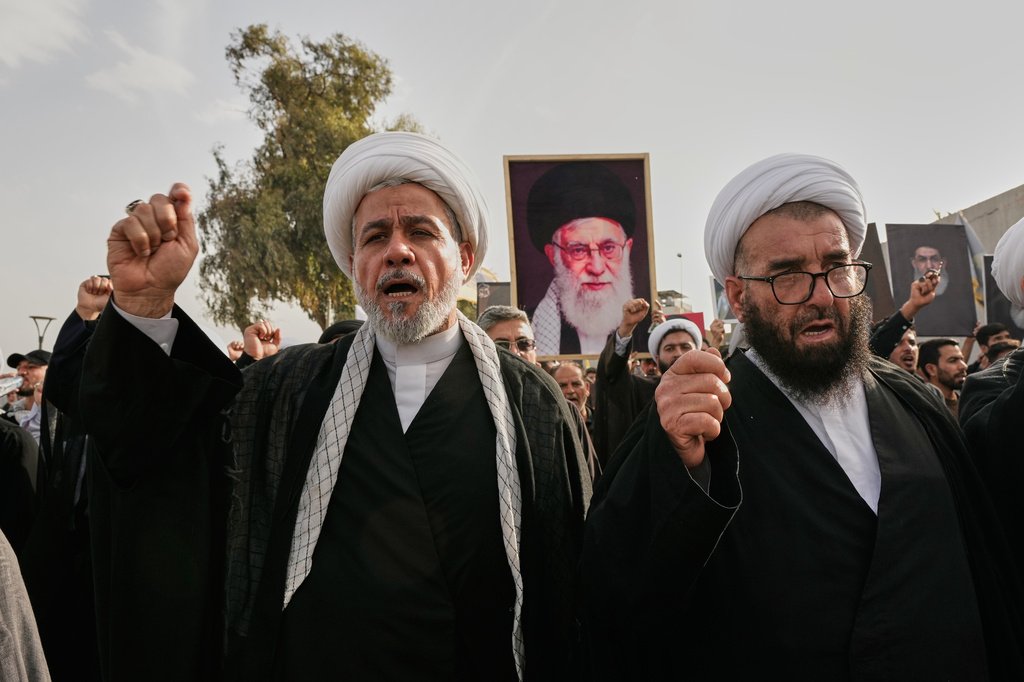
Iran's strategic doctrine in its confrontation with the United States centers not on achieving conventional military victory, but on gradually exhausting American political will and resources. Through proxy forces, energy market disruption, and financial pressure, Tehran aims to replicate what it views as Washington's historical aversion to protracted conflicts.
The Flaw in Tehran's Calculation
This approach rests on a critical assumption: that the US lacks the stamina for a long war of attrition. Analysis suggests this assumption is flawed if Washington reframes the conflict on its own terms. While Iranian leadership correctly assesses American reluctance for large-scale troop deployment—a sentiment reflected in ongoing political debate, as seen when Trump refuses to exclude ground invasion option in Iran standoff—this does not preclude other paths to strategic success.

A ground invasion would likely bolster the regime's narrative, rallying nationalist sentiment while imposing unsustainable costs. The alternative path to victory involves exploiting Iran's profound internal vulnerabilities and aligning US strategy with the aspirations of its population.
The Decisive Terrain: Iran's Internal Fractures
Nearly half of Iran's population consists of ethnic minorities with longstanding grievances against the central government. Simultaneously, waves of public protest, often met with severe repression, reveal deep disillusionment with clerical rule across Persian society. These forces represent a population open to systemic change.
The US strategy, therefore, should prioritize empowering these internal forces. This requires fostering a more unified opposition, expanding secure communication networks, and providing material support—including financial, technological, and defensive capabilities—to those challenging the regime. Without such support, civilians remain vulnerable to the Revolutionary Guard and Basij paramilitaries, which employ intimidation, torture, and lethal force to suppress dissent.
A Sustained Campaign of Pressure
This approach must be coupled with unrelenting economic and geopolitical pressure. Sanctions, particularly secondary sanctions, must be rigorously enforced to degrade the regime's financial foundation. Concurrently, the United States and its allies must guarantee freedom of navigation in the Strait of Hormuz through credible deterrence and burden-sharing diplomacy with Gulf, Asian, and European partners. As noted in related analysis, some officials downplay the need for a ground invasion to reopen Hormuz, highlighting alternative strategic views.
A critical component is disrupting Iran's ability to export discounted oil to China while threatening the same waterways. Curtailing this trade increases pressure on Tehran while reinforcing broader US strategic competition with Beijing.
Defining the Objective and Timeline
Washington must define its objective clearly: a long-term pathway to regime change driven from within Iran. This is not a campaign measured in months, but a sustained effort measured in years, matching the decades-long perspective of Iran's leadership. The strategy presents Tehran with binary choices: comply with strict limits on nuclear and missile programs and end support for terrorist proxies, or face escalating isolation.
Skeptics may argue this strategy is too slow. However, the historical alternative—oscillating between limited strikes and premature concessions—has repeatedly failed, allowing Iran to absorb pressure, claim victory through mere survival, and rebuild capabilities.
Signs of Strain and the Decisive Factor
There are already indicators of systemic strain within Iran, including economic mismanagement, rampant corruption, and widespread public dissatisfaction. A patient, disciplined US strategy can widen these cracks. The decisive factor remains the Iranian people. Unlike in past conflicts, significant segments of Iran's population are receptive to improved relations with the West. Its 80 million citizens, alongside a capable diaspora, constitute a force for change no external intervention could replicate.
The United States must articulate that it stands not against Iran as a nation, but with its people against a repressive regime. By combining sustained external pressure with strategic internal empowerment, Washington can prevail in a war of attrition without deploying boots on the ground, ultimately reversing the dynamic that has favored Tehran's endurance strategy.