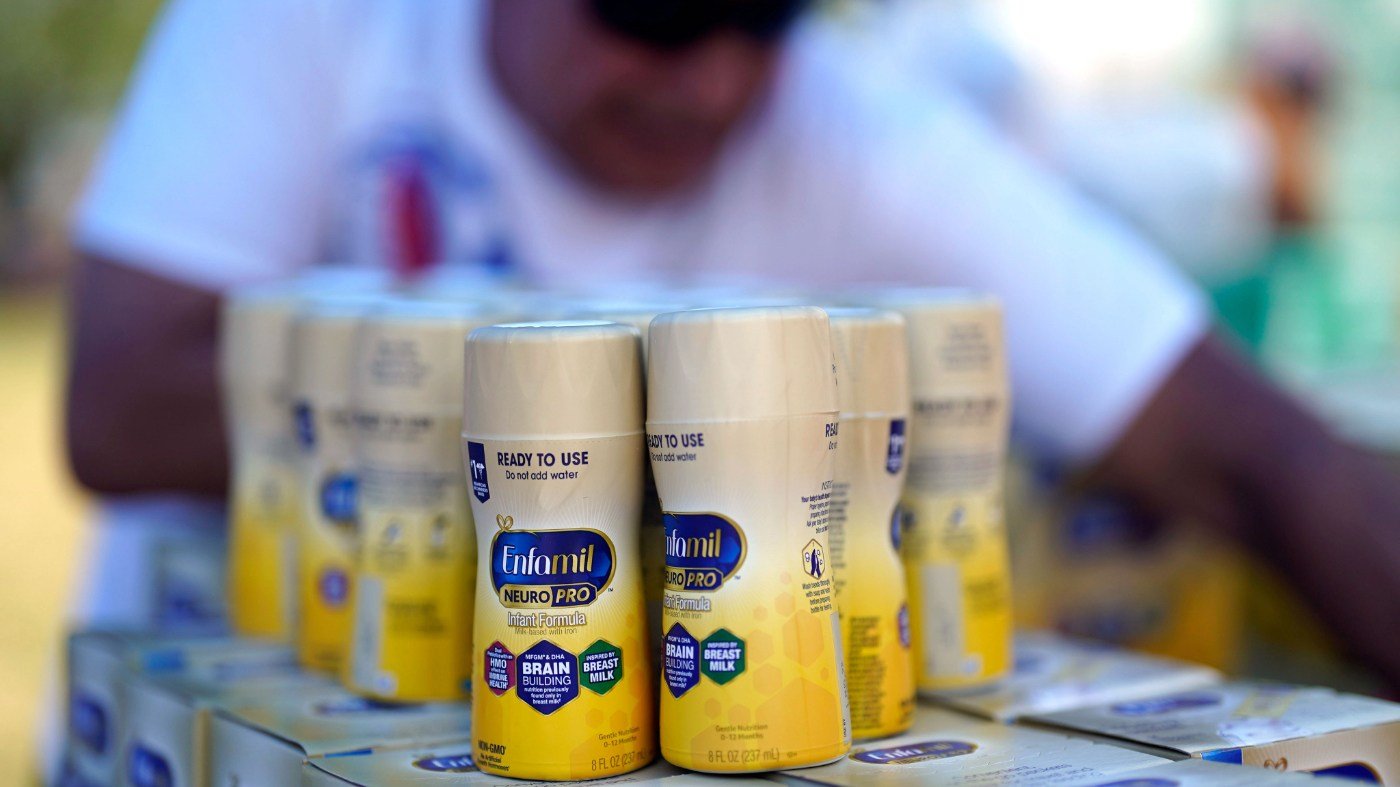
Abbott Laboratories has agreed to pay $385 million to resolve a federal civil complaint alleging that it knowingly produced powdered baby formula under unsanitary conditions at its Sturgis, Michigan, facility—conditions that federal investigators say put infants at risk and contributed to a nationwide formula shortage in 2022.
The settlement, announced by the Justice Department, closes a probe that had at one point weighed criminal charges against the company. Acting Deputy Attorney General Trent McCotter said in a statement that the agreement “makes clear the safety of our children is not negotiable.” The civil complaint accused Abbott of operating the plant in a manner that “put the products at unacceptable risk of microorganism contamination” and compromised their “reliability, quality, and safety.”

The case stems from a 2022 recall of several Abbott formula brands, including Similac, after four infants were hospitalized with rare bacterial infections traced to the facility. Two of those infants died. The Food and Drug Administration’s inspection found unsanitary conditions and multiple strains of Cronobacter sakazakii, a bacterium that can be deadly to newborns.
The Justice Department’s complaint detailed alarming practices, including the use of umbrellas to manage roof leaks—an improvised fix that diverted water from production areas but created damp environments conducive to bacterial growth. The complaint further alleged that Abbott “intentionally did not test for bacterial growth to avoid obtaining positive test results showing contamination,” and that in some cases where testing did reveal contamination, the company failed to disclose those results to the FDA during inspections in 2019 and 2022.
Under the terms of the settlement, Abbott does not admit liability or fault. The company maintained that there is no evidence its formula caused the illnesses or deaths, pointing to testing and genetic sequencing that found no link between its products and the reported infections. It also noted that no unopened, distributed Abbott formula has ever tested positive for Cronobacter sakazakii.
The bulk of the settlement—nearly $349 million—will go to the federal government, with just over $36 million allocated to state Medicaid and WIC programs that purchased Abbott’s formula. The Special Supplemental Nutrition Program for Women, Infants, and Children (WIC), administered by the U.S. Department of Agriculture, funds more than half of all infant formula sold in the United States, making the case a significant taxpayer-interest matter.
Three whistleblowers who first raised concerns about the plant will receive $69 million from the settlement. Their complaints helped trigger the FDA inspection and subsequent shutdown of the facility in February 2022; it reopened in June of that year.
The shutdown exacerbated existing supply chain strains and led to empty shelves in stores across the country, prompting emergency federal action to import formula from overseas. The episode also intensified scrutiny of the infant formula industry, with most baby formula lawsuits now concentrated in two Illinois counties, where many cases have been consolidated.
The settlement marks a notable resolution for the Trump administration, which opted to close the criminal investigation in favor of a civil penalty. It also comes as the administration has rolled back other environmental and health-related regulations, including power plant climate rules, signaling a broader shift in enforcement priorities.