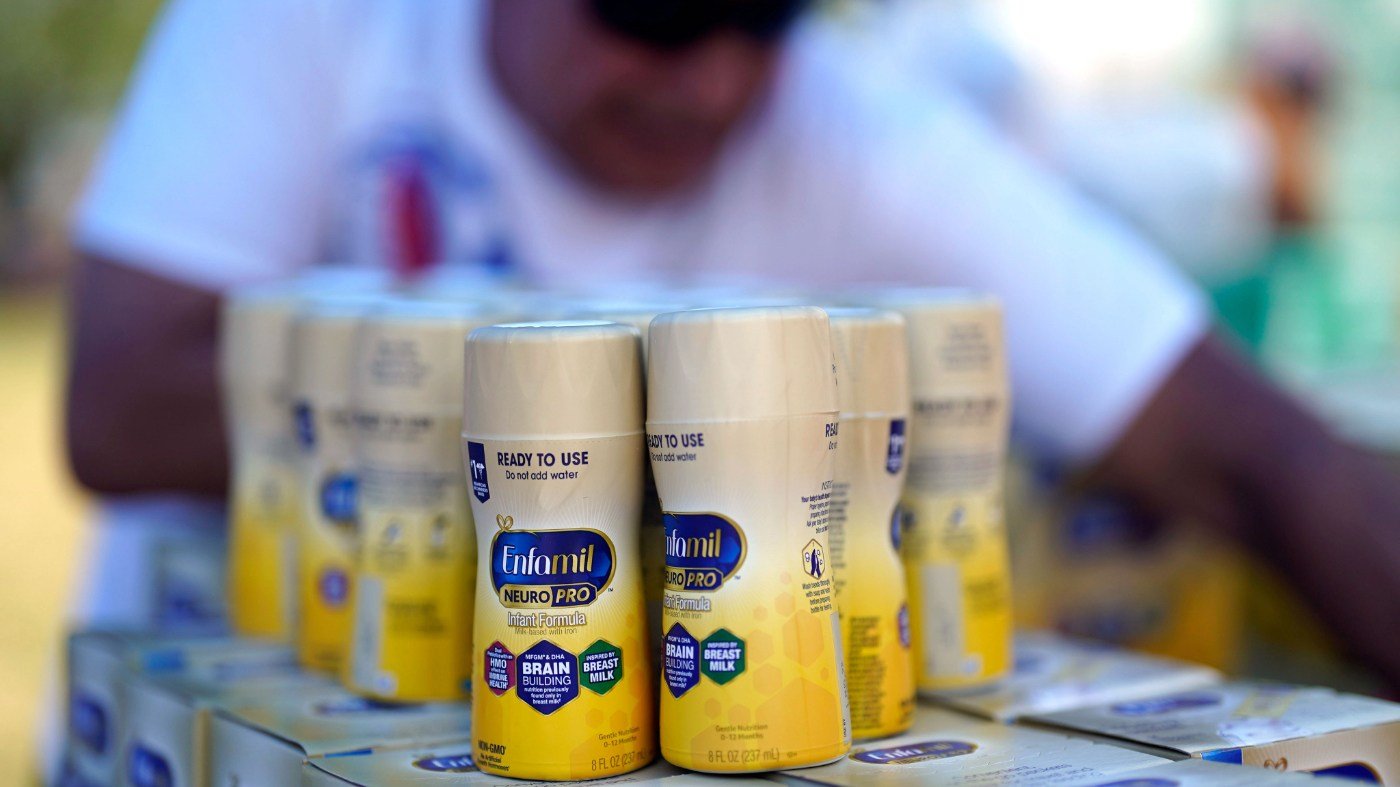
The legal landscape for infant formula manufacturers has shifted dramatically in recent years, with a surge of lawsuits alleging that specialized preterm formula causes necrotizing enterocolitis (NEC), a severe intestinal condition affecting premature infants. Earlier this month, the first federal bellwether trial in the consolidated litigation ended with a jury rejecting the claim that the prescription formula caused the infant's death.
While each case begins with a grieving family, the most striking pattern in this litigation is not medical but geographic. Roughly 90% of all U.S. baby formula claims have been filed in Madison and St. Clair counties in Illinois, two jurisdictions across the Mississippi River from St. Louis with a combined population of just over 500,000.

These cases have almost no connection to those counties. The infants were not treated there, and the families do not reside there. In the case now before the U.S. Supreme Court, the manufacturer moved its operations from Illinois to Indiana in 2018, yet an Illinois court ruled it could still be sued there indefinitely on any claim by any plaintiff.
The concentration is no accident. Trial lawyers have targeted these counties because they are ranked among the worst "judicial hellholes" in the nation by the American Tort Reform Foundation. Their courts are known for lax standards on expert testimony, plaintiff-friendly fault allocation, nearly limitless damages, and juries that have delivered multi-million-dollar verdicts. The same counties already draw nearly half of the nation's asbestos filings.
The strategic forum shopping has produced wildly inconsistent outcomes. In federal court, where more than 800 baby formula cases are coordinated under heightened evidentiary standards, the first jury verdict favored the defense. But in state courts, juries have returned $495 million against Abbott in St. Louis and $70 million against the same company in Cook County this spring. The science and defendants are identical; the results are not.
Illinois has shown little appetite for reform. The state's highest court accepted appeals in just 6% of cases in 2024. Governor J.B. Pritzker signed legislation last year that opened state courtrooms to even more out-of-state lawsuits, further cementing the state's reputation as a litigation hotspot.
The specialized formula at issue is typically available only in hospitals under a provider's prescription. It is produced by a handful of manufacturers, and every dollar spent defending these claims is a dollar not spent improving the product or keeping it on the shelf. The American Academy of Pediatrics and other experts call the formula "indispensable" and "an essential, often life-saving instrument of neonatal care," warning that litigation "may jeopardize the availability of these formulas."
Lawmakers from both parties voiced concerns about supply issues in a bipartisan, bicameral letter late last year. The 2022 formula shortage is still fresh in many families' minds, and another supply shock would compound an affordability crisis.
Rather than a case built on sound science, plaintiffs' lawyers have built a business model whose cornerstone is a friendly courtroom that can deliver what the evidence does not. The Supreme Court now has an opportunity to rein in predatory litigation and ensure that cases are filed in courts with genuine connections to the parties—not where a trial lawyer's map shows the biggest verdicts.