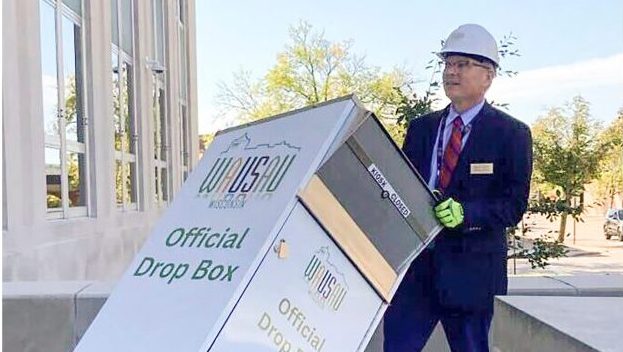
A Wisconsin mayor who physically removed an absentee ballot drop box from his city hall in the lead-up to the 2024 presidential election will not face criminal prosecution, a special prosecutor announced Wednesday. The decision closes a politically charged investigation into actions that touched on the state's ongoing battles over election administration.
Prosecutor Cites Lack of Evidence
Fond du Lac County District Attorney Eric Toney, appointed as a special prosecutor in August 2025, stated his review found insufficient evidence to prove Wausau Mayor Doug Diny violated any statutes. Toney, a Republican candidate for Wisconsin attorney general, determined the state could not establish guilt beyond a reasonable doubt.
"There are some that wanted charges issued based on politics and others that did not want charges issued based on politics," Toney said in a statement. "However, the facts are the facts and the law is the law, no matter how badly someone may wish for a result, our duty is to follow the facts, and the law, not politics or emotions."
Legal Rationale for Dismissal
Toney's analysis centered on two key points. First, he noted that state laws prohibiting tampering with ballot box locks or seals did not apply because the box was empty and had not been unlocked for the election when Diny removed it in September 2024. Second, he argued prosecutors would likely be unable to prove misconduct in public office because the box was intended for a mixture of election ballots and other municipal documents.
Diny, who holds a technically nonpartisan office but received Republican backing in his 2024 campaign, has consistently defended his actions. He claimed the unsecured box posed a theft risk and that he moved it to a secure location inside city hall for safekeeping. He returned the box one week later following concerns raised by the city's elections clerk.
In a statement to The New York Times, Diny acknowledged the incident became "to some level a national embarrassment" for the central Wisconsin city of approximately 40,000 residents. He expressed relief at the prosecutor's findings and said it was "time for the city to move with city business."
Broader Context of Election Disputes
The case unfolded against a backdrop of intense national and state-level conflict over voting procedures. In Wisconsin, a perennial swing state, the use of ballot drop boxes has been particularly contentious. The state's liberal-majority Supreme Court reinstated their use in July 2024, reversing a 2022 ruling made when the court had a conservative majority.
This legal back-and-forth reflects deeper partisan divisions over election security and access, a theme also seen in other states. For instance, a recent California Supreme Court decision blocked a local sheriff's ballot investigation, highlighting the judicial system's role in refereeing these disputes.
At the federal level, the issue intersects with the Trump administration's broader skepticism of mail-in voting. President Trump has frequently criticized the practice as vulnerable to fraud, despite a lack of substantiating evidence, and has moved to restrict it during his second term. This political environment ensures that local actions, like the one in Wausau, attract disproportionate attention and become symbols in a larger national debate.
The resolution of this case leaves unanswered questions about the limits of local officials' authority over election infrastructure. It also arrives as Wisconsin continues to be a focal point for political strategy, with both parties closely watching developments that could affect future elections, including recent electoral performances and policy debates over issues like municipal subsidies for technology projects.