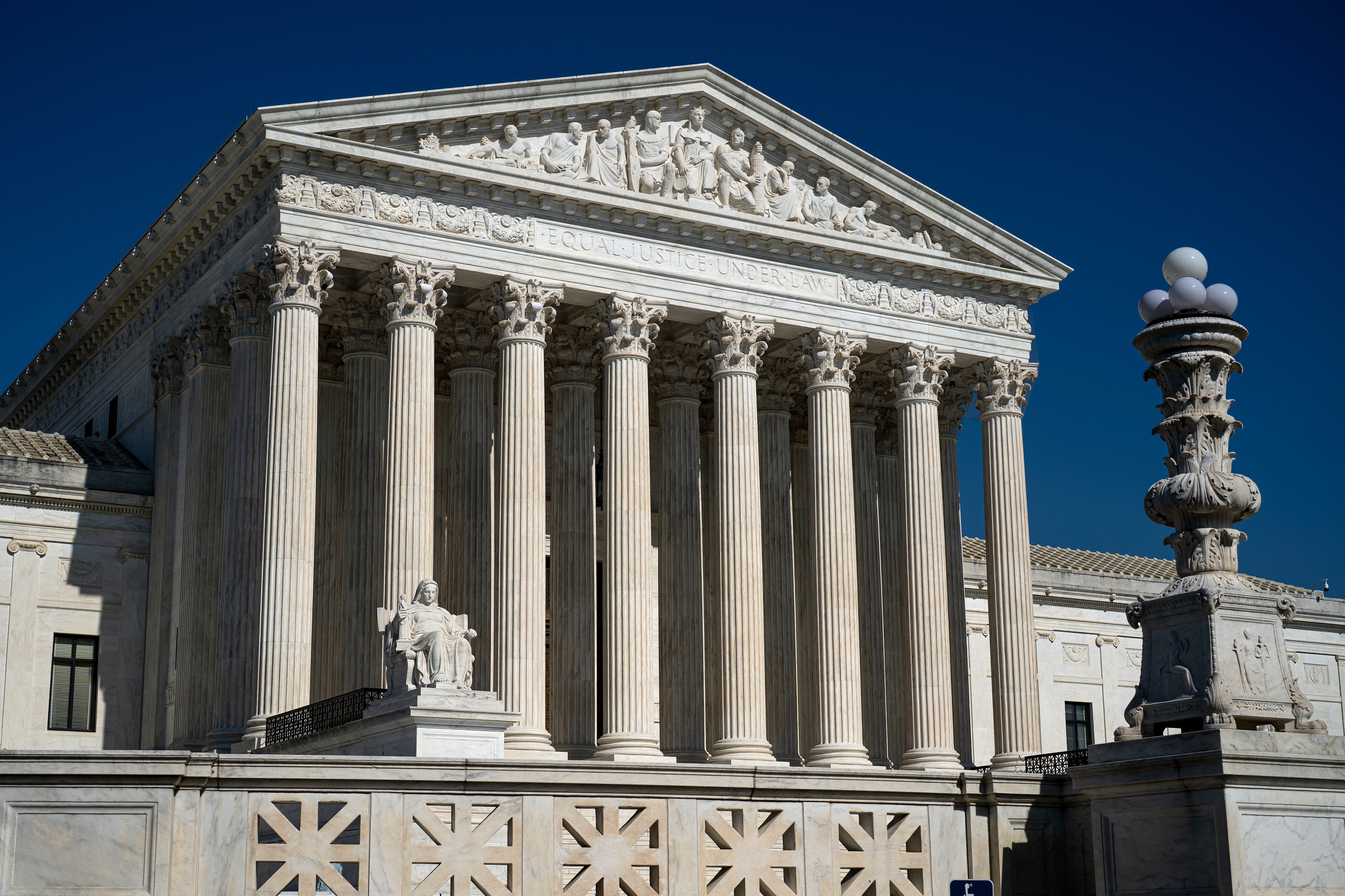
House Minority Leader Hakeem Jeffries has ignited a fierce debate by labeling the Supreme Court "basically a subsidiary of the MAGA Republican Party" and demanding "dramatic" reforms. Democrats, furious over rulings on voting rights, campaign finance, presidential immunity, and abortion, have floated proposals ranging from expanding the bench and imposing 18-year term limits to restricting the court's emergency docket and enacting a binding ethics code. Some have even suggested stripping the court's jurisdiction over presidential immunity appeals.
President Trump, despite his own grievances with recent decisions on tariffs and birthright citizenship, has accused "Radical Left Democrats" of mounting "an illegal and unconstitutional attack on our SACRED United States Supreme Court." The Republican National Committee has enshrined opposition to any court changes in its 2024 platform.

Yet neither party has questioned the court's fundamental authority to declare federal statutes unconstitutional. Perhaps they should. In a provocative new book, Supremacy: How Rule by the Court Replaced Government by the People, Harvard Law professors Nikolas Bowie and Daphna Renan challenge the conventional wisdom, tracing how the Supreme Court claimed the power to overrule Congress—and how fiercely that claim has been contested throughout American history. The result, they argue, is a nation governed not by laws enacted by the people, but by nine lawyers in robes.
The authors distinguish between vertical review—invalidating state laws under the Constitution's supremacy clause—and horizontal review, the power of federal judges to overturn the judgments of Congress. The Constitution is silent on how such disputes should be resolved. At the founding, James Madison and most Democratic-Republicans insisted that allowing unelected federal judges to override Congress "was never intended and can never be proper." Federalists, including Alexander Hamilton, disagreed.
In 1803, Chief Justice John Marshall, a Federalist, declared in Marbury v. Madison that it is "emphatically the province and the duty of the judicial department to say what the law is." But Bowie and Renan note that Marshall spent the rest of his career deferring to Congress's constitutional interpretations, and Marbury was often cited for the proposition that each branch could interpret the Constitution for itself.
The issue came to a head in 1857, when the Supreme Court voided a federal statute limiting the spread of slavery in the infamous Dred Scott decision. Abraham Lincoln's new Republican Party argued that political questions like slavery should be decided through elections. Otherwise, Lincoln warned, "the people will have ceased to be their own rulers."
During Reconstruction, congressional Republicans passed laws advancing civil rights and Black suffrage despite Dred Scott. To curb President Andrew Johnson's influence over the court, they reduced the number of justices from ten to seven and even considered requiring a supermajority to declare a statute unconstitutional. Yet in the post-Reconstruction era, the court dismantled "nearly every major law Congress passed to protect multiracial democracy in the South," and later struck down the federal income tax, workplace safety rules, child labor laws, and minimum wage guarantees.
Prominent jurists, including Oliver Wendell Holmes and Learned Hand, maintained that the Constitution did not grant federal courts the authority to review Congress's decisions. Felix Frankfurter mused about studying the scores of cases where the court invalidated legislation "with a view to ascertaining the value of the Court's corrective power." But after the Warren Court's landmark rulings on desegregation, abortion, and civil liberties, most liberals embraced judicial supremacy—even when it meant overriding Congress.
Bowie and Renan argue that judicial supremacy leaves no practical democratic mechanism for reversing court decisions short of amending the Constitution. And while the court sometimes protected vulnerable minorities, "a vastly larger set" of decisions favored "the one minority that the Court has consistently protected from Congress: the wealthy."
The irony is that, with an imperial president and a supine Congress, the court's authority to invalidate federal statutes may be less of a threat than the alternative. As the authors warn, reforms limiting the court's ability to decide constitutional questions might empower the president far more than Congress—especially if the president insists his interpretation of the Constitution is just as authoritative as that of Congress or the court. That prospect, already visible in Trump's aggressive use of executive power, should give pause to Democrats and Republicans alike. For now, the debate over court reform remains entangled with broader battles over presidential authority, as seen in recent legal fights over executive actions and congressional oversight struggles.