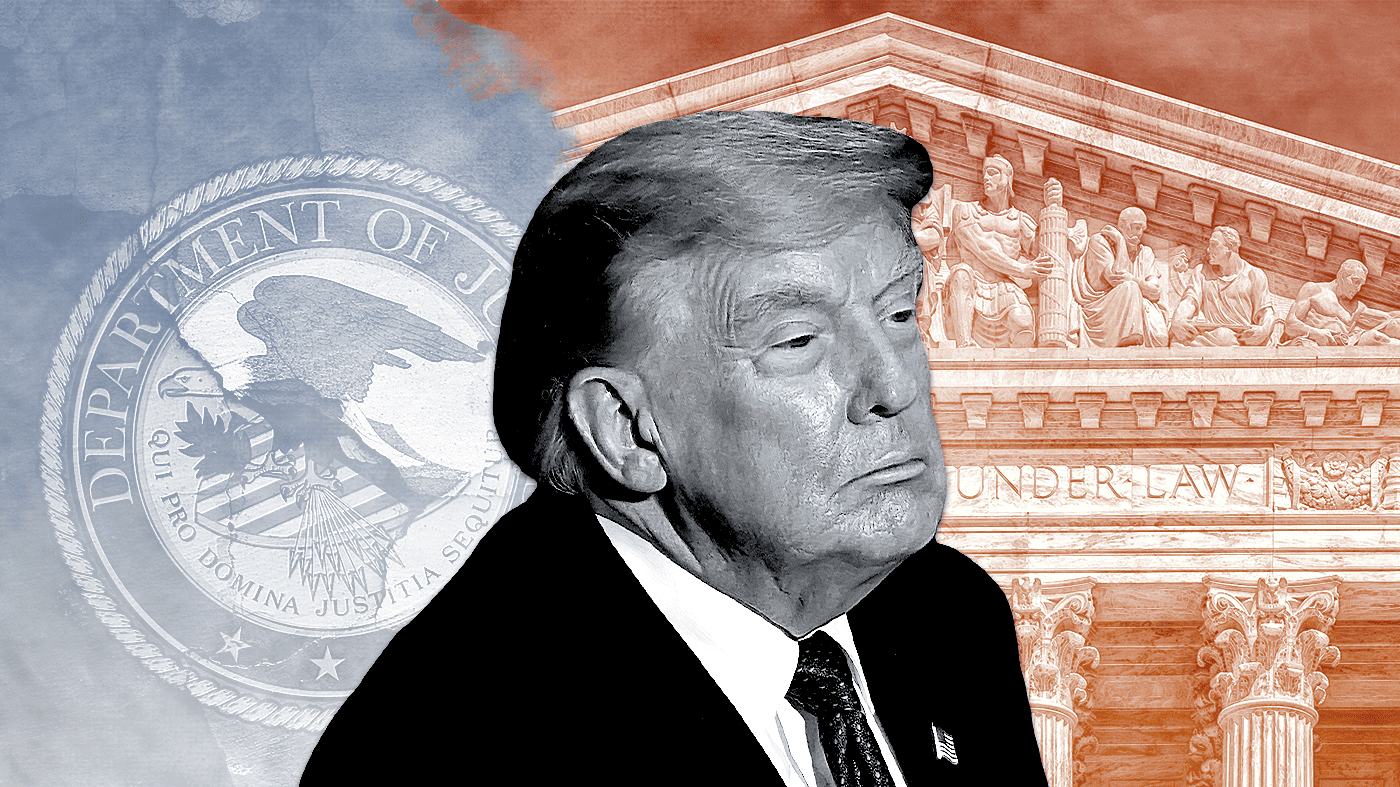
The Justice Department's repeated strategy of installing acting U.S. attorneys without Senate confirmation is now on a collision course with the Supreme Court, following unanimous and split appellate rulings last week that struck down the maneuver.
Three-judge panels from the 2nd and 9th U.S. Circuit Courts of Appeals both concluded that the DOJ cannot evade the Federal Vacancy Reform Act of 1998 (FVRA) by simply renaming someone or delegating the powers of a U.S. attorney to a subordinate. The decisions affirm that Sigal Chattah in Nevada and John Sarcone III in the Northern District of New York were not lawfully serving as acting U.S. attorneys.
The 9th Circuit's ruling was unanimous, with two Trump appointees and a George W. Bush appointee agreeing. The 2nd Circuit was split 2-1, with a Trump appointee dissenting. A DOJ spokesperson told The Hill that the department disagrees with both rulings and plans to appeal to the Supreme Court.
The department has 90 days from the lower court judgments to file a petition, but even if it does, the high court is under no obligation to hear the case. Carl Tobias, a law professor at the University of Richmond, doubts the justices will take it up, noting that two circuits have already reached the same conclusion, signaling broad judicial consensus against the DOJ's interpretation.
“That should be enough to tip off the Supreme Court that there's widespread agreement among judges,” Tobias said. The DOJ could also request en banc rehearings before the full appeals courts.
The rulings hinge on the FVRA's automatic succession rules, which state that a first assistant to a Senate-confirmed officer assumes the acting role by default when a vacancy occurs. Judge Eric Miller, writing for the 9th Circuit, emphasized that the statute does not permit the executive to fill a vacancy by designating a new first assistant or by “delegating all of the functions and duties of the U.S. Attorney to someone else.”
Under federal law, U.S. attorneys must be nominated by the president and confirmed by the Senate to serve permanently. During vacancies, the attorney general can appoint an interim for up to 120 days. Chattah, a former Nevada GOP chair, took over as interim U.S. attorney in April 2025, but resigned in July, just before her term expired. Then-Attorney General Pam Bondi then changed her title to first assistant and gave her the powers of the top prosecutor.
At least a dozen U.S. attorneys' offices are currently led by first assistants or similar designations, according to a DOJ website review. Sarcone was named a special attorney after district judges in upstate New York refused to extend his interim term. John McKay, a former U.S. attorney, called the tactic a “blatant attempt” to bypass the Senate's confirmation role, noting that “MAGA loyalists” are being placed in positions they would never be confirmed for.
Federal judges have repeatedly rejected the maneuver. In September, U.S. District Judge David Campbell ruled Chattah's appointment unlawful, calling it a procedure “never intended by Congress.” In October, Judge Michael Seabright disqualified Bill Essayli from supervising criminal cases in California. In January, Judge Lorna Schofield blocked grand jury subpoenas obtained by Sarcone against New York Attorney General Letitia James. Some judges have allowed the officials to remain as first assistants while appeals proceed.
The legal fight over the FVRA is part of a broader pattern of the Trump administration testing the limits of executive power, as seen in executive orders that have sparked court challenges. The DOJ's appeal could eventually clarify the scope of the vacancy act, but for now, the administration faces an uphill battle in the courts.