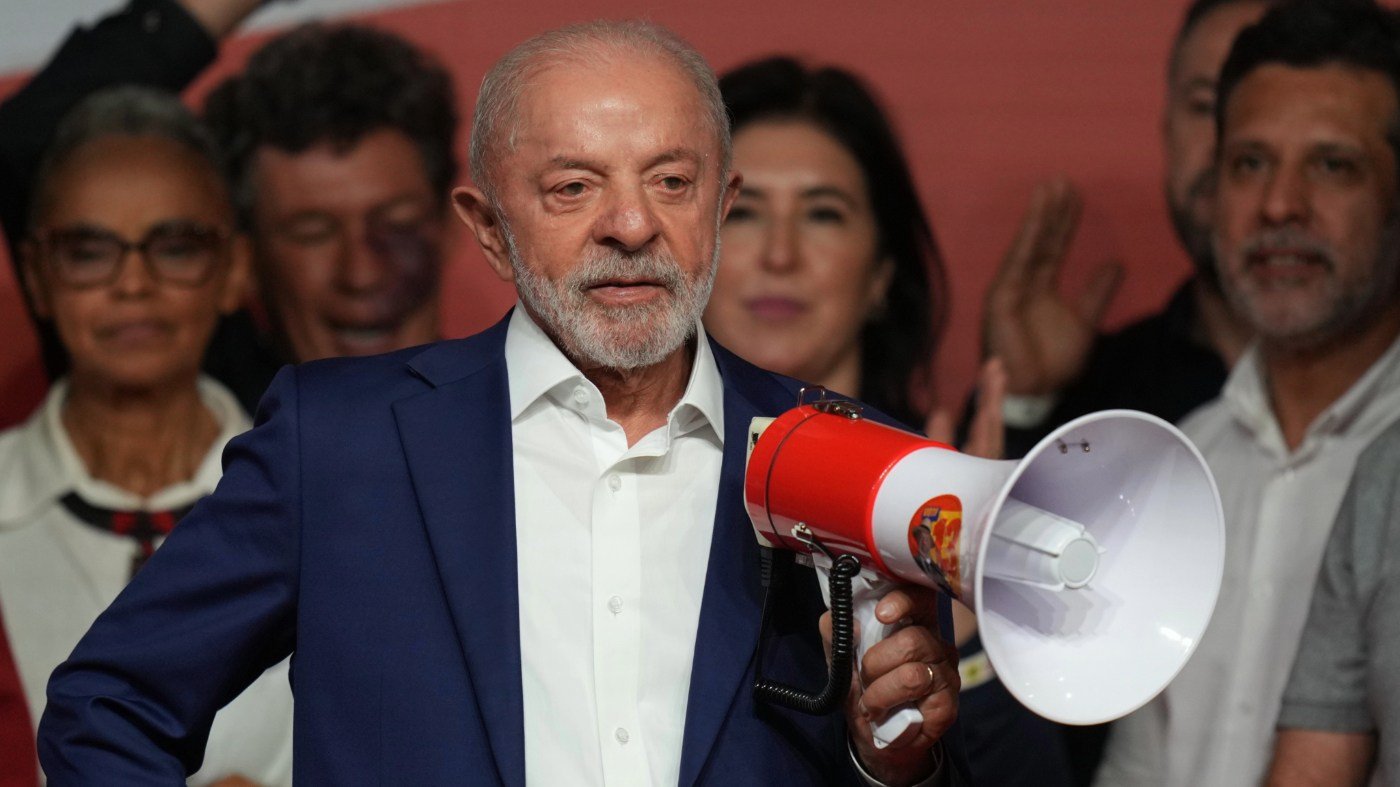
Brazil's presidential election delivered a seismic shock to the Latin American left. Flavio Bolsonaro, the conservative candidate, surged to a first-round victory on Sunday, capturing 47 percent of the vote against President Luiz Inacio Lula da Silva's 45 percent. The result not only upends Brazil's political landscape but also signals a broader regional transformation, one that President Trump has championed as a personal triumph.
Trump had rolled out the red carpet for Bolsonaro at the White House in May, a meeting that both men framed as the beginning of a new era. Since Trump's return to the political scene, at least seven Latin American nations have swung decisively to the right. Bolivia ended two decades of socialist governance, Venezuela's Nicolás Maduro was captured, Chinese influence over the Panama Canal has receded, and the Shield of the Americas security alliance has taken shape. Yet Brazil, the region's largest economy, remained the ultimate prize.
Trump called Bolsonaro's performance "a big victory: close, but a very, very big victory," reflecting the sense of momentum among conservative allies. But the numbers tell a more complicated story. While Lula has not yet conceded, he has already lost control of Congress, the Senate, and a swath of municipal governments. Flavio Bolsonaro, son of former President Jair Bolsonaro, heads into the October 25 runoff as the clear favorite.
A Family's Political Resurrection
The parallels between Trump and Jair Bolsonaro are striking. Both lost re-election bids, faced accusations of inciting insurrection, and weathered legal battles. But while Trump emerged with his political standing intact, Jair Bolsonaro was sentenced to 27 years in prison. Lula had calculated that imprisoning his rival would extinguish the right-wing movement. Instead, it galvanized it.
Last Sunday, four members of the Bolsonaro family won seats in the Senate or Congress, including Jair's wife Michelle and son Carlos. The legal persecution, far from discrediting the family, transformed them into martyrs and translated into votes. As Lula's popularity eroded over his failure to curb crime and violence, the public's appetite for change became unstoppable.
The polls, which had consistently favored Lula, proved unreliable. Lula, intoxicated by power, believed he would win outright or at least dominate a runoff. But the electorate's silent fury over insecurity and economic stagnation was never captured by pollsters.
Lula's Failed Playbook
Lula, who has run for president seven times since 1989, exhausted his populist toolkit. His promises of shorter workdays, expanded welfare programs like Bolsa Família, and higher wages fell flat. His pledges to protect the Amazon and gay rights failed to energize his base. Most critically, he underestimated the Brazilian people's firsthand knowledge of Venezuela's collapse under socialist rule, a cautionary tale even for a nation with the world's largest oil reserves.
Security dominated the campaign. Lula's soft-on-crime approach, particularly toward organized crime, was seen as a betrayal. Efforts to negotiate with or rehabilitate hardened criminals appeared to protect predators while ignoring victims. In contrast, Salvadoran President Nayib Bukele's hardline security model has gained admirers across the region. Bolsonaro has openly praised Bukele for achieving "one of the greatest and most effective restorations of sovereignty and public security."
An Outdated Ideology
Lula also anchored his campaign in an anachronistic anti-Americanism. He leaned on class struggle, anti-imperialist rhetoric, and dollar rejection, while championing the Chinese yuan. His proposals to bring social media, credit cards, and online betting under state control evoked the censorship models of Cuba and Nicaragua. Lula, a longtime admirer of Daniel Ortega and a founding figure of the São Paulo Forum, was the last dinosaur of Cuban-style socialism.
His defeat is no coincidence. A wave of change is sweeping the Americas, where security and alliances with the U.S. are now decisive electoral issues. As Trump's influence grows, the left's grip on the region continues to slip. The era of "21st-century socialism" is in intensive care, and Brazil's election may be the final blow.