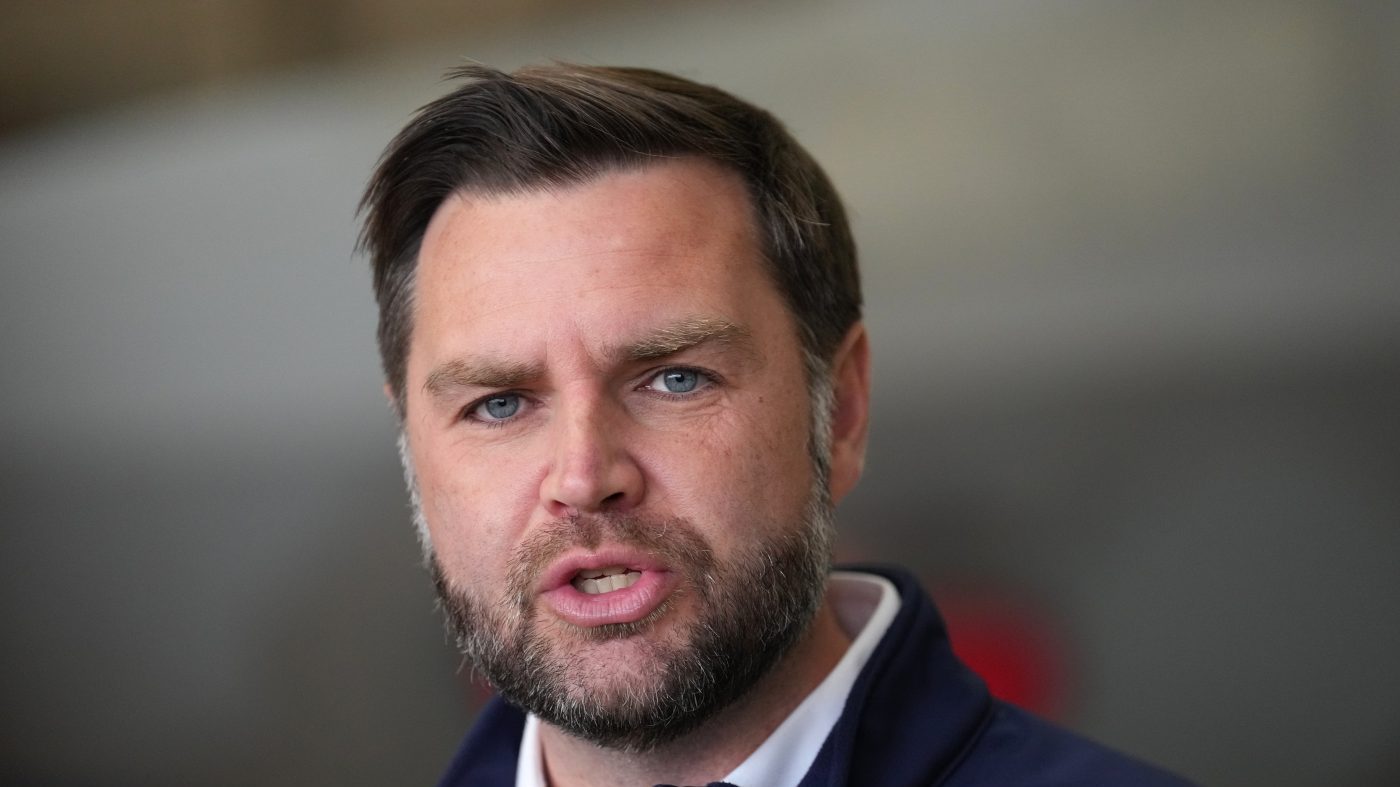
Vice President Vance on Tuesday made clear that any progress in nuclear negotiations with Iran hinges on Tehran taking concrete steps to reduce its enriched uranium stockpile, a demand that underscores the deep mistrust between the two nations.
In an exclusive interview with Reuters while campaigning for Republican candidates in Alaska, Vance said Iran's insistence on its right to enrichment remains a major obstacle. "If you don't want a nuclear weapon, then why do you need 60% enriched fuel?" he asked, referring to Iran's stockpile of uranium enriched to near-weapons-grade levels. "And if you want to show commitment to not building a nuclear weapon, don't build highly enriched fuel. That's a very basic threshold issue."
The vice president, who has been a key interlocutor in U.S. talks with Iran, added that Tehran must demonstrate its peaceful intentions through action, not just rhetoric. "I think if they want to show a commitment to not building a nuclear weapon, they would do something meaningful on their enrichment capacity," he said.
The negotiations, which began after the U.S. launched a military campaign against Iran on Feb. 28, have hit an impasse. Washington argues that Iran's leadership structure makes it unclear who holds decisionmaking authority, while Tehran accuses the Trump administration of negotiating in bad faith and sending mixed signals.
Iran's Foreign Ministry spokesperson Esmaeil Baghaei pushed back on the U.S. criticism, saying, "The problem is actually the opposite: it lies in the contradictory positions and mixed messaging from US officials."
The conflict has also taken a heavy toll on global energy markets, as Iran has threatened shipping routes through the Strait of Hormuz, a chokepoint for roughly 20% of the world's oil supply. The U.S. has responded with tit-for-tat military strikes, further escalating tensions.
Despite the standoff, Vance said the U.S. remains open to a deal that would require Iran to commit to not rebuilding its nuclear program, which the Trump administration claims was destroyed in strikes carried out in June 2025. "What the president has said is, look, from the very beginning, we're willing to strike an agreement where the Iranians commit to not rebuilding their nuclear program and take real steps in order to do that, but it takes two to tango, and we're not going to trade words for actions," he said.
He stressed that Washington expects reciprocity. "In other words, the United States is not going to do things for mere promise of actions on the Iranian side. We need to trade actions for actions here, and we'll see what the Iranians do."
The vice president's remarks come as he has been increasingly visible on foreign policy and domestic political fronts, including his early sparring with Senator Ted Cruz over the 2028 GOP primary and his push to broaden the party's appeal to working-class voters.