Speaking at the United Nations General Assembly last week, President Trump called on nations to unite against common threats, framing the moment as a test of collective resolve. While critics may dismiss his words as rhetorical, the underlying stakes are anything but symbolic. A growing chorus in Washington—spanning figures like Tucker Carlson and Hasan Piker—argues that America should focus inward, prioritizing domestic woes over international commitments. But that view, as Sen. Rick Scott and Rebeccah Heinrichs of the Hudson Institute contend, is dangerously shortsighted.
The push for retrenchment is not new. During the Great Depression, as Nazi Germany invaded Poland, many U.S. leaders argued that Americans couldn't afford to worry about Europe's security when jobs were scarce at home. Today's version of that argument resonates with young Americans facing high grocery bills and housing costs. Yet the choice between global leadership and domestic prosperity is a false one. The American Dream, Scott and Heinrichs insist, depends on the United States setting the rules that protect its people and economy.

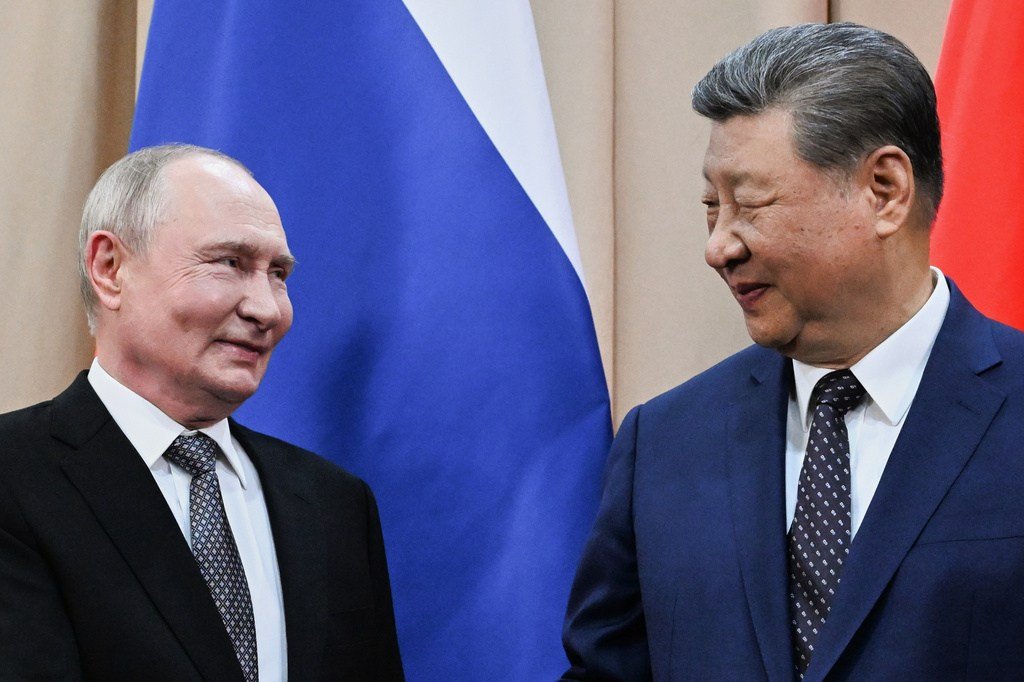
America First does not mean retreating from the world stage. The authors argue that a strong America—capable of deterring adversaries and winning conflicts if necessary—does not require endless wars or regime change. Instead, it requires clear-eyed engagement. The authoritarian alliance of China, Russia, Iran, North Korea, and Cuba is actively working to undermine U.S. influence, sever ties with Western allies, and reshape the global order to their advantage.
Russia's invasion of Ukraine is a direct test of NATO's resolve, while China leverages economic dependency to bend nations toward its interests. Iran destabilizes the Middle East, and North Korea continues its nuclear program while supporting Russian forces. These powers are not acting in isolation; they are coordinating to push American influence out of key regions. Even in the Western Hemisphere, Cuba remains a persistent destabilizing force.
Scott and Heinrichs are particularly critical of figures like Hasan Piker, whom they describe as a useful asset for adversaries due to his anti-capitalist rhetoric and controversial statements. They argue that the authoritarian alliance seeks to destroy the postwar order and the prosperity that generations have defended. If the U.S. retreats, they warn, China and its partners will isolate America, strangle its economy, and strip its autonomy, leaving the nation weak and dependent.
President Trump and Secretary of State Marco Rubio, they note, have demonstrated a smarter approach—one that pushes NATO allies to shoulder more responsibility and encourages new partners to join the cause. They also emphasize reducing economic exposure to adversaries, arguing that every dollar sent to Beijing is capital for them to use against American interests. Retreat, they conclude, only raises the cost of confrontation later. Strong leadership is essential for domestic security and prosperity; without it, America and its allies remain vulnerable.
The article echoes broader concerns about political courage and public trust. A recent Gallup poll found that only 4% of Americans see elected officials as courageous, a sentiment that may fuel isolationist appeals. Yet Scott and Heinrichs argue that true courage lies in maintaining global engagement despite domestic distractions. As the administration pushes forward with initiatives like the AI-powered America.gov portal to modernize federal services, the broader foreign policy stakes remain clear: America's leadership is not a luxury but a necessity.