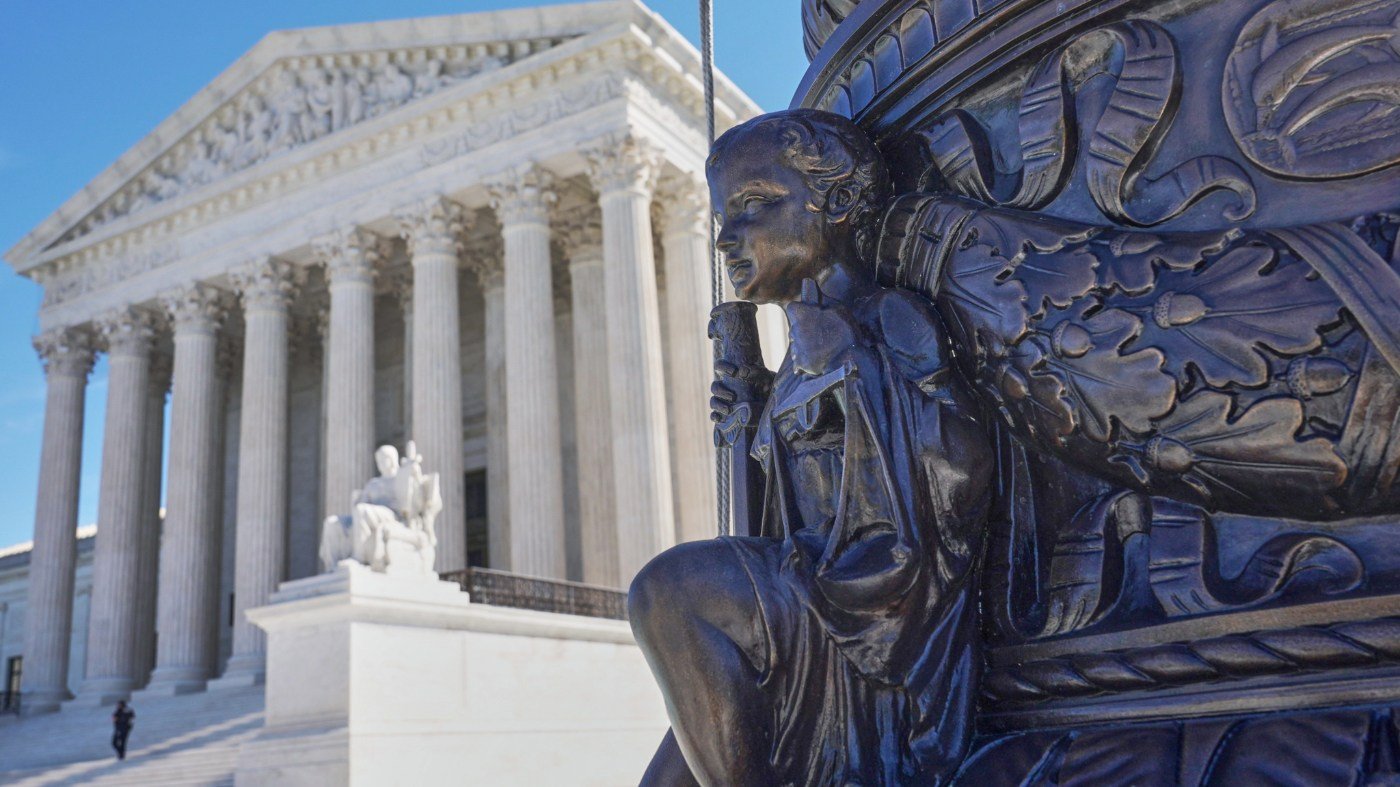
The Supreme Court's growing influence over American life has prompted calls for institutional checks. One proposal gaining traction is the creation of a "shadow court"—a parallel body designed to offer reasoned alternatives to the Court's decisions. This idea, championed by Fordham law professor Julie Suk in her new book The Shadow Court: Rescuing Democracy from the Supreme Court, suggests that a more democratically composed court could provide a vital counterweight.
The concept borrows from parliamentary systems, where a shadow cabinet—composed of opposition members—offers specialized critique and alternative policies. In the U.S., Senator Elissa Slotkin (D-MI) floated a similar idea to counter controversial cabinet picks, but Minority Leader Chuck Schumer showed no interest. Now, legal analysts argue the same logic should apply to the judiciary.

The Supreme Court's Partisan Record
Critics point to a series of decisions that appear driven by ideology rather than law. Bush v. Gore, which handed the presidency to George W. Bush despite losing the popular vote, Dobbs v. Jackson Women's Health Organization, which overturned abortion rights, and Trump v. United States, which granted former presidents broad immunity, all illustrate a Court willing to reshape policy from the bench. The term "qualified immunity" appears nowhere in the Constitution, yet it shields officials from accountability.
These rulings, alongside Citizens United's floodgates for dark money and Trump v. Slaughter's deference to executive power, have fueled concerns about a Court with vast authority and minimal oversight. As Justice Robert Jackson famously noted, "We are not final because we are infallible, but we are infallible only because we are final."
A More Democratic Alternative
Professor Suk's proposal outlines a shadow court with judges confirmed by the House, not the Senate, and serving fixed terms rather than lifetime appointments. This structure would be more responsive to the electorate, which is particularly relevant given the Senate's malapportionment—Wyoming's 580,000 residents hold the same representation as California's 39 million.
The shadow court could hear the same cases as the Supreme Court, offering alternative rulings and reasoning. It could also provide advisory opinions during the legislative process, a practice common in other democracies. This would allow the public and political branches to see how constitutional questions might be resolved differently.
Potential Impact and Opposition
Skeptics question whether a shadow court would have any real influence, perhaps dismissing it as a glorified think tank. But proponents argue that constitutional law is an ongoing argument about democracy. A body that offers disciplined, reasoned critiques could enrich public discourse and pressure the Supreme Court toward moderation.
The current conservative majority might resist such a challenge, potentially striking down the enabling legislation. But doing so would expose their self-interest and undermine their legitimacy. As Suk writes, "An additional court that is composed more democratically will make constitutional law more legitimately."
Given the Court's controversial stance on gun restrictions and its questionable claims of neutrality, the time may be ripe for such an institutional innovation. The Constitution begins with "We, the People," and a shadow court could ensure that the people have a stronger voice in constitutional interpretation.
James D. Zirin, a former federal prosecutor and legal analyst, argues that this mechanism would provide a disciplined way to shadow the issues before the nation's highest court. It would not replace the Supreme Court but would offer a persuasive alternative, enriching the dialogue about democratic self-governance.