The Supreme Court's conservative majority has consistently expanded gun rights, but two new cases could test the limits of that trajectory. The justices will hear arguments in December on whether the Second and Fourteenth Amendments protect the right to possess AR-15-style rifles, with implications for bans in Illinois and Connecticut.
Gun rights advocates are optimistic, citing a winning streak that began with District of Columbia v. Heller in 2008 and culminated in New York State Rifle and Pistol Association v. Bruen in 2021. Under Bruen, courts must uphold gun laws only if they align with the nation's historical tradition of firearm regulation, rejecting the balancing of government interests that applies to other constitutional rights.
That strict historical test has made it difficult to justify modern restrictions on weapons far more lethal than anything available at the founding. Yet the court has already shown flexibility. In United States v. Rahimi, an 8-1 majority relaxed the Bruen standard to uphold a law disarming domestic abusers, suggesting that public safety concerns can still matter.
The cases before the court stem from tragedies. Connecticut passed its semiautomatic rifle ban after the Sandy Hook Elementary School shooting in 2012, where 26 people were killed. Illinois' law, upheld by a lower court, followed the Highland Park parade shooting in 2022 that left seven dead and dozens wounded. These laws are now at the center of a constitutional challenge.
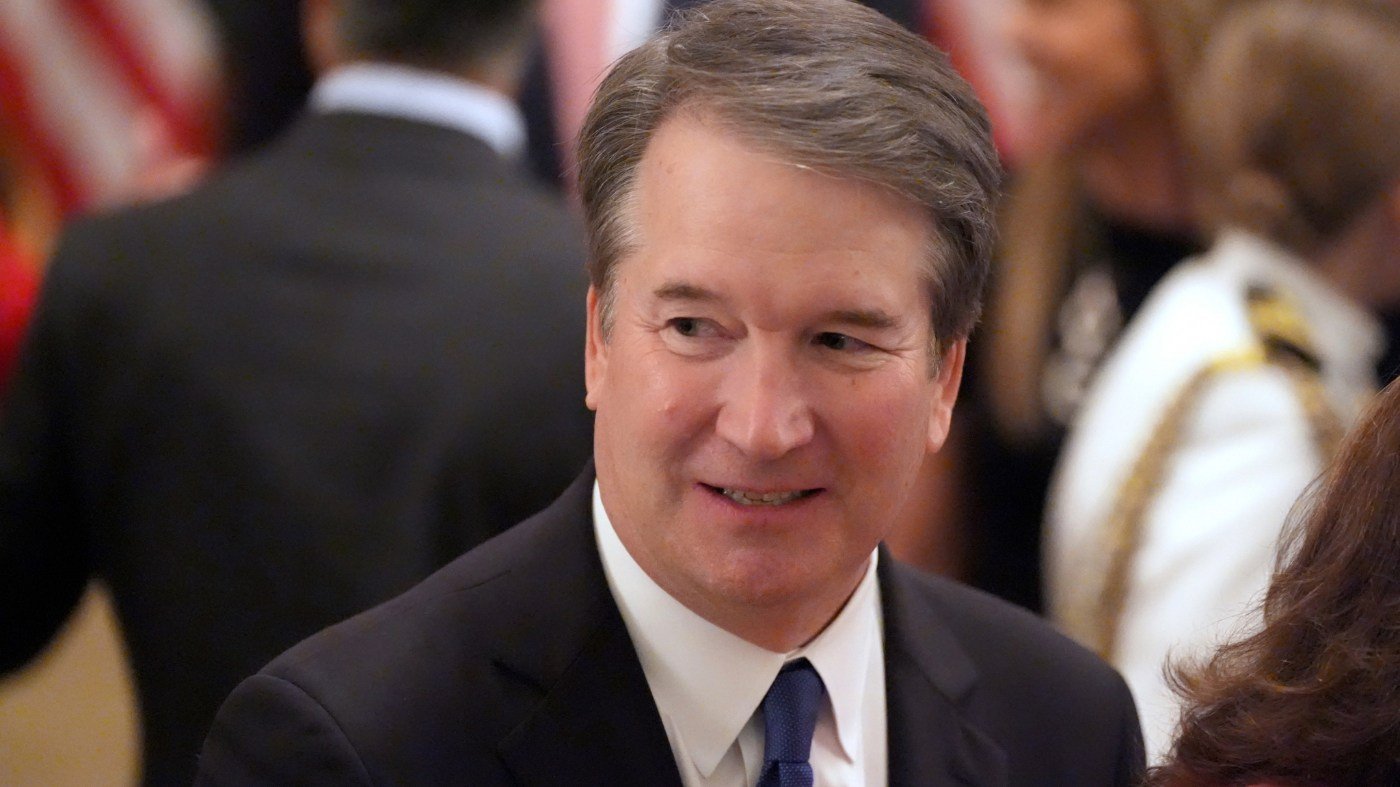
Justice Brett Kavanaugh, often a reliable vote for gun rights, may provide a path forward. In Trump v. Barbara, a birthright citizenship case, Kavanaugh wrote separately to argue that constitutional rights can be limited under "new circumstances" that were "largely unknown or unanticipated" at the time of ratification. His examples included illegal immigration and air travel, but the logic applies equally to firearms.
As Steven Lubet, a law professor and author of the original analysis, argues, the proliferation of semiautomatic weapons is a new circumstance that the founders could not have foreseen. If "new circumstances" can justify exceptions to birthright citizenship, they should also permit reasonable gun restrictions under the Second Amendment.
The court's decision could redefine the balance between individual gun rights and public safety. Gun control advocates fear the worst, but Kavanaugh's concurrence offers a glimmer of hope. The outcome will likely hinge on whether the conservative majority is willing to apply its own precedent flexibly.
Relatedly, the court has recently weighed in on other Second Amendment issues, including a Missouri redistricting dispute that touched on constitutional interpretation. Meanwhile, the Biden administration's approach to regulation continues to face legal challenges, as does its voting policy. These cases show that the court's conservative majority is willing to scrutinize government actions, but with Rahimi as a precedent, it may also accept pragmatic limits.