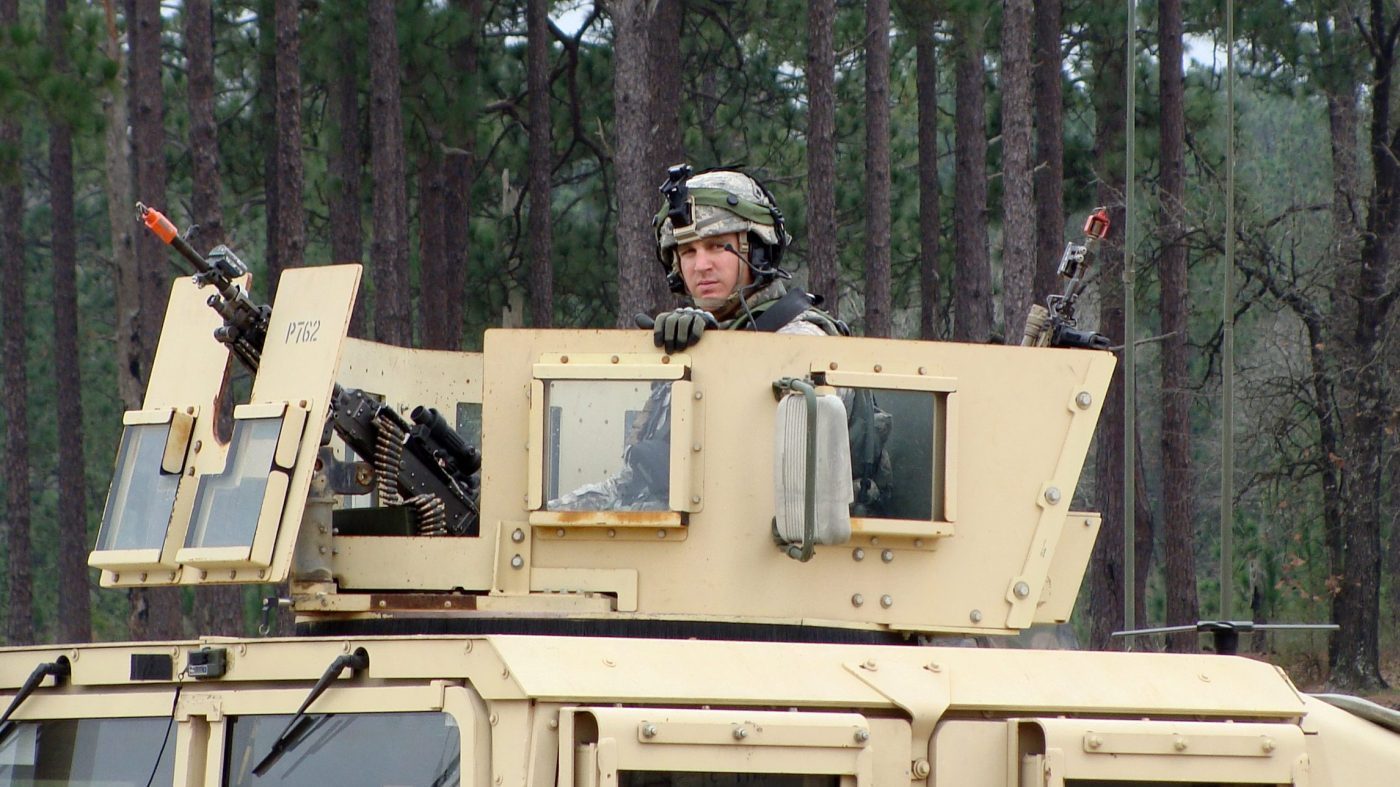
At Fort Polk in western Louisiana, the U.S. Army is rethinking how it prepares for future conflict. The installation, home to the Joint Readiness Training Center (JRTC), has long been the final proving ground for brigades before deployment. But now, the training is shifting from counterinsurgency to high-tech warfare, with a focus on drones, artificial intelligence, and autonomous systems.
Bryan Pickens, a retired special operations veteran with 14 combat deployments to Afghanistan and Iraq, warns that the military is lagging behind potential adversaries. "I often say we are on a rowboat while our enemies are escaping us on a jet ski," he said. "The Global War on Terror skills prepared us to fight dirt farmers. Not our peer enemies." Pickens, who has also advised Ukrainian forces, now trains U.S. and NATO troops on modern warfare.

To address these gaps, the Pentagon has announced a new Autonomous Warfare Command, led by a four-star general, to scale AI, robotics, and low-cost drone capabilities across the services. NewsNation has learned exclusively that part of this initiative includes an integrated technology system for the Army that connects equipment from different manufacturers, streamlining training and cutting costs. The first test bed is JRTC, in partnership with Forterra, a defense tech company specializing in autonomous ground systems.
Training Against a High-Tech Enemy
At JRTC, the 1st Battalion, 509th Infantry Regiment, known as "Geronimo," plays the opposing force, mimicking the tactics and equipment of U.S. adversaries. Geronimo soldiers are equipped with drones, advanced communications, and intelligence tools that replicate what troops might face from Russia, Iran, or China, according to Logan Morris, chairman of Fort Polk Progress and a former civilian aide to the secretary of the Army.
The challenge has been that each enemy system operates on its own platform, requiring soldiers to learn multiple interfaces and processes, which is time-consuming and expensive. The new system, called OASIS-Fabric and OneLink, aims to solve this by integrating data from various platforms into a single, cohesive picture. Phil Cotter, Forterra's head of growth, said, "What Geronimo is good at is flummoxing these units that come down [to Fort Polk]. They shouldn't have to also be burdened with trying to learn 50 different systems, 50 different battery chargers, 50 different handheld controllers and range limitations."
The platform acts as a "middleware and data layer" that allows disparate systems to communicate, Cotter explained. Scott Sanders, Forterra's chief growth officer, said the goal is to enable a young soldier under stress to plan a mission autonomously, without waiting for higher headquarters. "The soldier should be able to do all the mission autonomy planning right there," he said, "reducing cost, enhancing interoperability, and increasing the speed of decision-making at the tactical edge."
Morris noted that the system isn't just for Geronimo; it will also be available to the training units, allowing them to integrate and evaluate capabilities from multiple vendors seamlessly. If successful, the plan is to expand it to all Army training centers and eventually to combat operations.
Urgency for Transformation
Lt. Col. Trevor Jones, commander of Geronimo, wrote in a statement that the Army must "fail fast" to learn what works and what doesn't. "The risk of being outclassed by a rival military's transformation is very real with the current pace of technological change," he said. Forterra acknowledges the system may not be perfect initially, but argues that experimentation is critical to avoid falling further behind adversaries who are innovating rapidly.
The technology has already seen real-world use. Over the past year, Forterra sent 105 autonomous vehicles to Eastern Europe to support Ukraine's defense. Cotter said some of the underlying technology, refined in combat, is being applied to the Geronimo program. Sanders added that after successful tests in Ukraine, "We said, 'Let's roll this out broadly to the U.S. military, one training center at a time.'"
Security concerns remain, particularly regarding data protection. Cotter insists the platform is equipped to mitigate risks, though he declined to provide specifics. The move comes as the military faces increasing pressure to modernize, with questions about military readiness and legal limits swirling in Washington. The push also intersects with broader debates over defense spending and trade policy, as lawmakers scrutinize how the Pentagon allocates resources.
As the Army embraces this new approach, the hope is that Fort Polk will become a model for how to train against the weapons of tomorrow, ensuring U.S. forces are not left behind in the race to adapt.