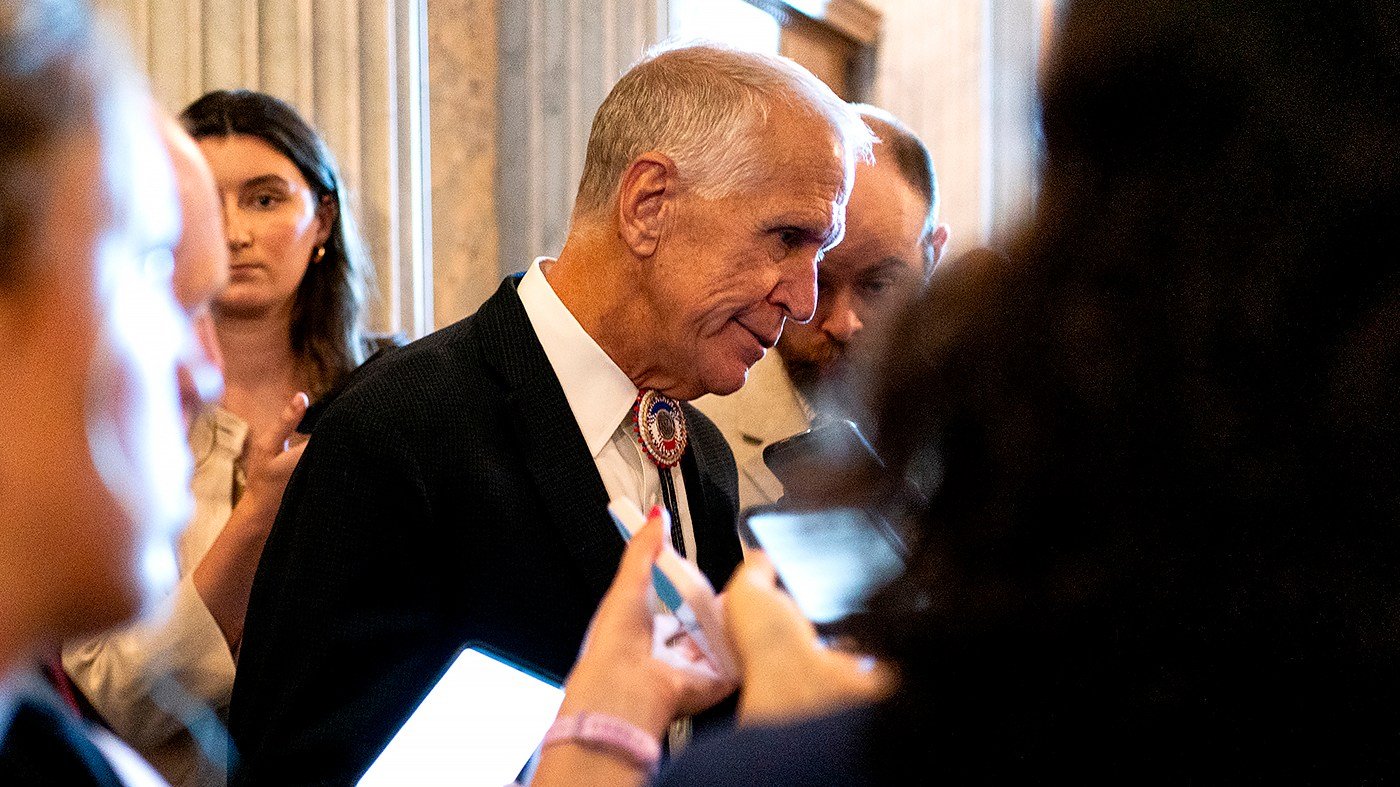
Sen. Thom Tillis (R-N.C.) on Sunday sharply criticized President Trump's recent agreement to purchase diesel fuel from Russia, arguing that the move undermines congressional efforts to hold Moscow accountable and undercuts the legacy of the late Sen. Lindsey Graham (R-S.C.).
Speaking on NBC News' "Meet the Press" with Kristen Welker, Tillis urged the president to implement the Russia sanctions bill that Congress sent to his desk rather than pursue energy deals with Moscow. "The president needs to move forward with the sanctions bill that we sent him. This agreement with pursuing Russian oil is essentially, I think, tarnishing Lindsey Graham's efforts to try and get the sanctions bill through," Tillis said.
He added: "So, the president should implement the sanctions bill, not be wide open to Russian energy."
The comments come after Trump announced Friday that Russia would supply the United States and global markets with diesel fuel. In a post on Truth Social, Trump said he had concluded a "highly successful discussion" with Russian President Vladimir Putin, in which it was agreed that Russia would "immediately supply over 300,000 Tons of Diesel Fuel to the American and Global Marketplace, another 500,000 Tons during the month of November, and 1,000,000 Tons immediately thereafter."
The deal lands just weeks before the midterm elections, where rising energy prices have become a central issue for voters. It also follows Trump's signing last month of a Russia sanctions bill into law, which allows for additional sanctions and tariffs against Moscow amid its ongoing war in Ukraine. That legislation, championed by Graham before his death, pushes for tariffs of up to 100 percent on the top five buyers of Russian energy or on countries assisting Russia in evading sanctions.
Tillis's rebuke is the latest sign of bipartisan fury over Trump's Russian diesel deal, with lawmakers from both parties expressing alarm that the administration is deepening energy ties with a sanctioned adversary. Critics argue the agreement could undermine the very sanctions regime that Congress sought to strengthen.
The timing is particularly sensitive given the administration's broader posture toward Russia. Just hours after Trump touted an energy ceasefire, Russia bombed a Kharkiv power plant, underscoring the fragility of any diplomatic understanding. Ukrainian President Volodymyr Zelensky is expected to seek details on that claimed ceasefire, and the diesel deal is likely to add to his concerns.
On Capitol Hill, some lawmakers are already pushing back with legislation. Rep. Brian Fitzpatrick (R-Pa.) has introduced a bipartisan bill to block Russian oil imports, reflecting unease that the administration's energy policy is at odds with congressional intent.
The White House has not yet responded to a request for comment from The Hill.