Approximately 1,000 American soldiers, accompanied by Abrams tanks, are scheduled to return to Lithuania by late October for a nine-month rotation. The Pabrade training area, which has hosted rotating US battalions since 2019, has been empty since June. These troops will be stationed in the narrow corridor between Belarus and Kaliningrad—a Russian exclave that Moscow has just declared it would defend with nuclear weapons.
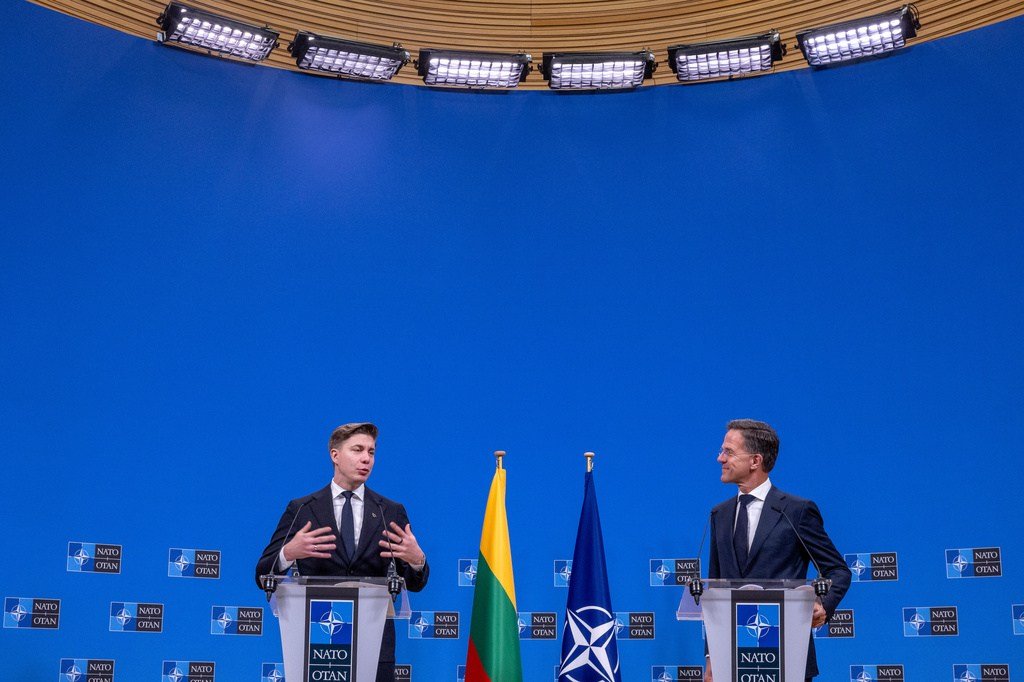
On September 30, Russia delivered a document to NATO governments, first reported by Reuters, warning that it would employ its entire arsenal if the alliance attempted to blockade Kaliningrad. NATO Secretary General Mark Rutte dismissed the threats as "not helpful." The following day, at the Valdai forum, Vladimir Putin stated that a direct attack would put the use of all Russia's weapons on the agenda "inevitably and immediately."
Rutte is correct to downplay the rhetoric. No blockade is being planned. Moscow is reacting to six months of inconsistent American signals regarding Lithuania, and the memo sets up a test it intends to conduct there.
Consider how the Kremlin interprets the record. In May, the Pentagon canceled the deployment of a 4,000-soldier armored brigade to Poland—the formation that normally supplies Lithuania's battalion. In June, roughly 1,000 Americans departed without replacement, and Defense Minister Robertas Kaunas said the next rotation was "under review." In August, according to NATO sources cited by Euronews, Pentagon policy chief Elbridge Colby urged Baltic officials to soften their tone toward Russia. On September 22, Lithuanian President Gitanas Nauseda announced the troops were returning. Eight days later, Politico reported that Colby had excluded the Baltics, Britain, and France from the Bergen Group, his working group on NATO's future. Russia's memo went out the same day. Colby is hosting that group in Poland.
In Moscow, a withdrawal, a return, and an exclusion in quick succession read as a commitment Washington has not settled.
Lithuania cannot be faulted for failing to spend on defense. NATO estimates its defense spending at 5.33 percent of GDP, the highest in the alliance and more than twice the 2.53 percent average for European allies and Canada. Kaunas proposed a permanent US base during a Pentagon visit in September, and Prime Minister Mindaugas Sinkevicius then told Bloomberg that Lithuania would "pay the bill" for one. On October 6, parliament voted 106 to 18 to advance removing the constitutional ban on foreign bases being sited there.
Russia has run this play against Lithuania before. In June 2022, Vilnius began enforcing EU sanctions on rail freight to Kaliningrad and Moscow threatened retaliation. On July 13, the European Commission issued new guidance; nine days later Lithuanian Railways resumed the shipments. The Kremlin took an important lesson: lean on the smallest frontline ally, and the bigger European capitals look for a way out. This dynamic echoes Washington's foes going sideways to bypass US strength.
The next test will probably stay below the Article Five threshold. The memo prepares the ground by recasting routine enforcement, such as boarding a sanctions-evading tanker, as steps toward a "blockade."
In May, Foreign Minister Kęstutis Budrys told a Swiss newspaper that NATO could "level" Russia's bases in Kaliningrad. In August, a NATO flight package including the new EA-37B electronic-attack jet circled near the exclave for almost two hours. In mid-September a Russian frigate fired two flares toward a Danish military helicopter. On October 3, Vilnius airport shut down for under an hour after a suspected drone crossed from Belarus, its second closure in three weeks. Lithuania has since invited Colby to see the airspace violations for himself.
A standoff on the rail line, sabotage, or harassment near Pabrade would force Washington to answer a question it has avoided. Does an ally kept out of the planning room still get the full guarantee?
American voters are unsure too. In the Chicago Council's 2025 survey, 55 percent backed using US troops if Russia invaded the Baltic states, compared to 62 percent for Poland. A crisis staged to look like Baltic overreach rather than invasion is designed to push that number below 50. Colby's August advice suggests parts of the administration already accept Moscow's premise. This approach may also be influenced by domestic political considerations, such as those seen in pre-midterm backlash over Russia deals.
Look at the map. The Suwałki Gap, the 65-mile strip between Kaliningrad and Belarus, has Poland on one side with a seat in Colby's room and Lithuania on the other side without one. The American battalions will be on the Lithuanian side.
Colby's case has logic. Thirty-two members agree slowly, and Washington wants Europe's largest militaries to carry conventional defense so that US forces can concentrate on China. None of that requires shutting out the allies nearest the threat in the week the threat was put in writing. With a third aircraft carrier heading to the Middle East as President Trump weighs further action against Iran, a Baltic crisis this winter would force the choice between theaters that Colby's strategy was built to avoid.
The fix is cheap. Washington's Europe force review is due to finish in December, and Trump said on October 5 that he would "certainly look at" a base in Lithuania. Making the nine-month rotation permanent, and giving the Baltic states a seat at the next Bergen meeting, would cost a fraction of one carrier deployment and tell Moscow plainly that the western commitment to Vilnius is not under review. Tokyo, Seoul and Manila would see the same message. Such a move would also align with efforts to counter Russian aggression, like those in bipartisan bill to block Russian oil.
Without that, Russia will keep probing a guarantee the Pentagon has allowed to be cast into doubt. The soldiers arriving at Pabrade will be the first Americans in its path.
Imran Khalid is a physician and has a master's degree in international relations.