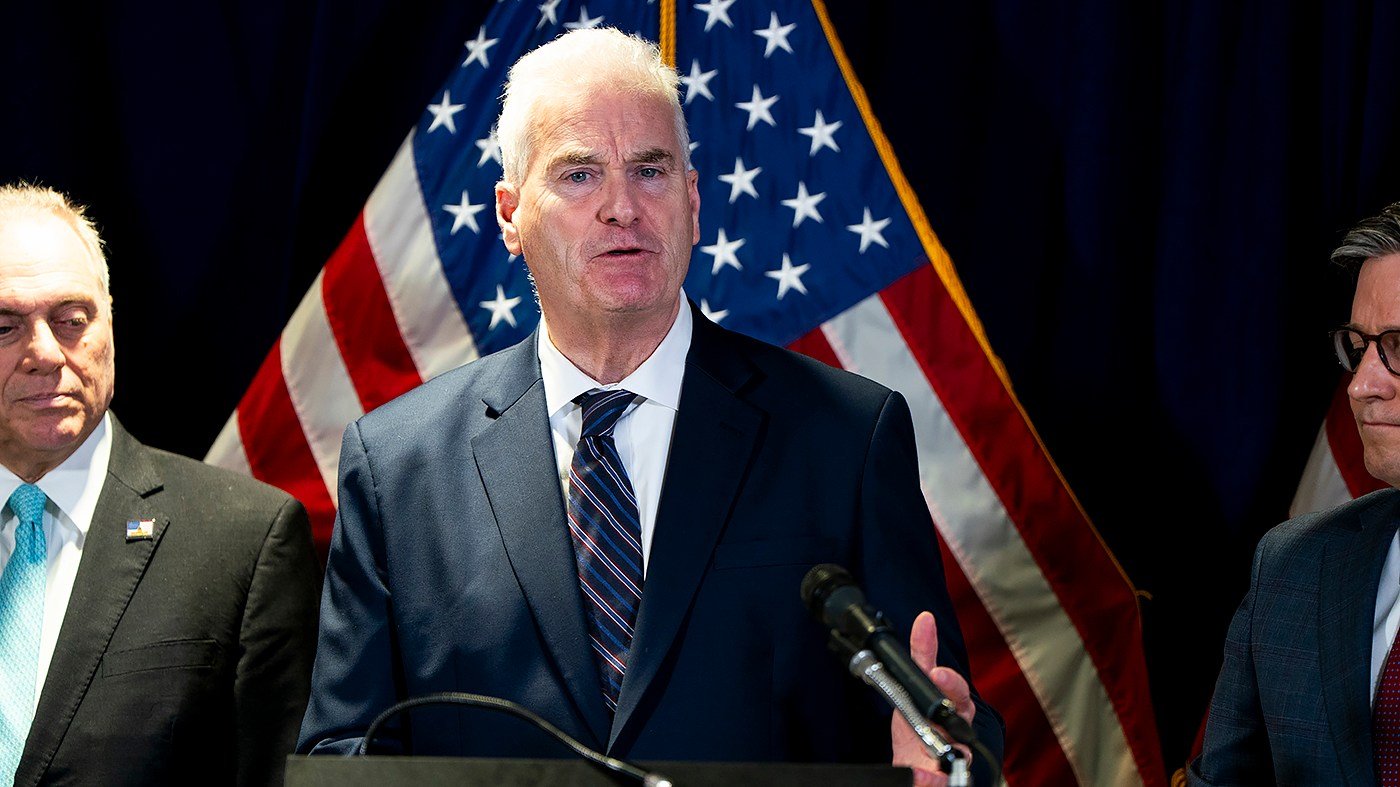
House Majority Whip Tom Emmer (R-Minn.) expressed strong support on Sunday for President Trump's role in deciding whether to livestream the execution of convicted Fort Hood shooter Nidal Hasan. Emmer, who noted he personally opposes the death penalty, told ABC's Jonathan Karl on "This Week" that he is "so happy" to have a president who will make decisions in the best interest of the American people.
"He will hold the criminals and the terrorists accountable," Emmer said. "And, frankly, if you come to this country or you're radicalized in this country to kill Americans and disrupt our way of life, there should be significant consequences."
Trump announced on Saturday that he would "make a decision ultimately" about streaming the execution, weighing the potential deterrent effect against the graphic nature of the event. "There are two thoughts: Don't show it and show it, because you know by showing it, maybe other people won't be doing what he did," Trump told reporters outside the White House. "So I'll make a decision ultimately. I know what the military would like to do, but we'll make a decision."
The White House confirmed last week that Defense Secretary Pete Hegseth recommended Hasan be executed by firing squad on Dec. 3, and Trump approved the method. The decision has sparked debate, with Pope Leo rejecting the death penalty as the Pentagon prepares for the unprecedented livestream possibility.
Hasan, a former Army psychiatrist, opened fire at Fort Hood in November 2009, killing 12 soldiers and one civilian, and injuring 32 others—the deadliest mass shooting on a U.S. military installation. During his 2013 trial, where he acted as his own attorney, Hasan admitted in his opening statement, "The evidence will clearly show that I am the shooter," and said he carried out the attack in response to U.S. wars in Afghanistan and Iraq.
The last U.S. execution by firing squad was of Army Private Eddie Slovik in 1945, who was convicted of desertion during World War II. Slovik's execution was the first for desertion since the Civil War. The most recent military execution overall was of Private John A. Bennett in 1961, who was hanged for rape and attempted murder, according to the Death Penalty Information Center.
Vice President Vance told reporters Friday that he would not watch the execution if livestreamed, adding he didn't "know that that's actually going to happen." The controversy comes amid broader political tensions, including pre-midterm backlash over Trump's Russia diesel deal and the execution livestream debate.
Emmer's comments align with the administration's tough-on-crime stance, but the decision to stream a federal execution would be unprecedented in modern U.S. history. Legal experts and human rights groups have raised concerns about the potential for sensationalism and the impact on the public's perception of state-sanctioned killings.
As the Dec. 3 date approaches, Trump's decision will likely intensify the national conversation around capital punishment, transparency in government, and the treatment of convicted terrorists. The White House has not indicated a timeline for the announcement.