A bipartisan push to place a national memorial honoring the 18 million women who served on the home front during World War II on or near the National Mall has stalled in the Senate, despite passing the House with overwhelming support late last year.
The World War II Women’s Memorial Location Act would authorize the memorial’s placement in close proximity to the existing World War II Memorial, a site supporters argue is the most fitting and prominent location to tell the story of the “Rosies”—the women who built planes, tanks, and ships, and kept the U.S. economy running while men fought overseas.
Congress in 2022 passed bipartisan legislation authorizing a national memorial to these women, and the effort is now in the site selection and approval phase. But without the location act, the memorial cannot be placed on the National Mall.
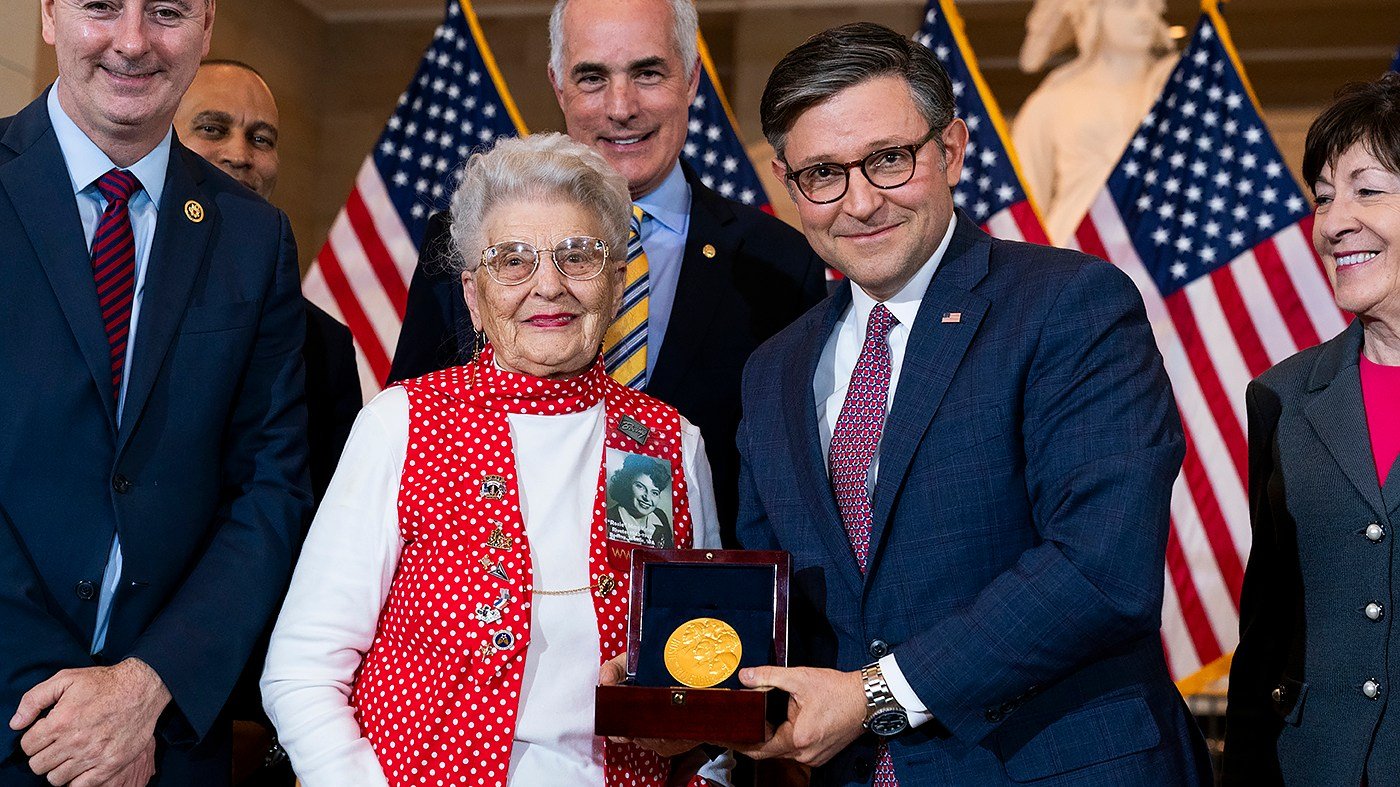
Mae Krier, a 100-year-old original Rosie who worked on Boeing aircraft from 1943 to 1945, is urging the Senate to act. “Each year, there are fewer living Rosies,” she wrote in a recent op-ed. “Those of us left hope to see firsthand the day that our efforts, and our sacrifices, are remembered and honored on the National Mall alongside our memorials commemorating America’s heroes.”
Krier, who helped establish National Rosie the Riveter Day in 2017 and accepted the Congressional Gold Medal on behalf of all Rosies in 2024, said she remains as determined as she was at 17, when she left her North Dakota hometown for Seattle to join Boeing. “We answered our country’s call when freedom was at stake,” she wrote. “Now, I ask our nation to ensure that our story, and the lessons it carries, will never be forgotten.”
The Rosies included not only riveters but also mechanics, pilots, engineers, electricians, code breakers, autoworkers, lumberjacks, farmers, and ranchers. Their work helped secure Allied victory and reshaped perceptions of women’s contributions to the workforce and national service.
As the nation marks America250, supporters see a unique opportunity to recognize the Rosies as enduring symbols of civic pride and sacrifice. The memorial would educate future generations about the indispensable role women played in securing victory and advancing freedom.
The bill’s path through the Senate remains uncertain. Krier is calling on the Senate to pass the measure and President Trump to sign it. “I refuse to let that be the end of our story,” she wrote.
Similar bipartisan efforts to honor historical contributions have recently gained traction, such as a bipartisan House duo urging colleagues to honor midterm results, underscoring the potential for cross-party cooperation on commemorative legislation. Meanwhile, other high-profile honors, like the Nobel Medicine Prize honoring pioneers of brain light-switch research, show that recognition of long-overlooked achievements can transcend political divides.
With the number of living Rosies dwindling, time is of the essence. The Senate’s next move will determine whether their legacy finds a permanent home on the National Mall.