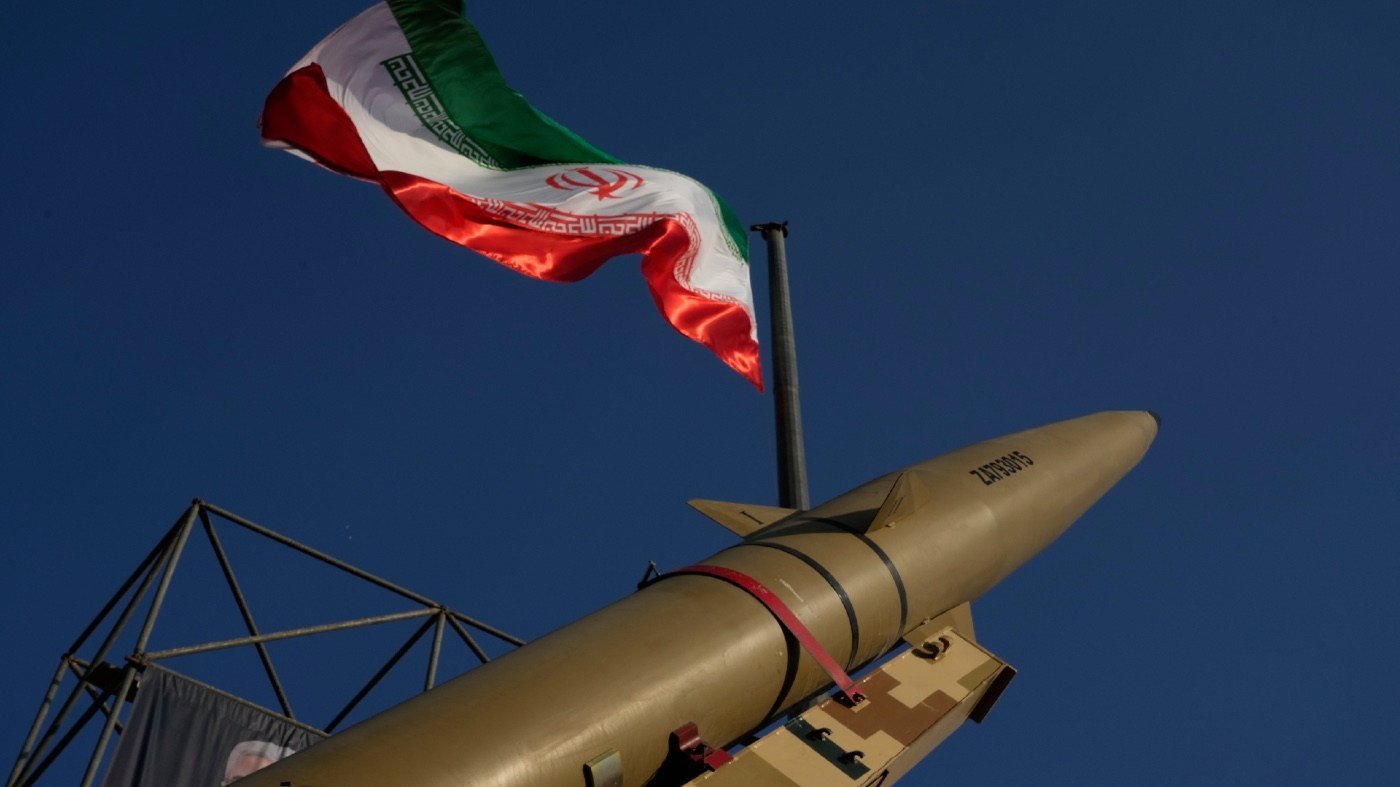
When Washington slapped tariffs on Chinese goods in April 2025, Beijing retaliated by restricting rare earth exports—a move that rippled through allied supply chains worldwide and continues to strain economies. Similarly, after US and Israeli strikes on Iran in February, Tehran widened the battlefield to include Gulf states. These actions illustrate a growing trend: America's adversaries are increasingly resorting to horizontal escalation—expanding conflict into new regions or domains—to counter US influence.
European defense ministers met in Brussels last month to address the surge in gray-zone attacks, and even Switzerland's typically quiet government has voiced alarm over Russian activities. The discovery of an explosive-laden drone at Germany's Leipzig Airport in August underscores the pattern: Beijing, Tehran, and Moscow are deliberately targeting US allies and interests across multiple fronts simultaneously.
Horizontal escalation poses a unique challenge for US policymakers, who tend to organize strategy vertically—separating NATO, trade, and Taiwan into distinct silos. Adversaries are exploiting this by operating sideways, connecting issues that Washington treats as unrelated. China, Russia, and Iran have different capabilities and goals, but they share a common desire to reshape the US-led international order. Chinese President Xi Jinping often speaks of "major changes unseen in a century," a phrase he used in 2023 while standing beside Vladimir Putin in Moscow, urging the Russian leader to "push it forward together."
These rivals cooperate when convenient. Tehran supplied Moscow with drones during Russia's darkest days in Ukraine, and Russia has reciprocated with advanced military aid, reportedly helping Iran develop supersonic cruise missiles. China has eased pressure on both by providing dual-use goods for Russia's defense industry and continuing to buy sanctioned Iranian oil. Even without formal coordination, their actions reinforce each other: Russia's war drains Western air defenses, Iran ties down US naval assets in the Middle East, and China's buildup forces Washington to reserve capabilities for a potential South China Sea confrontation.
This exposes a fundamental vulnerability in American power. Alliances multiply US strength, but they also provide adversaries with a wider array of targets. An opponent unwilling to confront the US directly can threaten a weaker ally, sabotage infrastructure, or disrupt supply chains. To counter this, Washington and its allies must first deny easy opportunities for horizontal escalation by diversifying vulnerable systems, hardening what cannot be diversified, and building deeper stocks of critical military assets. Allies should also be encouraged to shoulder more of the burden.
Yet resilience alone is insufficient. Trying to defend every vulnerability at all times would hand adversaries a permanent advantage. Instead, the US and its partners should develop their own horizontal escalation options. As EU Defense Commissioner Andrius Kubilius put it, "if we are facing painful hybrid threats or actions, our answer should be painful in a similar way… Not similar means [necessarily], but pain should be at the same level." Germany's response to the Leipzig incident—shipping additional IRIS-T air defense missiles and attack drones to Ukraine—exemplifies this approach.
The same logic should guide competition with China and Iran. Economic coercion need not be answered only with economic measures; gray-zone attacks need not be met only at the site of the attack. By creating uncertainty about where and how the US will respond, Washington can deter adversaries from escalating. Moreover, horizontal escalation can inadvertently strengthen alliances. When China cut European supply chains in retaliation for US tariffs, Washington forged a new critical minerals partnership with Europe. Similarly, China's support for Iran and Russia's assistance to North Korea may push Gulf states and Asian allies to reassess their ties with Beijing and Moscow.
Combating horizontal escalation requires US allies to guard against sabotage, share more of the deterrence burden, and coordinate closely to protect critical technologies and supply chains. But it also demands American leadership and dependability to ensure that openness remains a source of strength for the West rather than a vulnerability. As adversaries go sideways, Washington must be prepared to meet them there.