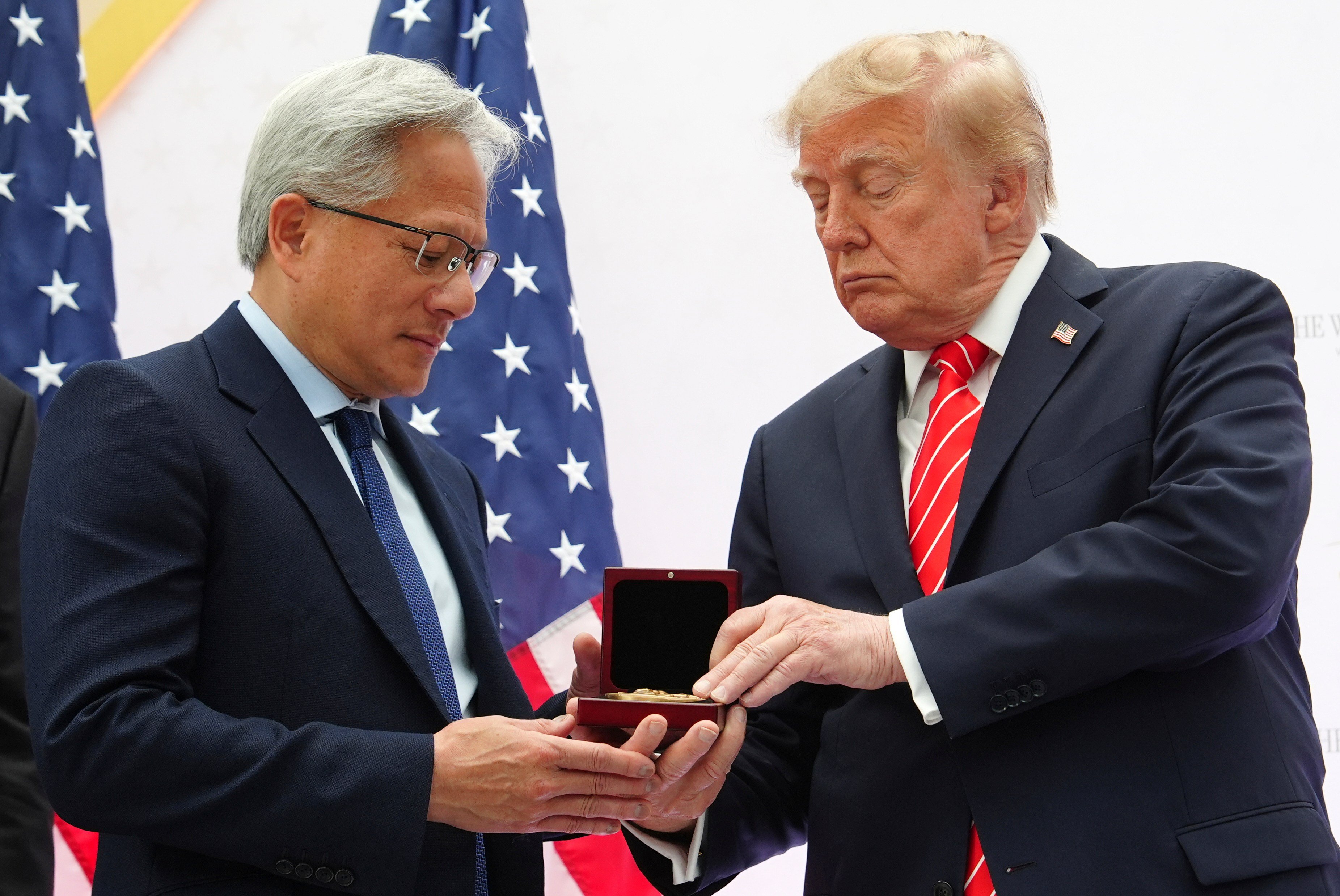
In a stunning reversal, Nvidia's board reinstated Jensen Huang as chief executive on Monday, a decision driven directly by President Trump's intervention. The move caps a dramatic saga that began with Huang's ouster in November over an admitted affair with a woman accused of links to Chinese intelligence, and it has ignited a political firestorm in Washington.
Trump claims credit, sparks debate
Trump openly acknowledged his role, telling CNBC, "I believe my intervention was very important," and adding that the board "decided to do what we wanted them to do." In a social media post, he praised the decision as "correct and proper." His defenders argue that restoring Huang is crucial for maintaining U.S. leadership in the AI race against China. But critics contend Trump has sidelined serious national security concerns to stabilize markets and reward a powerful ally.

The security questions center on Alice Huang, no relation to Jensen, who has been accused of maintaining contact with China's Ministry of State Security through fall 2025. The Chinese government dismissed the allegations as a smear, and Alice Huang has remained silent. Jensen Huang also reportedly had a second affair with an Nvidia executive, complicating his return.
Bipartisan backlash grows
The reinstatement drew rare bipartisan criticism. Sen. Pete Ricketts (R-Neb.) noted the board had previously cited Huang's lack of "candor," arguing his behavior does not merit reinstatement. Sen. Kevin Cramer (R-N.D.) warned of "national security risk," pointing to the extortion threat posed by a Chinese asset. Even former Speaker Newt Gingrich urged Congress to investigate what he called "a national security issue of enormous proportions."
Democrats, set to take control of Congress in January, are vowing thorough probes. Soon-to-be Speaker Hakeem Jeffries called the decision "indefensible, irresponsible and incomprehensible," promising a "swift, thorough and wide-ranging investigation" into Nvidia's actions. Senate Minority Leader Chuck Schumer pledged Democrats would "wield their full power to investigate any wrongdoing." Sen. Elizabeth Warren demanded the administration explain what "input" was given, while Hillary Clinton dubbed the affair "Supergate."
Market surge masks deeper questions
Wall Street reacted euphorically: Nvidia shares soared 31%, adding nearly $1 trillion to its market value and boosting Huang's personal fortune by an estimated $33 billion. Yet the political and legal uncertainties remain unresolved. Trump cited Attorney General Todd Blanche's statement that the government has no evidence of unlawful conduct by Huang, but that narrow legalistic framing leaves open what might happen if new evidence emerges—and whether Huang now enjoys impunity due to his ties to the president.
As GOP lawmakers demand answers about the White House's role, and with Schumer promising a full Democratic probe, the controversy is far from over. The episode also raises questions about board independence, as Trump's personal push has blurred the line between corporate governance and presidential power. For now, Huang is back, but the political and security fallout is only beginning.