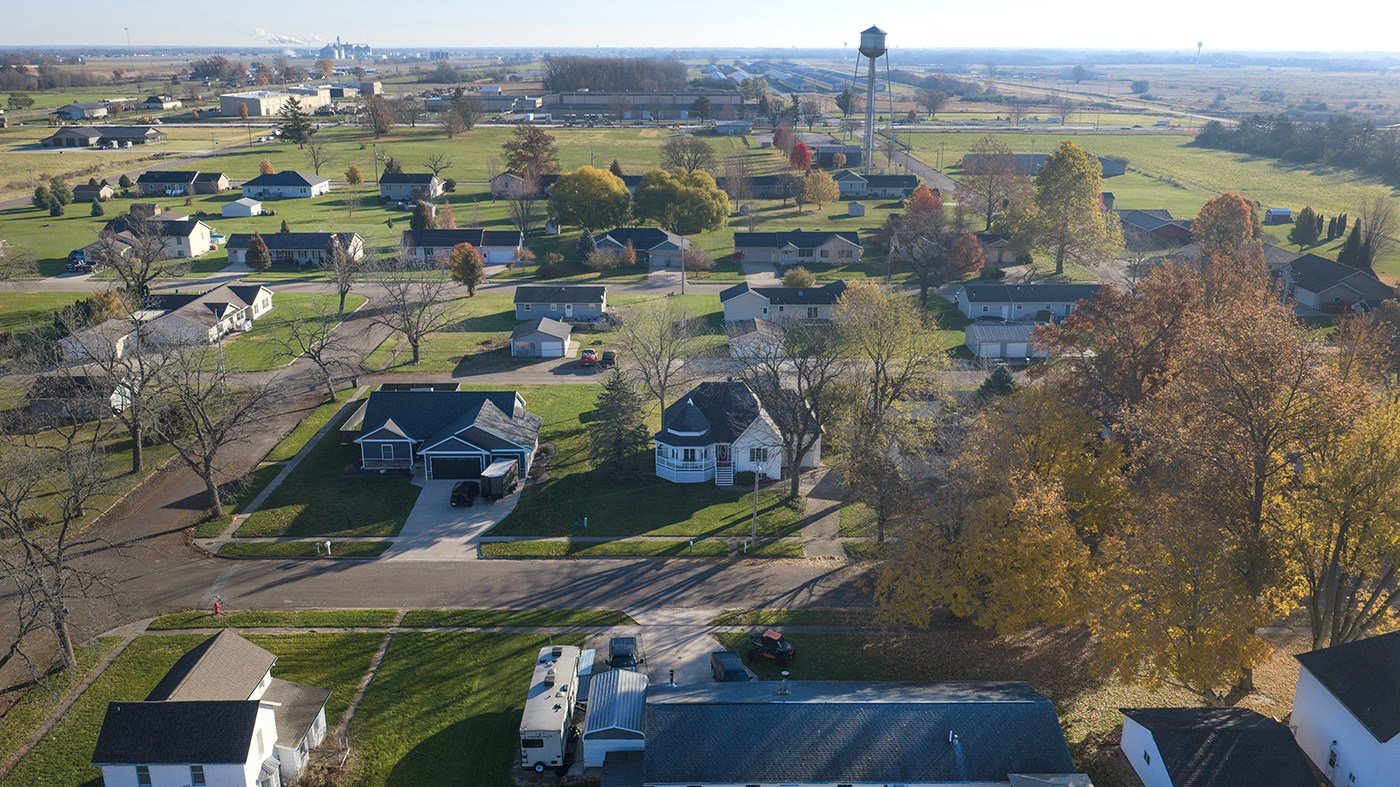
President Trump and Iowa's incoming governor, Rob Sand, are both distancing themselves from a politically explosive decision over the Army's plan to detonate lead-containing munitions at the Iowa Army Ammunition Plant in Middletown. The standoff has left residents in the area uncertain about their safety and has sparked questions about how the situation was allowed to develop.
The Army had scheduled the controlled detonation for Wednesday, but on Monday Trump announced he would not proceed if Sand or the Eighth Circuit Court of Appeals objected. Neither did, and Sand issued a statement insisting the federal government should make the call. This back-and-forth has done little to reassure Iowans, who could be exposed to airborne lead particles if the explosion goes ahead.
Lead is a potent neurotoxin, particularly dangerous to children, and can cause developmental delays, lowered IQ, and behavioral problems. Adults face risks of kidney damage, cardiovascular issues, and fertility problems. The Environmental Protection Agency has warned that lead does not degrade, meaning any contamination could persist in the environment for years.
Experts say that even a controlled detonation will produce a toxic debris cloud. "It seems like coming to the conclusion of a controlled explosion is the best of a bad set of options," said Alex Souchen, a military historian at the University of Guelph. "They're going to try to limit the release of any sort of toxic byproduct, but it's going to cause a debris cloud regardless of what happens."
The Army's short notice and the potential health risks have triggered public outrage and legal challenges. Environmental groups sued over the EPA's emergency permit, and the detonation was postponed twice before landing on Wednesday. The Army claims the detonation is necessary to prevent an accidental explosion that could create a large-scale hazardous debris field, but critics question why the problem was not addressed earlier.
"When the military says it's discovering that there was an issue ... what was happening before? How are they monitoring it? How did it just suddenly become an issue right now and not five months ago?" Souchen asked. "That to me is the bigger question ... the fact that there's been a long-term storage problem, and what does that mean for the other ordnance that's being stored at that facility?"
On Monday, Trump wrote that he personally supports the detonation but would defer to the courts and Sand. "If he or the Courts do not agree, we will have no choice but to not proceed with the controlled removal of these hazardous materials, and be forced to hold the incoming Governor responsible for any and all death or destruction caused by this very unfortunate, and longterm, situation," Trump said.
Sand, a Democrat who defeated Republican Zach Lahn in the gubernatorial race, kicked the decision back to the White House, saying the federal government should decide but that "Everyday Iowans are entitled to know how Middletown came to this situation, and learn why the administration believes this is the best path forward." The appeals court also declined to halt the detonation, denying an emergency request from environmental groups.
Peter DeCarlo, an air pollution expert at Johns Hopkins, noted that an intentional explosion gives authorities more control over the timing and wind conditions, but the risk of lead exposure remains. "If this dust gets transported through the air, wherever it lands ... it will be there for some time," he said, adding that children are especially vulnerable if contaminated dust settles indoors.
The situation has also drawn attention to the military's oversight of hazardous materials. As the clock ticks toward Wednesday, Iowans are left waiting to see whether the detonation will proceed and who, ultimately, will be held accountable. For more on the political dynamics, see Trump's federal intervention and his DOJ speech on similar executive actions.