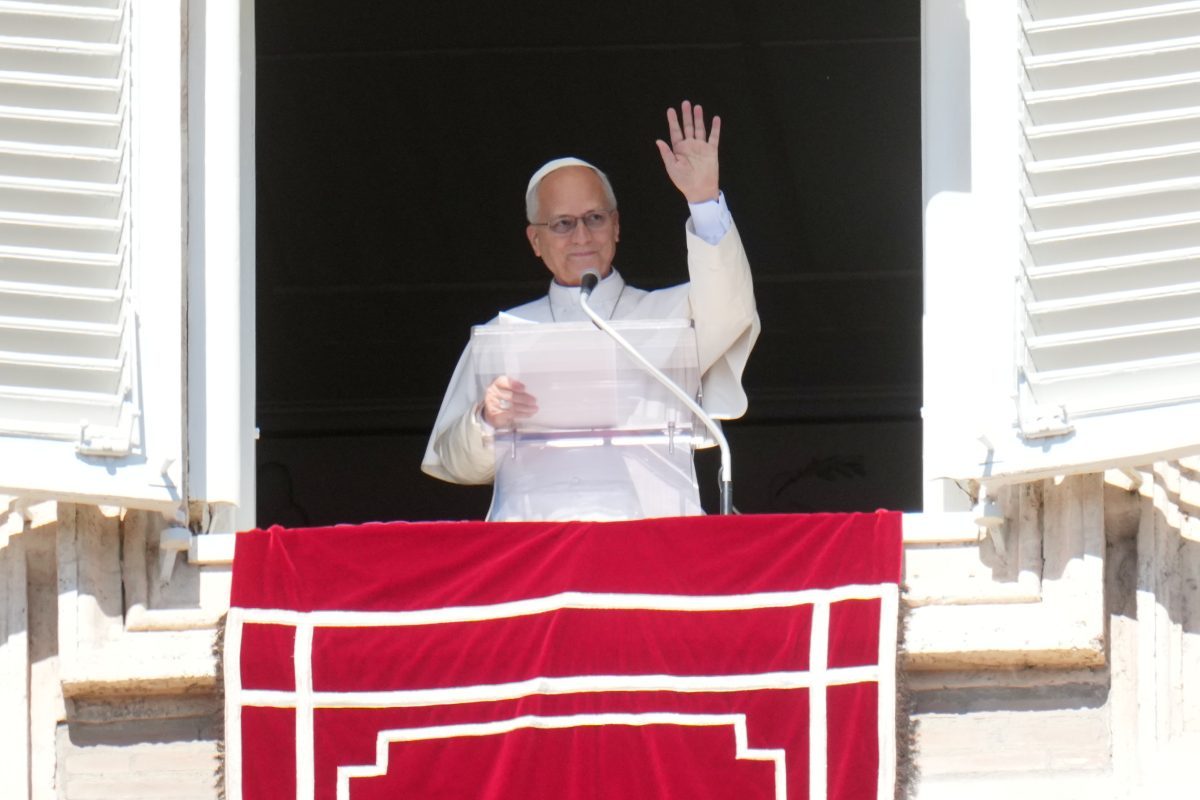
Pope Leo XIV disclosed on Sunday that he will undergo an operation in the coming days to excise a nodule from his lung, marking the first significant health episode of his 17-month tenure as leader of the Roman Catholic Church.
The 71-year-old pontiff, the first American to occupy the papacy, informed the public during his customary noon blessing that the growth had been detected at an early stage and was "circumscribed" — meaning it is small and confined to a specific area. The Vatican said the expected recuperation period following the procedure would be one week.
The pope's decision to speak openly about his medical condition from the balcony overlooking St. Peter's Square represents a notable departure from the customary reticence of the Holy See on matters of papal health. He expressed gratitude to the assembled faithful for their support and placed himself in their prayers.
A pontiff's transparency
Leo's announcement comes as he navigates a global church facing numerous challenges, from internal governance debates to international diplomacy. His willingness to share details about his health may be read as part of a broader effort to project candor and accessibility — a style that has characterized his young papacy.
The nodule's discovery was made early, according to the pope's own account, which could improve the prognosis. Medical experts note that small, localized lung nodules are often benign, but surgical removal is a common precaution to rule out malignancy. The Vatican has not released further clinical details, and it remains unclear whether the nodule was found during a routine examination or because of symptoms.
The surgery will require the pope to convalesce for approximately seven days, according to the Holy See. That timeline suggests a minimally invasive procedure may be planned, though no official confirmation has been provided. During his recovery, scheduled audiences and public appearances may be adjusted or delegated.
Political and diplomatic implications
For a figure who serves both as a spiritual leader and a head of state, any health disruption carries political weight. The Vatican's diplomatic machinery, which Leo has sought to energize on issues ranging from migration to climate change, will continue under the direction of the Secretariat of State. Still, the pope's personal engagement in high-stakes negotiations — including behind-the-scenes efforts on conflicts in Europe and the Middle East — could be temporarily curtailed.
Leo's pontificate has already been marked by a willingness to address contentious topics with unusual directness, a trait that has drawn both praise and criticism. His health disclosure fits that pattern. It also invites inevitable speculation about succession and the future direction of the church, though the Vatican has stressed that the surgery is routine and the recovery brief.
The pope's age, 71, places him in a demographic where medical vigilance is standard. His predecessor, Francis, faced numerous health scares during his papacy, often with limited public detail. Leo's approach appears more forthcoming, at least in this instance.
As the Vatican prepares for the procedure, the global Catholic community — and the wider world of politics and diplomacy — will be watching closely. A week is a short time in the life of the church, but in the fast-moving world of international affairs, even a brief absence can have ripple effects.
The pope concluded his Sunday remarks with a request for prayers, a gesture that underscores both his personal faith and his recognition that his health is now a matter of public concern. Further updates are expected from the Holy See in the days ahead.