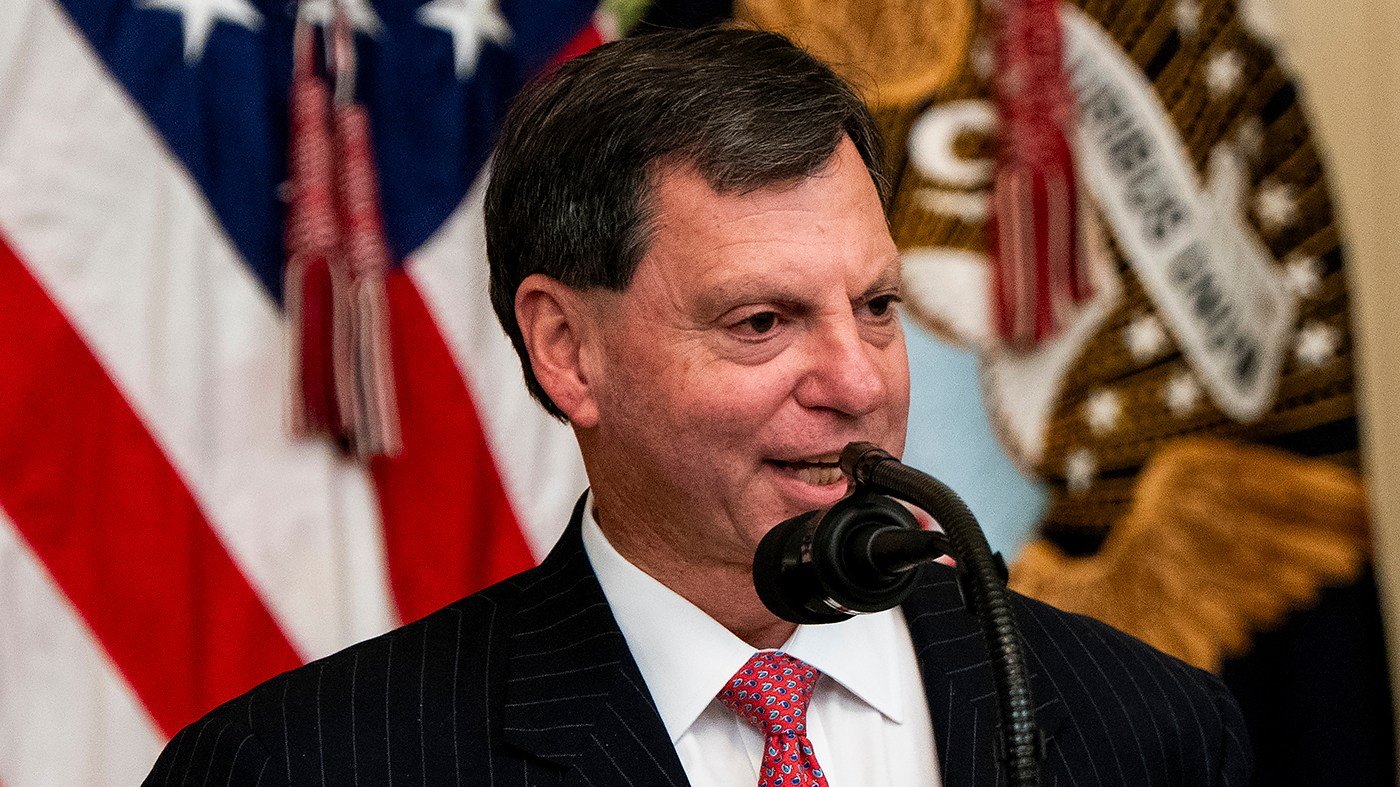
Social Security Commissioner Frank Bisignano said Monday that the program will remain viable for another nine decades, offering a bullish outlook even as Washington debates how to address its long-term financing gap.
Speaking on CNBC's "Squawk Box," Bisignano noted the program's longevity: "This is a long journey. It's 90 years old. It'll be around for another 90 years." His comments come as the Social Security Administration (SSA) prepares to announce the annual cost-of-living adjustment (COLA) on Wednesday, following the release of September inflation data by the Bureau of Labor Statistics.

The COLA for 2026 was set at 2.8%, benefiting roughly 75 million recipients. The Senior Citizens League projects the 2027 COLA could reach 3.5%, which would mark the fourth-highest increase since 2008. That adjustment would raise the average monthly benefit from $1,941.76 to $2,009.72, based on SSA data from August.
"People are very, very grateful for it, and they look forward to it," Bisignano said of the annual COLA, underscoring the program's importance to retirees and disabled Americans.
However, the program's financial outlook remains a point of contention. Earlier this year, Bisignano and other Trump administration officials warned that the Old-Age and Survivors Insurance (OASI) Trust Fund would only be able to pay 78% of scheduled benefits starting in the early 2030s. That projection has fueled bipartisan proposals to shore up the system, ranging from raising the retirement age to increasing payroll taxes.
President Trump has repeatedly suggested investing Social Security trust funds in the stock market to boost returns. During an Oval Office event last week, he argued, "I wanted to ride with Social Security being fully invested in the stock market in the first month of my first year. Had we done that, Social Security right now would be the richest entity anywhere in the world." He added that his proposal faced "tremendous criticism by the Democrats and some Republicans" who viewed it as too risky.
The debate over Social Security's future is likely to intensify as the trust fund depletion date approaches. Lawmakers on both sides have offered competing plans, but no consensus has emerged. Bisignano's optimistic prediction, while reassuring, does little to resolve the underlying fiscal challenges.
As the SSA prepares to release the new COLA, retirees and policymakers alike will be watching closely. The adjustment, while modest, provides some relief against inflation, but the larger question of the program's long-term sustainability remains unresolved.

