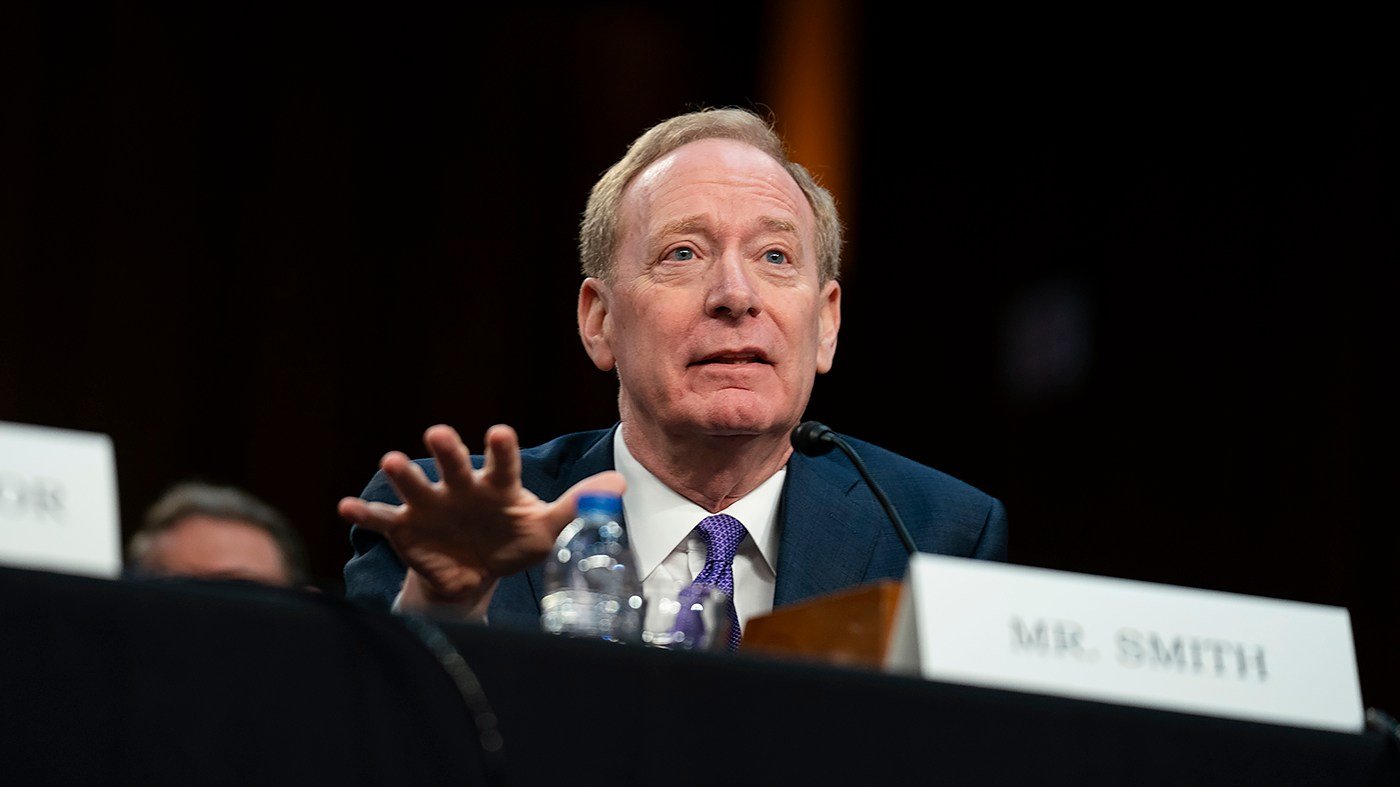
Microsoft President Brad Smith is pushing for stricter government oversight of artificial intelligence, saying the technology currently faces fewer safety requirements than everyday consumer products like milk and washing machines. In a BBC interview released Sunday, Smith argued that self-regulation by tech companies is no longer enough to ensure public safety.
Smith acknowledged that the prospect of government evaluators approving AI products before they hit the market "makes people nervous," especially in the United States. But he stressed the disparity in oversight: "Right now, your washing machine is subject to more safety rules than AI. Every carton of milk that you see in the grocery store is subject to safety rules and inspection."

He drew a parallel to aviation, noting that airplanes are certified by regulators in multiple countries before they can carry passengers. "You can get on a plane in London. You can fly to Athens or New York. Either way, that plane has been certified so that it is considered safe by the aircraft regulators in both countries," Smith said.
The Microsoft executive called for a "safety brake" on AI systems, likening it to circuit breakers in homes and emergency brakes on trains and buses. He also suggested that companies should have a legal duty to notify victims when an AI-powered system causes a breach.
Smith's comments come as the White House has secured voluntary commitments from major AI developers—including Google, Anthropic, Meta, OpenAI, xAI, and Nvidia—to implement robust internal controls and external auditing. But Smith warned that such self-regulatory efforts are insufficient. "If it's left to the industry alone, frankly, the good companies will do what you want. It's the companies that are not as responsible that you need to worry about," he told the BBC.
The debate over AI regulation is intensifying in Washington, where lawmakers are grappling with how to balance innovation and safety. Smith acknowledged the risk of overregulation, saying, "We should always worry that regulation can become too heavy-handed. It can slow innovation, and I think President Trump is right to remind us to think about, even worry about those concerns."
But he argued that the current pace of AI development is outpacing safety measures. "AI is moving forward faster than the speed of safety. That's not good for the protection of the public. It's not even good for the industry itself," Smith said.
Smith's remarks add to a growing chorus of tech leaders and policymakers calling for more robust AI governance. The issue has become a key political flashpoint, with some Republicans wary of government intervention and many Democrats pushing for stricter rules. As the political landscape shifts ahead of the midterms, AI regulation could emerge as a defining policy battle.
For now, Smith's comparison to milk and washing machines underscores the regulatory gap. "Just remember," he said, "your washing machine is subject to more safety rules than AI."