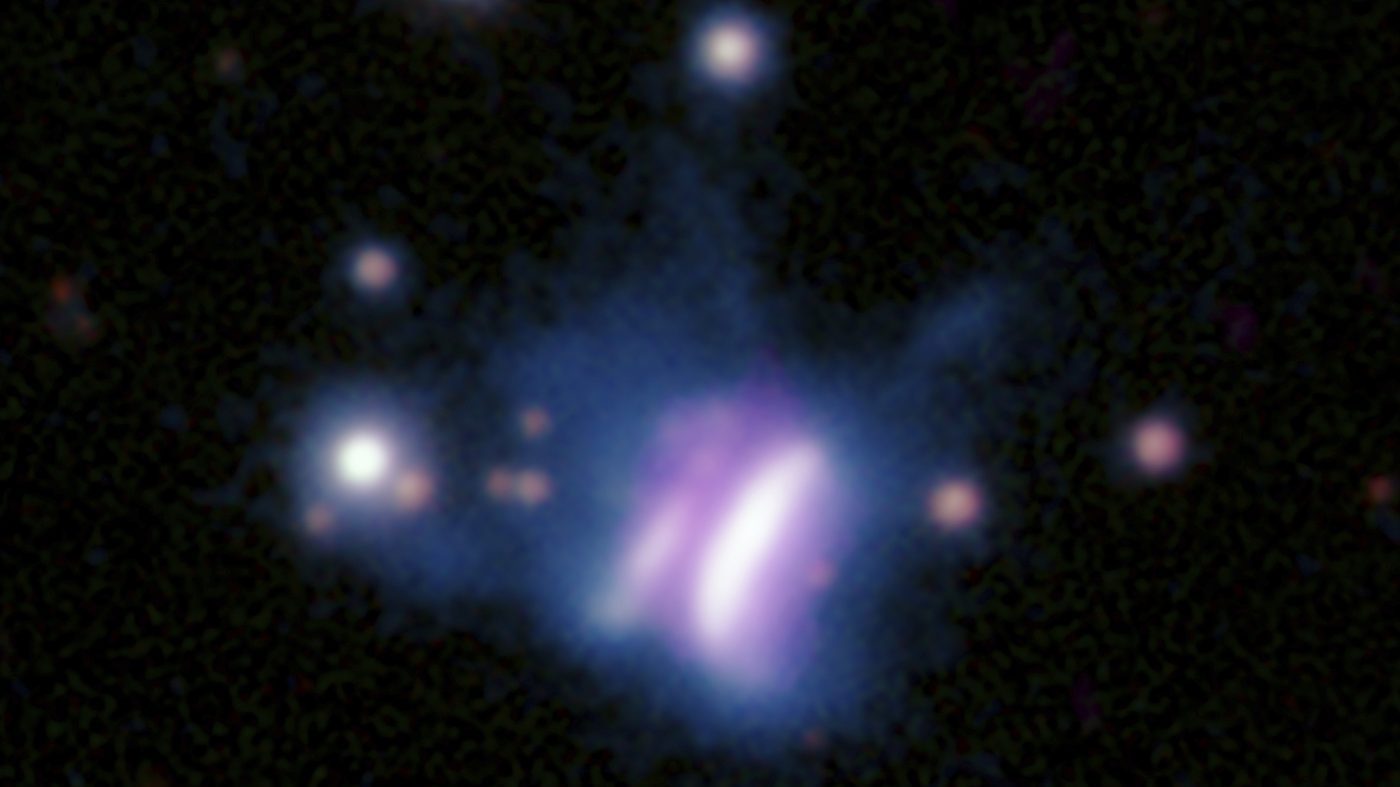
Astronomers have identified a second-generation planet orbiting a white dwarf star, according to a study published in Nature Astronomy. The discovery, based on data from NASA's Hubble Space Telescope, marks a rare find: a world born from the ashes of a star that had exhausted its nuclear fuel.
The team focused on the white dwarf HS 0209+0832, the dense core left behind after a low-mass star shed its outer layers. By analyzing nearly 100 chemical signatures from the star's first observation in 1999, researchers concluded that these elements originated from material ejected during the star's death throes, which subsequently coalesced into a massive gas planet.

Unlike most known planets—including those in our solar system, which are first-generation worlds formed from the debris of a star's birth—this new planet is a second-generation object. It formed from the cast-off remnants of the dying star itself, a process that has been theorized but rarely observed.
The study's lead author noted that the chemical composition of the planet can only be produced under the extreme conditions of a dying star, providing strong evidence of its origin. The planet is estimated to be a gas giant roughly the size of Jupiter, though it is currently losing its atmosphere at a rapid rate.
Despite this atmospheric loss, astronomers believe the planet is likely to survive as the white dwarf cools. Once the star reaches a stable temperature, the planet could remain in a stable habitable zone for millions of years, raising intriguing possibilities for long-term planetary stability.
This discovery adds to a growing body of research on planetary systems around white dwarfs, which are often seen as harbingers of a star's fate. It also challenges assumptions about where and how planets can form, suggesting that even after a star's death, new worlds can emerge.
The findings have broader implications for understanding planetary evolution and the potential for life in extreme environments. While the planet itself is unlikely to host life, its existence demonstrates that planetary formation can occur in the most unexpected places, offering a glimpse into the distant future of our own solar system.
Researchers plan to continue studying HS 0209+0832 and other white dwarfs to uncover more examples of second-generation planets, which could reshape our understanding of stellar and planetary lifecycles.