The White House's escalating confrontation with Ukrainian President Volodymyr Zelensky over a diesel agreement with Russia has fractured President Trump's own political base, triggering a public spat between a top Trump adviser and far-right activist Laura Loomer.
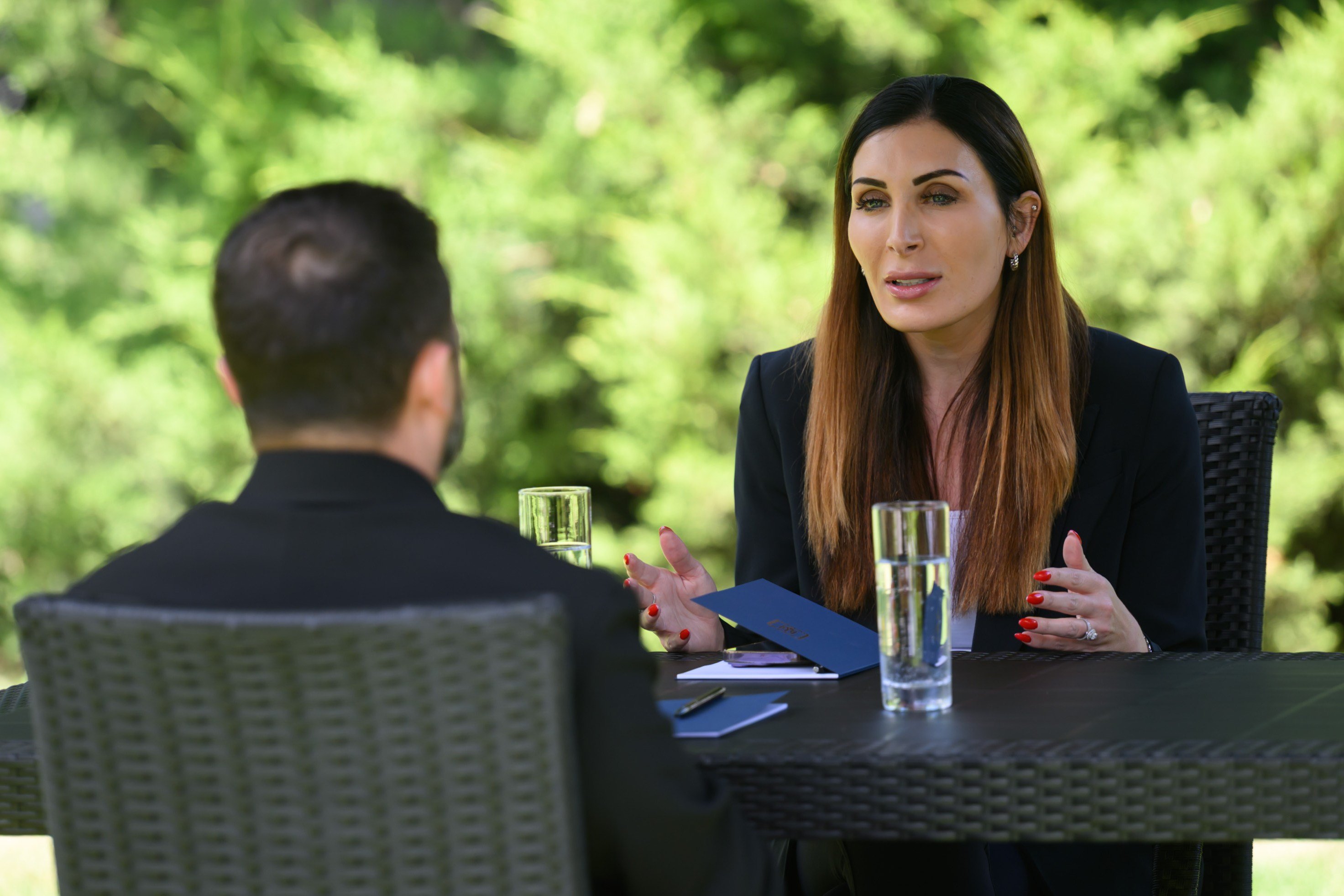
Loomer, a vocal Trump loyalist who has previously advised the president informally, took to X on Sunday to defend Zelensky, citing her July interview with him in Kyiv. She recounted that Zelensky had praised Trump and expressed eagerness to negotiate an end to the war, but insisted that any deal must not amount to Ukraine's unconditional surrender to Moscow.
Alex Bruesewitz, whose consulting firm manages several of Trump's most-followed social media accounts, responded sharply. In a post aimed at Loomer, he accused Zelensky of calling Trump "weak" and of striking Russian oil refineries immediately after the president announced a diesel deal with Putin. "Let's stop pretending that he's a good ally," Bruesewitz wrote, adding that if Loomer remained in contact with Zelensky, she should urge him to stop undermining Trump and harming American interests.
The clash comes after Trump suggested Saturday that Ukraine should replace Zelensky with a more pliable leader, following Zelensky's criticism of the White House's decision to lift sanctions on Russian diesel. Trump blamed Zelensky for rising diesel prices, saying the Ukrainian leader "wants to make problems for the world."
The dispute quickly drew in Rep. Dan Crenshaw (R-Texas), a staunch advocate of military aid to Ukraine. Crenshaw criticized Elon Musk's remarks echoing calls for new Ukrainian leadership, prompting Bruesewitz to retort that Crenshaw, as an outgoing backbencher, should not obstruct Trump's peace efforts. Crenshaw fired back with a "free civics lesson," arguing that increasing leverage is essential to any credible negotiation.
The infighting underscores the political pressure Trump faces over energy costs ahead of the midterms. His agreement with Putin to funnel Russian diesel to global markets has drawn bipartisan criticism, with Zelensky calling it a "birthday gift" to the Russian leader and warning it would fund Moscow's war effort. Ukraine's subsequent strike on a major Russian refinery further inflamed tensions, and Trump declared an energy ceasefire that Zelensky says Russia has already violated.
As the MAGA coalition wrestles with these divisions, the episode highlights the fragility of Trump's support for Ukraine policy. While some allies, like Loomer, see strategic value in backing Zelensky, others within Trump's orbit view any dissent as disloyalty. The rift also exposes broader GOP fractures over the president's approach to Russia, with several Republican lawmakers voicing alarm about the deal's implications for the party's electoral prospects.
Analysts remain skeptical that the diesel agreement will meaningfully lower prices, casting doubt on its economic impact. Meanwhile, Trump's threats to cut off intelligence and arms to Ukraine, reported earlier this week, have added another layer of uncertainty to an already volatile standoff.
For now, the public war of words between Bruesewitz and Loomer—once aligned in their support for Trump—illustrates how the Ukraine issue has become a flashpoint within the president's inner circle, with potential consequences for both foreign policy and domestic politics.