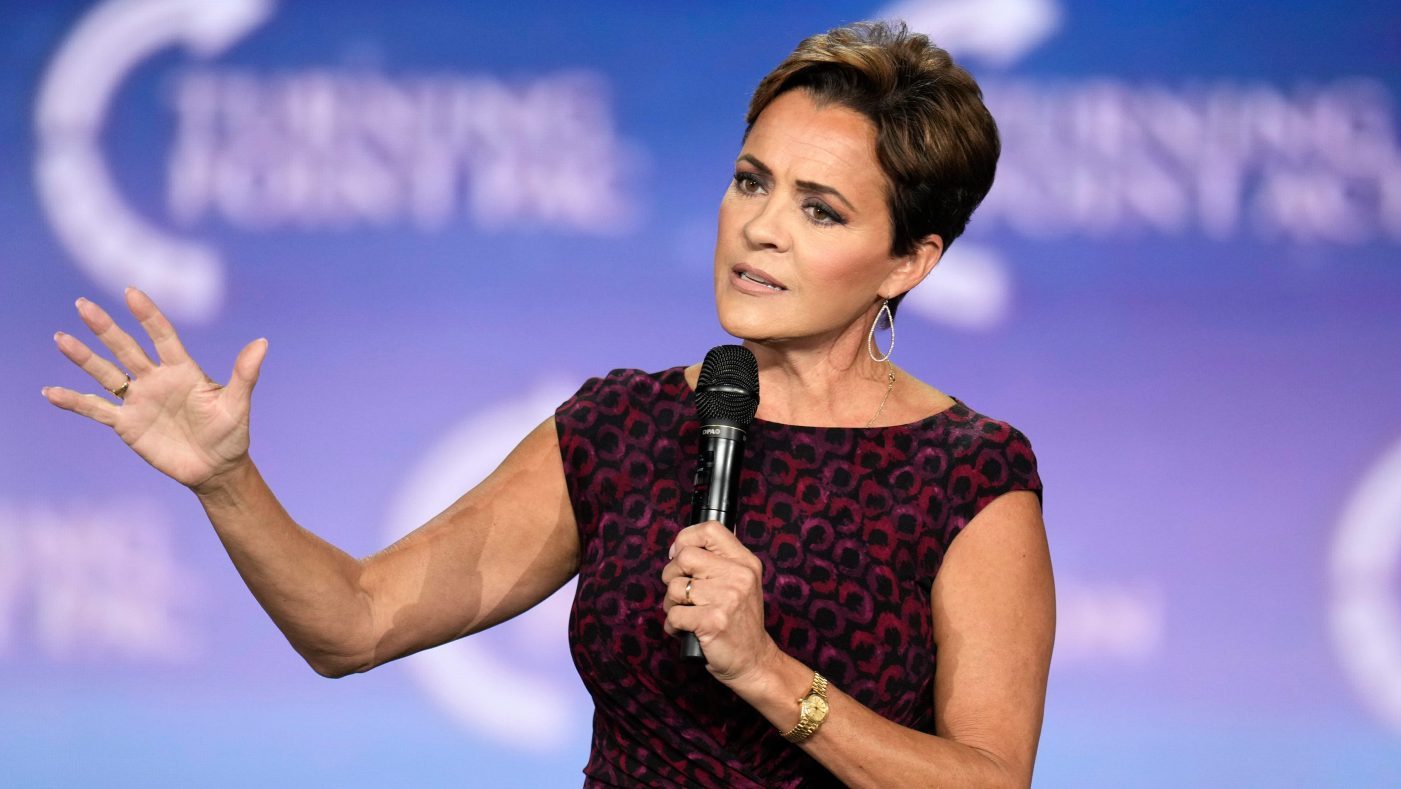
The Supreme Court on Tuesday declined to review an appeal from Andrew Parker, an attorney who faced sanctions while representing former Arizona GOP gubernatorial candidate Kari Lake in a 2022 lawsuit challenging the state's use of electronic voting machines. The high court offered no explanation for its refusal, effectively upholding the sanctions imposed by a lower court.
Parker's legal challenge centered on a lawsuit filed in April 2022, when Lake and Republican Mark Finchem were running for governor and secretary of state, respectively. The suit sought to force election officials in Maricopa and Pima counties to abandon electronic voting systems, claiming the machines were unreliable and vulnerable to manipulation. Both candidates ultimately lost their races.
U.S. District Judge John Tuchi dismissed the lawsuit in August 2022 for lack of standing. Later, in 2023, he ordered Parker and co-counsel Kurt Olsen to pay $122,200 in sanctions after determining their claims were frivolous. In his ruling, Tuchi emphasized the need for deterrence, writing, "Failing to impose meaningful sanctions here might very well encourage others to follow suit by lending their credibility to documents filed in court without facing any real consequence if their certifications prove hollow or incomplete."
A divided panel of the 9th U.S. Circuit Court of Appeals affirmed the sanctions in spring 2025. Parker's attorney, Nathan Lewin, argued to the Supreme Court that the sanctions were an attempt to chill "politically disfavored litigation," pointing to a dissent from six 9th Circuit judges who objected to the full court's refusal to rehear the case. Lewin warned that allowing the sanctions to stand would "close the door to creative, aggressive, or novel claims and arguments for any client or lawyer unable to afford the cost of a sanctions order."
Maricopa County's attorneys rejected that characterization, asserting that Parker and Olsen were not penalized for bringing an unconventional or politically unpopular case. "Petitioners were sanctioned because they made objectively false and misleading statements in documents that they signed and filed in a federal district court," they wrote. They also accused the lawyers of "unreasonably and vexatiously multiplying the proceedings" by ignoring warnings about the potential frivolousness of their claims.
The Supreme Court's decision comes amid broader debates over election integrity and the role of courts in adjudicating such disputes. Critics of the sanctions have compared them to judicial overreach, while supporters argue they are necessary to maintain professional standards. The case also highlights ongoing tensions over legal challenges to election procedures.
This is not the first time the Supreme Court has weighed in on this matter. In 2024, the justices rejected a separate request from Lake and Finchem to revive their original lawsuit. Parker's petition in this case was filed individually, and Olsen was not listed as a party.
The high court's refusal to hear the appeal leaves the 9th Circuit's ruling intact, meaning Parker must pay the sanctions. Legal experts say the decision could have broader implications for how courts handle similar election-related lawsuits, potentially discouraging lawyers from filing claims without solid evidentiary support.
As the 2026 midterm elections approach, the case serves as a reminder of the legal boundaries surrounding election challenges. While courts remain open to legitimate disputes, they are increasingly willing to penalize baseless claims, a trend that may shape future litigation strategies.