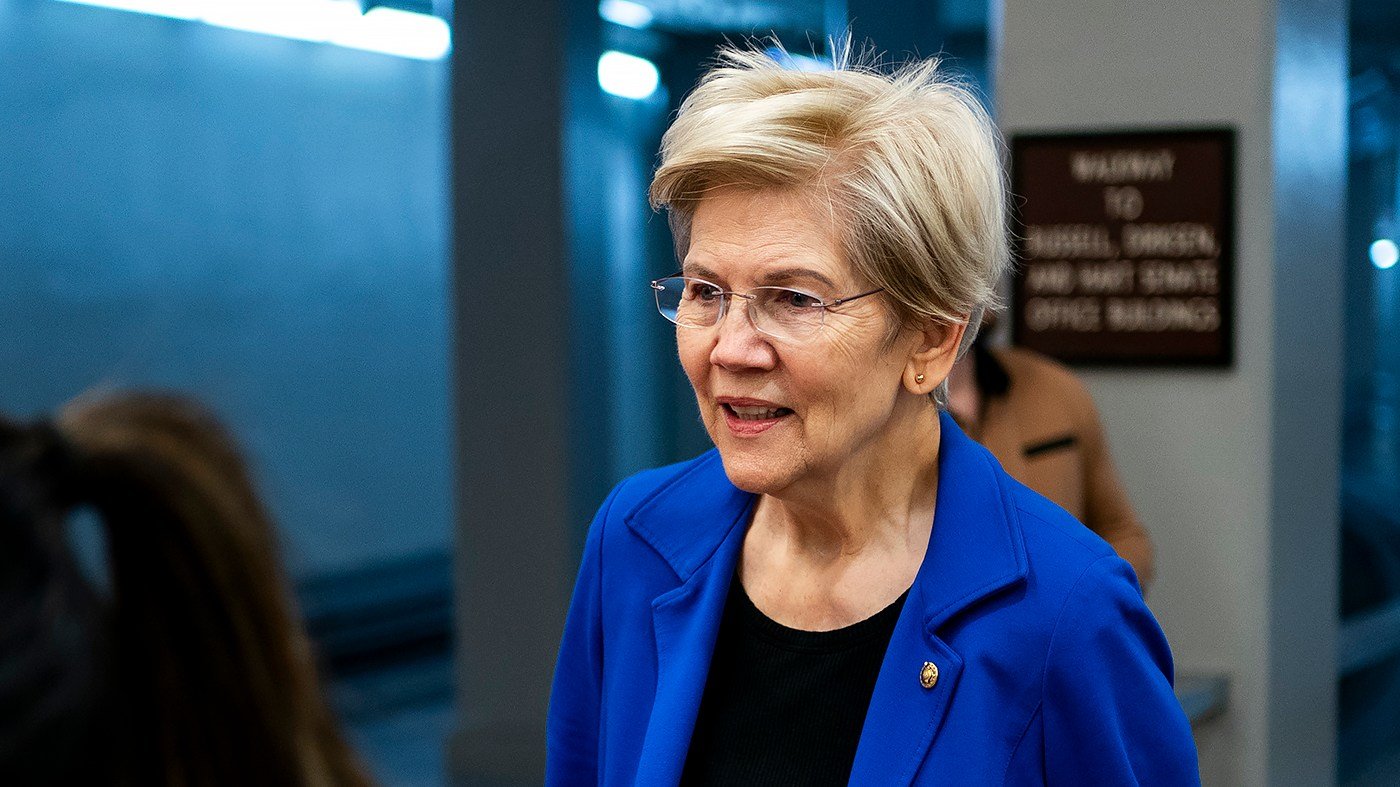
Sen. Elizabeth Warren (D-Mass.) is on track to assume the chairmanship of the Senate Banking Committee, a powerful platform from which she intends to intensify her scrutiny of corporate America. Known for her consumer advocacy since the 2008 financial crisis, Warren has been a relentless critic of big business and shows no intention of easing up once she takes the gavel.
“Accountability is coming. If you’re a Wall Street executive, Big Tech CEOs, giant corporations that have been cheating people, you should be worried,” Warren said Tuesday at the Popular Mandate Conference in Washington, D.C.

Warren has served as the ranking member of the Banking panel for the past two years, working alongside Chair Tim Scott (R-S.C.). With Democrats winning control of both chambers in last week’s midterms, Warren is next in line to lead the committee. A Banking aide said she is preparing to focus on issues that have defined her career and resonated with voters, including affordability, industry accountability, and corruption.
Before entering politics, Warren was a law professor specializing in personal finance and middle-class economic issues. She joined the Senate in 2013 after playing a key role in the Obama administration’s response to the financial crisis and championing the creation of the Consumer Financial Protection Bureau (CFPB).
“Warren has been a key player on financial regulation for her entire career going back to the Obama administration,” said Brian Gardner, chief Washington policy strategist at Stifel. “She’s had influence over policy, but she’s never been Banking Committee chair. Given that banking and financial services are among the top priorities she cares about, this is the ultimate moment for her to push legislation.”
Warren is signaling that she will use the committee’s oversight powers aggressively from the start. Banks, cryptocurrency, private equity, and consumer lending are likely targets, according to Gardner. She also plans to scrutinize Trump administration officials and Trump family businesses, especially their crypto ventures, which Democrats have repeatedly criticized.
“Warren plans to use the power of oversight to hold Donald Trump, his administration, and his cronies accountable for making life unaffordable for working people in order to line their own pockets,” the Banking aide said.
Beyond oversight, Warren is seeking legislative victories. She has focused on housing policy and aims to build on the bipartisan 21st Century ROAD to Housing Act, which passed this summer and became law without President Trump’s signature. That law streamlines federal review for housing construction and includes restrictions on private equity investors buying single-family homes. “The idea is simple: homes are for families, not corporations,” Warren said, adding that lawmakers “should do more to stop Wall Street from buying up homes.”
Sen.-elect Troy Jackson (D-Maine) expressed interest in joining the Banking panel and echoed the need for housing action. “Housing’s a big issue across this country right now,” Jackson said, calling for another bill to address apartment, condo, and mobile home costs.
Warren is likely to target private equity beyond housing. Brad Lipton, director of corporate power and financial regulation at the Roosevelt Institute, noted that private equity’s impact on everyday life—buying up businesses, daycares, and veterinary clinics—has become a growing concern for economic populists. Warren has introduced legislation to hold private equity firms liable for debts of companies they control.
Her agenda also includes criticizing consolidation in food and healthcare, calling for a criminal investigation into Bank of America over anti-money laundering violations, and pressing the Pentagon to address price gouging by defense contractors. Lipton predicts affordability and corruption will be central themes, particularly the sense that the system is rigged against working families.
With her track record, Warren’s ascension to Banking chair marks a significant shift in the committee’s direction. As the new Democratic majority takes shape, Warren’s leadership is expected to bring heightened scrutiny to the financial sector and beyond.