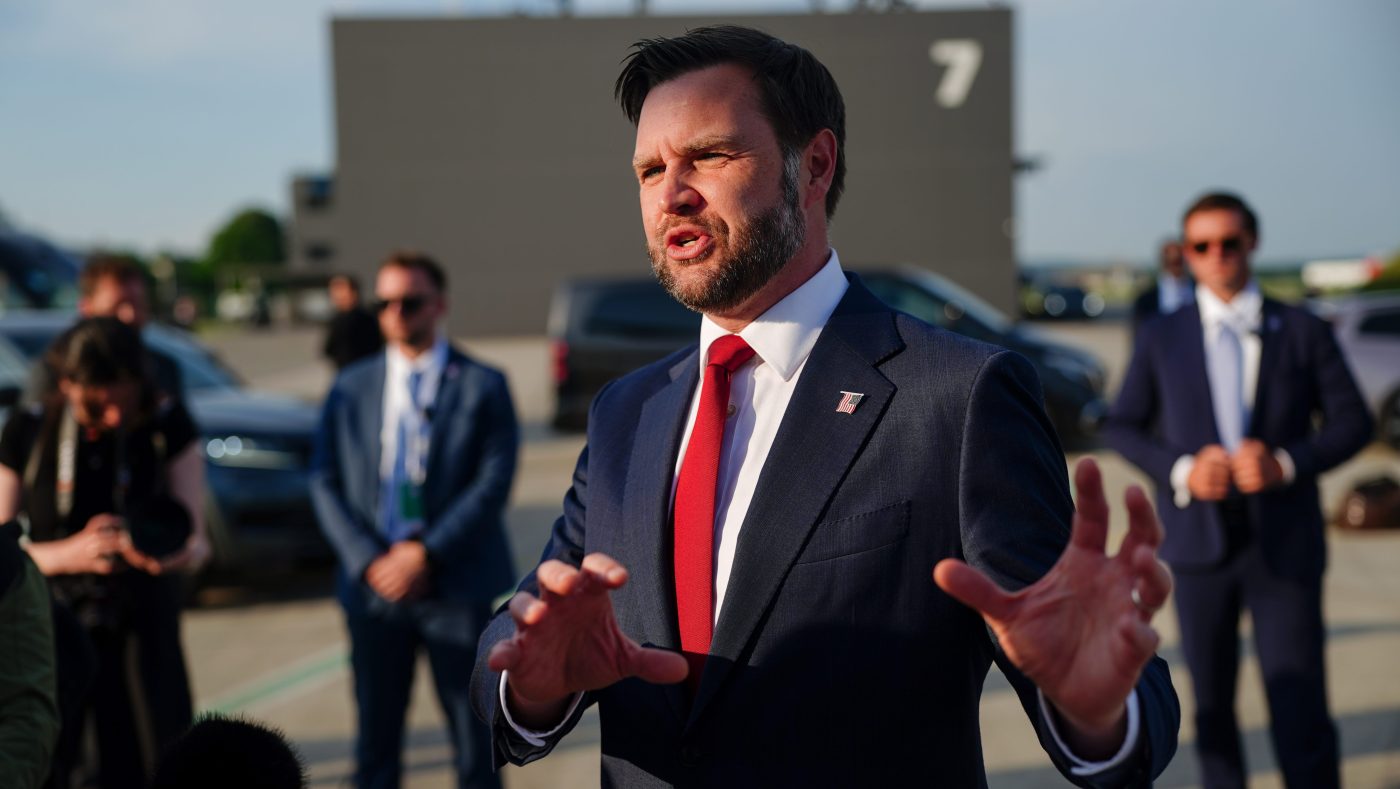
Vice President Vance declared Monday that Iran has agreed to allow international nuclear inspectors back into the country, marking a potential breakthrough in ongoing negotiations between Washington and Tehran aimed at de-escalating Middle East tensions. Iran has not yet confirmed the arrangement.
“Letting in the inspectors is a big deal,” Vance told reporters, referring to experts from the United Nations’ International Atomic Energy Agency (IAEA). “But again, we’re going to see what they actually let the inspectors do once they’re in the country. That’s going to continually be a part of our negotiation.”
Vance’s announcement comes as the administration continues diplomatic efforts that began with direct talks in Switzerland, where he reported notable progress. The vice president emphasized a results-oriented approach: “My point is not that I trust or distrust anybody. My point is that I trust actions and what the president has asked us to do is verify what they’re doing, focus less on what they’re saying.”
IAEA inspectors, who had operated under the 2015 Joint Comprehensive Plan of Action (JCPOA) negotiated by the Obama administration, are expected to resume their work as early as this week. Their access was curtailed after U.S. and Israeli airstrikes last summer targeted Iran’s three primary nuclear sites. Inspectors last visited Tehran’s enrichment facilities before those strikes, and Iran’s parliament later passed a law limiting cooperation with the IAEA and ending inspections.
Iranian Foreign Ministry spokesperson Esmaeil Baghaei, in comments reported by the Islamic Republic News Agency, said Tehran has not taken on new commitments. The outlet also cited anonymous officials indicating that Iran’s nuclear program was not discussed during the first round of talks in Switzerland.
Vance described the negotiations as productive, highlighting four specific achievements: the establishment of mechanisms to demine the Strait of Hormuz, a framework for technical negotiations, and other undisclosed steps. “Yesterday was a very, very good day. We made a lot of good progress. We did exactly what we wanted to do,” he said.
The development follows a period of heightened tensions, including the airstrikes on Iran’s nuclear sites and ongoing proxy conflicts. The administration has framed the talks as part of a broader push to end the conflict in the Middle East, with Vance’s team noting that the IAEA’s return could provide critical verification of Iran’s nuclear activities.
Earlier, Vance had kicked off the Iran nuclear talks in Switzerland amid escalating Hezbollah-Israel clashes, signaling the administration’s urgency to address both the nuclear issue and regional stability. The Strait of Hormuz, a key chokepoint for global oil shipments, remains a flashpoint, with Iran’s past threats to close it hanging over the negotiations.
The White House has not provided a timeline for the inspectors’ arrival, and Iran’s silence on the matter leaves the announcement’s full significance uncertain. But Vance’s remarks suggest the administration is betting that tangible steps—like IAEA access—can build momentum for a broader deal.