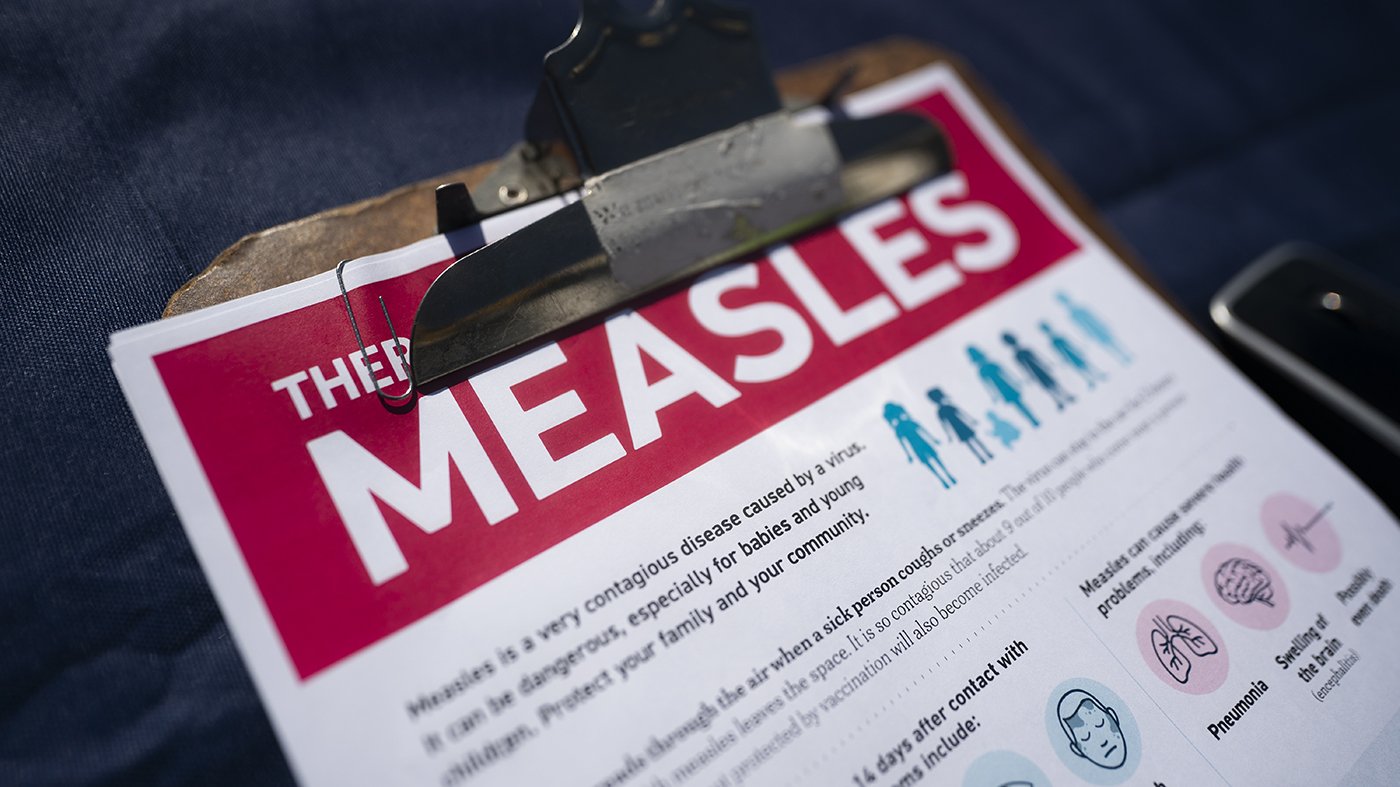
Utah has overtaken South Carolina as the center of measles transmission in the United States, with state health officials confirming 441 cases so far in 2026 — more than double the total reported nationwide last year. The outbreak, concentrated in the state's southwest, echoes the pattern seen in Texas in 2025, where a small, vaccine-resistant community sparked widespread spread.
According to the Utah Department of Health and Human Services, the 441 cases represent roughly a quarter of the 1,814 measles cases confirmed by the Centers for Disease Control and Prevention this year. The vast majority are linked to the Fundamentalist Church of Jesus Christ of Latter-Day Saints (FLDS), an insular religious group with historically low vaccination rates. This mirrors the Texas outbreak, which originated in a Mennonite community in the western part of that state.

Statewide, only 78.5 percent of public-school kindergartners were vaccinated against measles during the 2023-2024 school year — far below the 95 percent threshold needed to prevent outbreaks. In Utah's Southwest Health District, where the FLDS community is based, the vaccine exemption rate for kindergartners in the 2024-2025 school year approached 20 percent. Nationally, kindergarten vaccination rates have fallen to 92.5 percent.
The situation has grown so dire that Utah's health department is now urging parents to consider an early, extra dose of the measles, mumps, and rubella (MMR) vaccine for infants aged 6 to 11 months — a measure typically reserved for international travel or exposure to known cases. “Given the high levels of measles in Utah, it is now appropriate to consider this early, extra dose for all Utah infants of this age,” the department said in guidance released this week.
Infectious disease physician Andy Pavia of the University of Utah compared the outbreak to a wildfire. “What it takes for a measles outbreak to grow out of control is a lot like a wildfire. You have to have a spark. It has to land in an area with a lot of potential fuel — that is unvaccinated people — and you have to fail at the early efforts to stamp it out when it's controllable,” he said. “Once it starts blossoming, it can become a super fire.”
Pavia also criticized the state legislature for passing laws that he said have crippled public health response. He pointed to HB0182, passed in 2022, which restricted emergency powers for municipal leaders and limited health departments' ability to declare public health emergencies. “As a consequence, I believe the health department kept a fairly low profile and did not do things that might have been controversial, like offer mass vaccination sites,” he said. “In other states, that was one of the tools that was employed.”
Notably, while the outbreak is tied to a religious community, the mainstream Church of Jesus Christ of Latter-day Saints (LDS) has long supported vaccination. Its general handbook states: “Vaccinations administered by competent medical professionals protect health and preserve life. Members of the Church are encouraged to safeguard themselves, their children, and their communities through vaccination.” The FLDS and LDS are separate organizations.
Lindsay Keegan, a University of Utah epidemiologist, noted that Utah's geography and social patterns have accelerated the spread. “Utah is a very connected state, even though we're quite rural. Many people in Salt Lake and Utah counties along the Wasatch Front spend their weekends traveling to the desert to do outdoor sports. There is a lot of mixing across the state that maybe is not happening in Texas,” she said. This intermixing, combined with low vaccination rates and weakened public health infrastructure, has turned a localized spark into a statewide crisis.