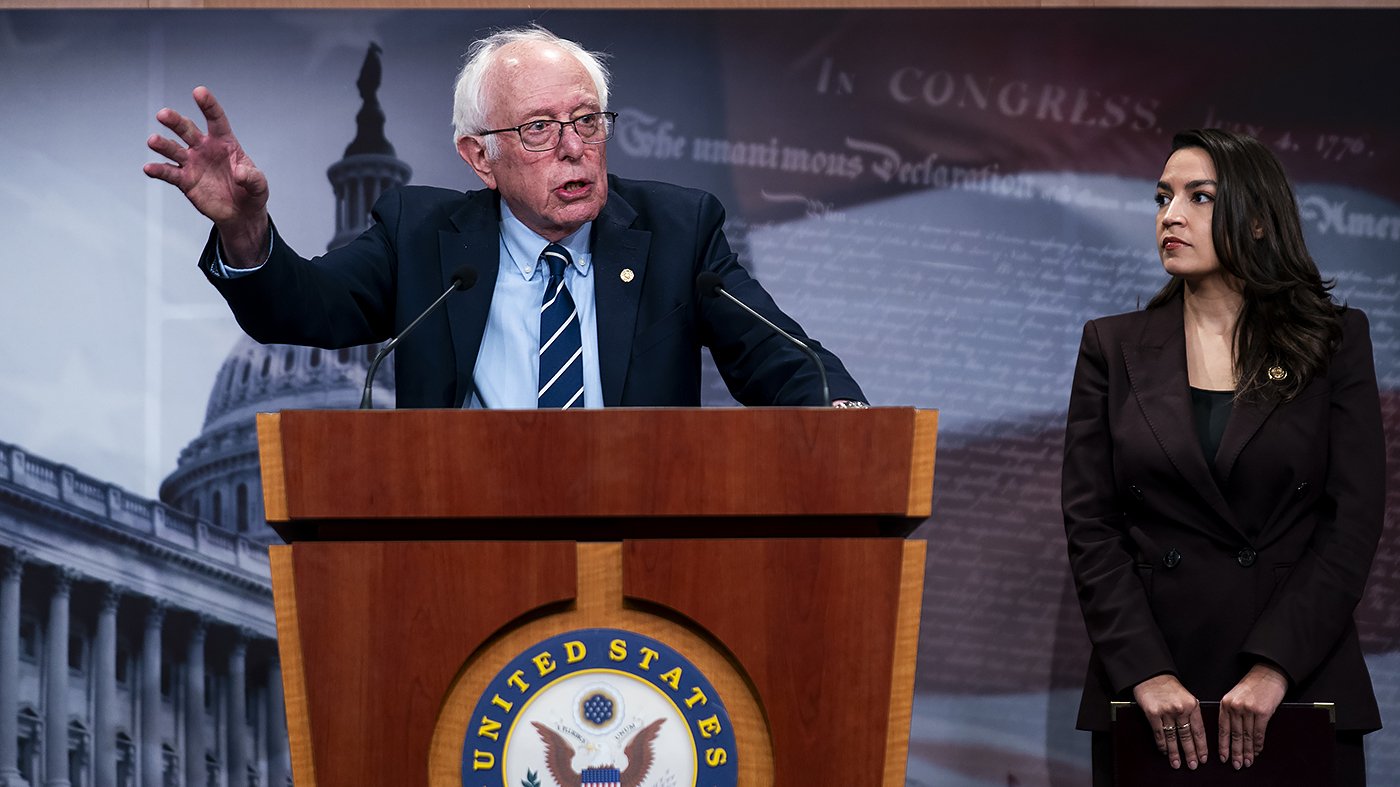
Sen. Bernie Sanders (I-Vt.) is emerging as one of the most vocal skeptics of artificial intelligence on Capitol Hill, warning that the technology poses an existential threat and calling for international cooperation with China—a position that cuts against the bipartisan consensus in Washington.
At 84, Sanders has aligned himself with the so-called AI “doomers,” a group of researchers and activists who argue that unchecked development of superintelligent machines could endanger humanity. In a press call last week, he described the current trajectory as a “runaway train” accelerating without clear oversight. “We don’t know where it ends up. We don’t know what its impact will be,” he said, adding that Congress is not prepared to handle the challenge.
Sanders has proposed a moratorium on new data center construction, a move he says would give democracy time to catch up with the technology. Along with Rep. Alexandria Ocasio-Cortez (D-N.Y.), he introduced legislation in March that would halt data center development until strong national safeguards are in place, including protections against mass job displacement and limits on electricity price hikes for consumers. The proposal comes as data centers face growing local opposition and public anxiety about AI rises.
Analysts see Sanders’ hard-line stance as a natural extension of his populist brand. “For Sen. Sanders, I imagine he thinks that taking this more hard-line stance on AI might fit well with his populist political beliefs and expand his appeal to a wider swath of voters,” said Andrew Lokay, a senior research analyst at Beacon Policy Advisors. Sarah Kreps, director of the Tech Policy Institute at Cornell University, noted that AI has “become kind of an elite-driven phenomenon,” which aligns with Sanders’ critique of concentrated wealth. He has repeatedly highlighted the outsized role of billionaires like Elon Musk, Jeff Bezos, and Mark Zuckerberg in shaping AI development.
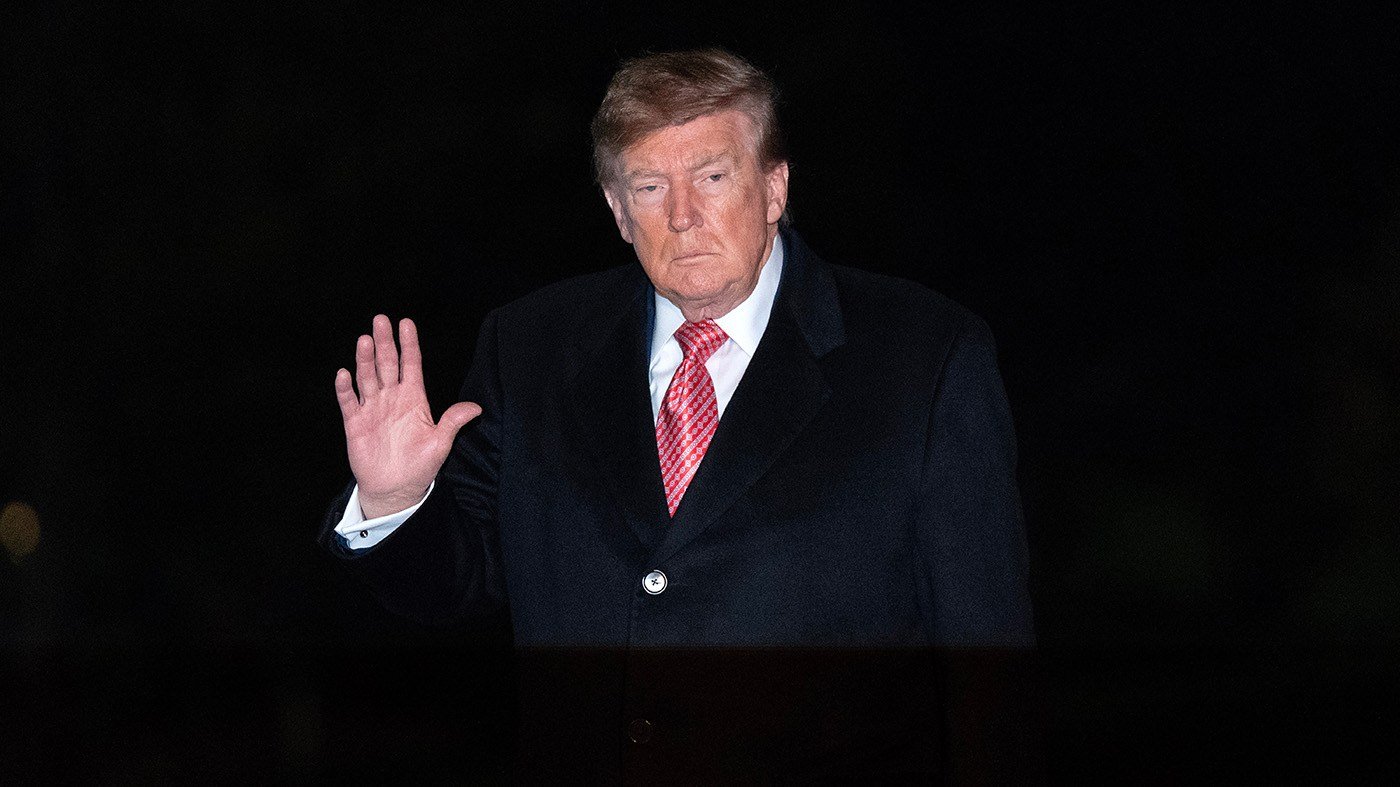
Sanders’ call for cooperation with China on AI safety has drawn sharp criticism from the Trump administration and its allies. Treasury Secretary Scott Bessent slammed the senator for “inviting foreign nationals to tell the United States how to regulate AI,” arguing that the real threat is letting any other nation set global standards. Venture capitalist Marc Andreessen simply shared an image of the event with the comment, “Concerning.”
The administration has centered its AI policy on outpacing China, pushing to preempt state-level regulations that could slow innovation. While Democrats have largely called for more guardrails, few have endorsed a slowdown. Sen. Mark Warner (D-Va.) dismissed the moratorium approach as “idiocy,” warning it would “simply mean China’s going to move quicker.”
Sanders, however, draws a parallel to the Cold War nuclear arms race, noting that past superpower competition eventually led to arms control agreements. He organized an event last week featuring AI researchers from the U.S., Canada, and China—including participants who joined via teleconference—to discuss existential risks and the need for international rules. The inclusion of Chinese researchers drew sharp pushback from Trump officials.
Outside Washington, Sanders’ position resonates with a segment of the AI research community. Max Tegmark, a professor at MIT, warned, “If we just go ahead and do something that’s foolhardy before figuring out how to control this stuff, we’re in a worse position than the Neanderthals.”
Jennifer Huddleston, a senior fellow at the Cato Institute, expressed concern that Sanders’ approach represents a return to earlier, more fearful views of AI. “It’s kind of concerning that we’re seeing this position come back,” she said, noting that many have since recognized the technology’s beneficial applications.
The debate over AI policy is unfolding against a backdrop of intensifying US-China rivalry, with the White House recently leveling industrial-scale AI theft charges against Beijing ahead of a potential Trump-Xi summit. Meanwhile, Sanders’ partnership with a Chinese AI official has raised bipartisan concerns about the implications for US technology policy.