A United Nations Security Council effort to address the blockade of the Strait of Hormuz collapsed on Tuesday after Russia and China exercised their veto power, sinking a resolution that had been significantly diluted in an attempt to secure their approval. The measure, spearheaded by Bahrain, sought to coordinate international efforts to reopen the critical maritime passage, which has been effectively closed by Iran for over five weeks, disrupting nearly 20% of global oil shipments.
Vote Tally and Diplomatic Warnings
The resolution received votes in favor from eleven nations: Bahrain, the Democratic Republic of Congo, Denmark, France, Greece, Latvia, Liberia, Panama, Somalia, the United Kingdom, and the United States. Colombia and Pakistan abstained. Ahead of the vote, Bahrain's foreign minister, Abdullatif bin Rashid Al-Zayani, warned that allowing the strait's closure to stand would invite broader instability, undermine the Security Council's authority, and create a world where "force, arrogance and hegemony prevail."
The final text was a weakened version of the original proposal. Initial language authorizing nations to use "all necessary means" to ensure transit was removed to appease concerns from China, Russia, and France about endorsing the use of force. The adopted draft instead encouraged states to coordinate "defensive" efforts to secure navigation and demanded Iran halt attacks on regional infrastructure and stop interfering with commercial vessels.
Rationale for the Veto
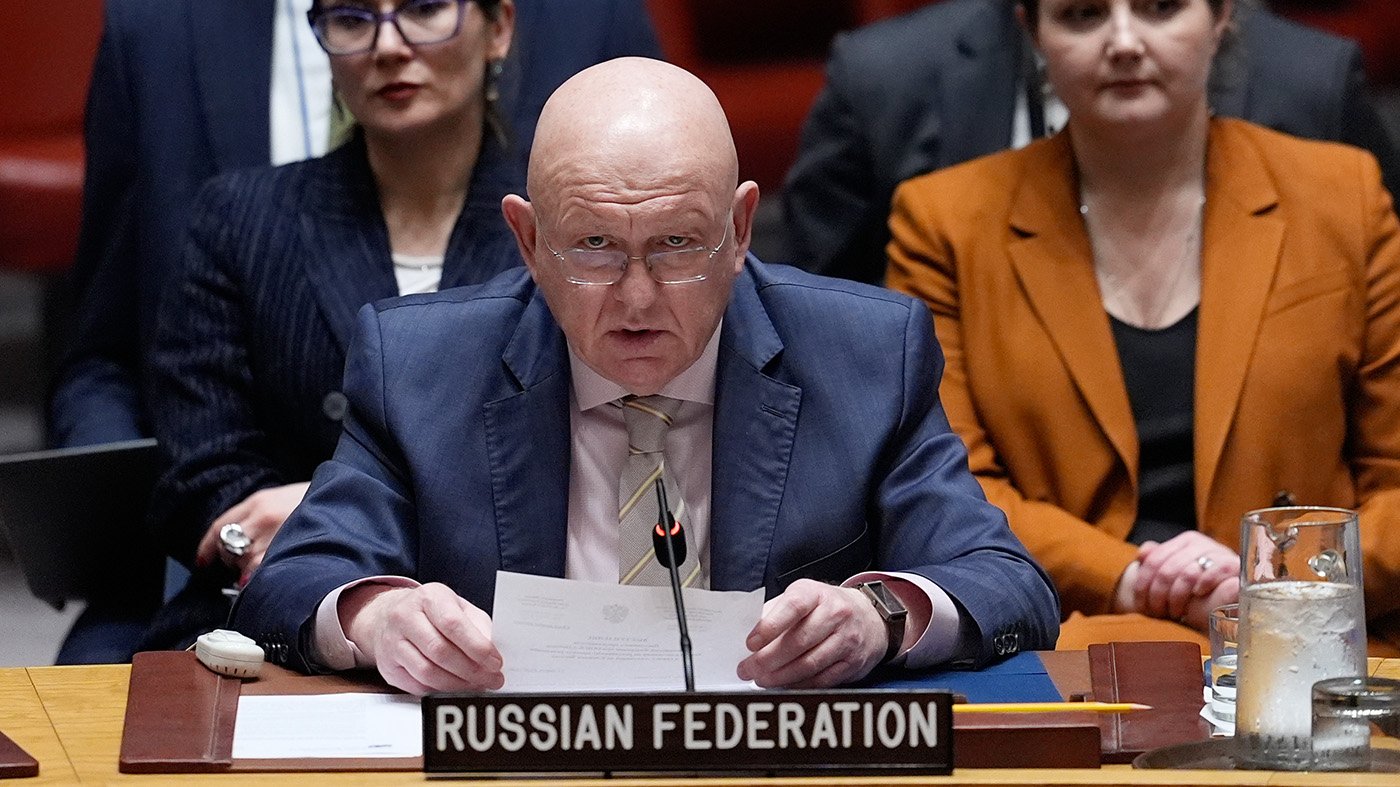
In explaining their opposition, Russian Ambassador Vasily Nebenzya condemned what he called U.S. and Israeli aggression toward Iran, labeling the resolution "unbalanced, inaccurate and confrontational." Chinese Ambassador Fu Cong argued the text was one-sided and "highly susceptible to misinterpretation or even abuse," warning that current hostilities against Iran were likely to escalate further. Their vetoes came despite urgent warnings about the mounting global economic toll.
The prolonged blockade and escalating attacks on energy infrastructure have fueled fears of sustained supply disruptions, keeping Brent crude prices above $100 per barrel. The World Food Programme has estimated an additional 45 million people could face extreme hunger by June if the crisis continues.
U.S. Reaction and Escalating Threats
U.S. Ambassador Mike Waltz denounced the Russian and Chinese vetoes as "a new low" and accused Tehran of "holding the global economy at gunpoint." He asserted the vote outcome would not prevent the United States from acting in self-defense. This statement followed a stark ultimatum from President Donald Trump, who had given Iran until 8 p.m. EDT Tuesday to strike a deal to reopen the waterway, threatening to unleash "all Hell" by targeting bridges and power plants. In a social media post, Trump warned that "a whole civilization will die tonight," a threat that drew scrutiny over potential violations of international law.
Iran's ambassador, Amir Saeid Iravani, forcefully rebuffed the threat during the Security Council meeting, vowing that Iran would "take all necessary measures to defend its people" and that the U.S. and Israel would bear responsibility for all consequences. Tehran has also rejected proposals for a temporary ceasefire, demanding a permanent end to hostilities instead. The diplomatic failure at the UN coincides with heightened warnings from U.S. lawmakers about imminent military action.
Broader Strategic Context
The veto highlights deepening geopolitical fissures, with Russia and China aligning to block a U.S.-backed maritime security initiative. This move occurs as both nations pursue strategic interests that often counter American influence, such as China's expanding economic footprint in Africa. The stalemate leaves the international community without a unified diplomatic framework to resolve the crisis, increasing the risk of unilateral military action and further market volatility. OPEC+ has indicated plans for a conditional output increase, but it remains contingent on the strait reopening.
With the UN path blocked and Trump's deadline passed, the focus shifts to potential unilateral U.S. measures and Iran's response, setting the stage for a dangerous new phase in the confrontation over one of the world's most vital shipping lanes.