The United Nations’ International Maritime Organization (IMO) has temporarily halted the evacuation of ships from the Persian Gulf through the Strait of Hormuz following a drone attack on a commercial vessel off the coast of Oman. The incident, confirmed by British military sources, occurred shortly after Iran warned vessels against using the new U.N.-backed route without Tehran’s permission.
IMO Secretary-General Arsenio Dominguez announced the pause on Thursday, stating that the evacuation plan would remain on hold until the agency receives verified safety guarantees for all ships on the list and operating in the region. Dominguez clarified that the attacked vessel, the Ever Lovely, was not part of the U.N.-coordinated effort. A U.S. official, speaking on condition of anonymity, told the Associated Press that the ship was struck by a drone operated by Iran’s paramilitary Revolutionary Guard.
The attack came hours after Iran’s newly created Persian Gulf Strait Authority declared that any transit outside its designated routes would not be covered by safe passage guarantees. The United Kingdom Maritime Trade Operations center reported damage to the vessel but no injuries or environmental fallout.
The alternative passage, established by Oman and the IMO, is seen as a critical pressure valve for global energy markets and a way to reduce Iran’s leverage in ongoing peace negotiations with the United States. Secretary of State Marco Rubio, visiting Gulf allies to reaffirm U.S. commitments, warned that disruption of the route would create serious problems. “If that stops, then we’re going to have a problem,” Rubio said before the strike was reported. He later emphasized that Washington is dedicated to ensuring safe transit through the strait.
Traffic through the strait has increased in recent days, with 125 vessels crossing last week—up from 33 the prior week—according to Lloyd’s List Intelligence. S&P Global reported 78 transits on Wednesday, the highest single-day count since the outbreak of hostilities, though still below the prewar average of 130 or more. Oil prices briefly dipped below $73 per barrel on Thursday, signaling market optimism that the situation may stabilize.
The U.S. and Iran remain locked in negotiations over an interim peace deal, with a 60-day window to finalize terms under a memorandum of understanding signed last week. The talks cover key issues such as safe passage through the strait and the future of Iran’s enriched uranium stockpile. Both sides have traded public threats and claimed concessions, while behind-the-scenes discussions continue. The broader regional picture is complicated by renewed fighting in Lebanon between Israel and Iranian-backed Hezbollah, which has killed five people in recent days and threatens to unravel a tentative ceasefire. Iran insists any deal must include an Israeli withdrawal from Lebanon—a condition Israel has rejected.
Iran’s Revolutionary Guard naval arm issued a statement Thursday, carried by state-run IRNA, denouncing the new shipping route as “unacceptable and completely dangerous.” The Guard asserted that the only authorized passage through the Strait of Hormuz is the one declared by Iran, and warned that vessels using other routes face severe consequences. “Violators will be dealt with,” the statement said, without specifying measures. On Wednesday, a Guard soldier radioed a tanker with a threat: “You are in range of my missiles and maybe (I) fire on you,” according to private security firm Ambrey.
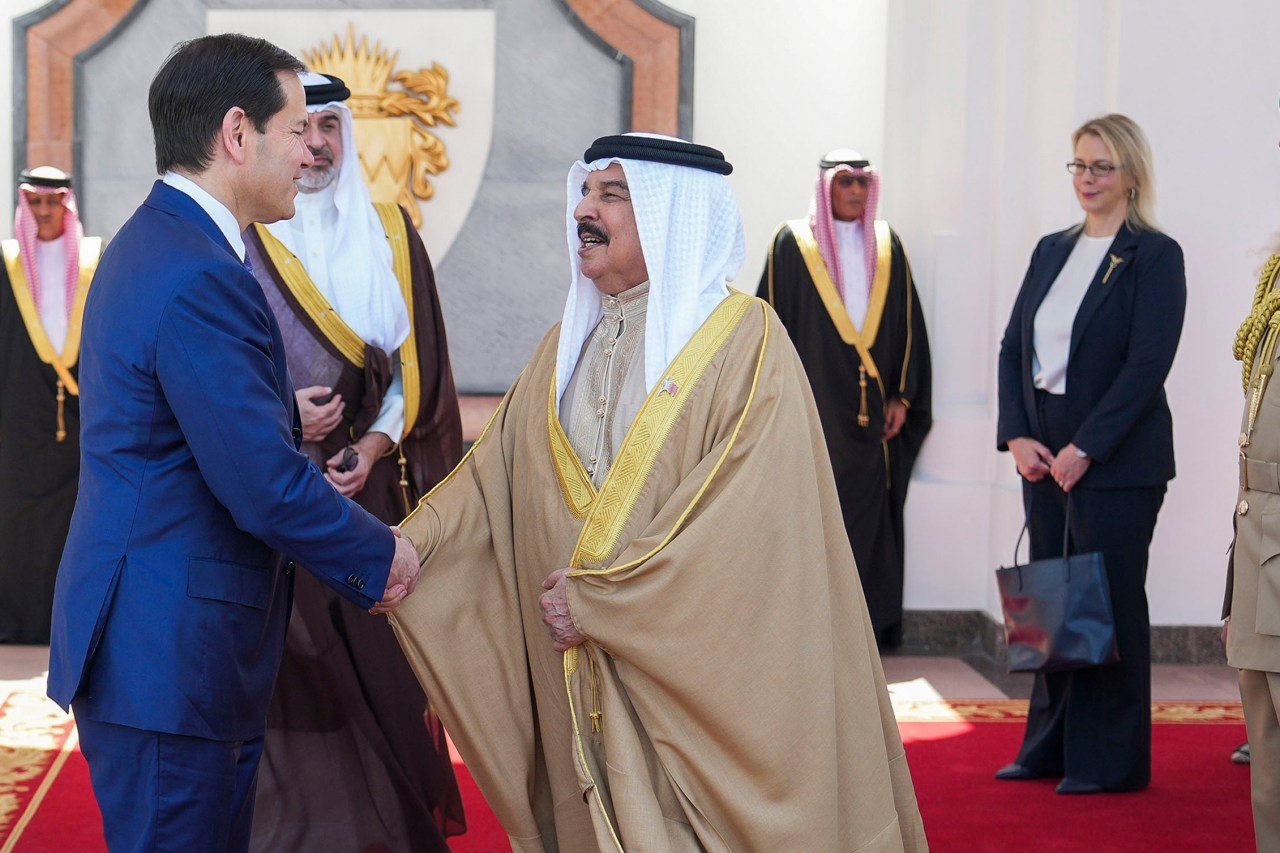
Rubio, meeting with foreign ministers of the Gulf Cooperation Council in Bahrain, sought to reassure regional partners that their interests would be safeguarded in any U.S.-Iran agreement. “There is no part in this deal that’s undertaken that in any way undermines the security, the stability or the prosperity of any of our partners in the Gulf region,” he said. Bahrain’s foreign minister, Abdullatif bin Rashid Al Zayani, echoed the need for stability. The evacuation pause and drone attack underscore the fragility of efforts to reopen the strait, a chokepoint for about a fifth of the world’s oil and natural gas. For a deeper look at the surge in tanker traffic, see our analysis on Strait of Hormuz Tanker Traffic Surges as Evacuation Plan Takes Effect. The incident also highlights the ongoing tensions as Vance Declares Breakthrough in Iran Talks, IAEA Access Secured.