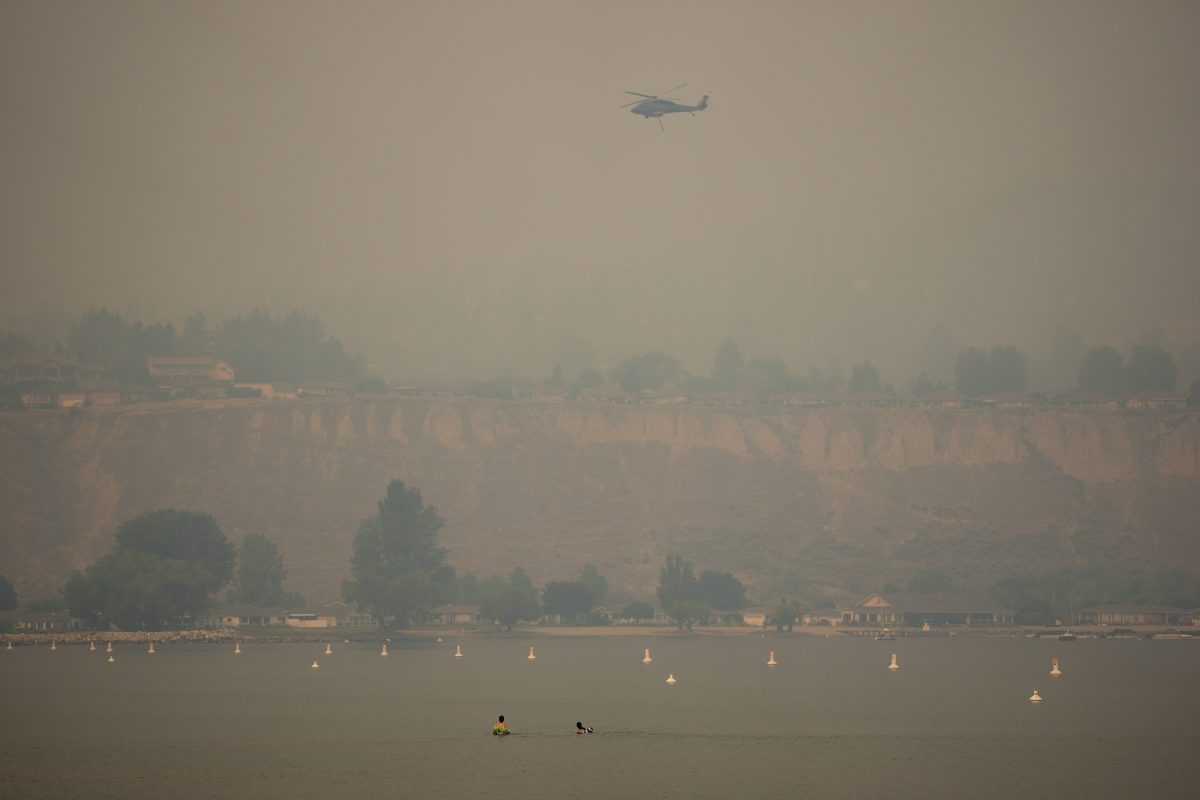
Wildfires sweeping across the western United States and Canada have forced tens of thousands from their homes, with the most acute crisis unfolding in British Columbia's Okanagan Lake region. Authorities there have declared a provincial state of emergency as a fast-moving blaze torched structures and prompted dramatic aerial rescues.
In British Columbia, more than 20,000 residents have been ordered to evacuate communities along the lake's shores, including Summerland and Peachland. The Bald Range fire, which ignited Friday evening, has been the primary driver, consuming homes and forcing many to flee with little notice. Anette Boulet, a Summerland resident, described the terrifying overnight escape: "You couldn't see barely. It was, it was just dark, and the ridge, the ridge of fire just coming towards you." She and her family reached a reception center in Penticton, where she said, "There's no words to express it. The fear."

Canadian federal officials have stepped in to assist. Eleanor Olszewski, the minister of emergency management and community resilience, said Sunday she had approved a request for federal aid to provide shelter and accommodations for the displaced. The province's state of emergency allows for coordinated resources and potential mandatory evacuations.
Meanwhile, in Washington state, crews have been battling three wildfires near Spokane for over a week. The blazes have damaged or destroyed approximately 920 structures, though containment efforts have stabilized the situation. Officials reported Sunday that none of the fires were growing and that mop-up operations were underway. A man has been arrested and charged with intentionally setting the largest of the three fires.
Residents in the hard-hit town of Malden, which was largely destroyed by a wildfire in 2020, received some relief as evacuation orders were downgraded from immediate to a readiness status. John Goyke, who operates the town's water system, said winds had calmed and the fire was not advancing. He noted that residents are being asked to conserve water so that fire trucks have adequate supply. The town's fire department is trucking water from nearby Rosalia.
Laurie Allen, a 65-year resident of Nine Mile Falls, north of Spokane, fled last weekend with her husband, dog, and two kittens as flames approached. She learned from a friend that her home, though covered in ash, was still standing. "I've been here 65 years. It's never happened," she said. "We didn't think about anything but grabbing our animals and leaving. But now it's affected so many of our friends and family around. So it's pretty dang devastating."
The human toll also includes two helicopter pilots killed in Utah when their aircraft crashed while fighting a wildfire in Fishlake National Forest. Sevier County Sheriff Nathan Curtis said crews could not reach the site immediately due to steep terrain and active fire. "When we first got there we could see two different plumes of smoke, one from the crash site, one from an active fire coming towards us," he said. The National Transportation Safety Board is investigating.
These fires come amid growing concerns about the role of climate change in intensifying wildfire seasons. A recent study has linked climate change to Canada's record-breaking fires, underscoring the policy challenges facing lawmakers. As communities rebuild, the intersection of emergency management and climate resilience remains a pressing issue for politicians on both sides of the border.