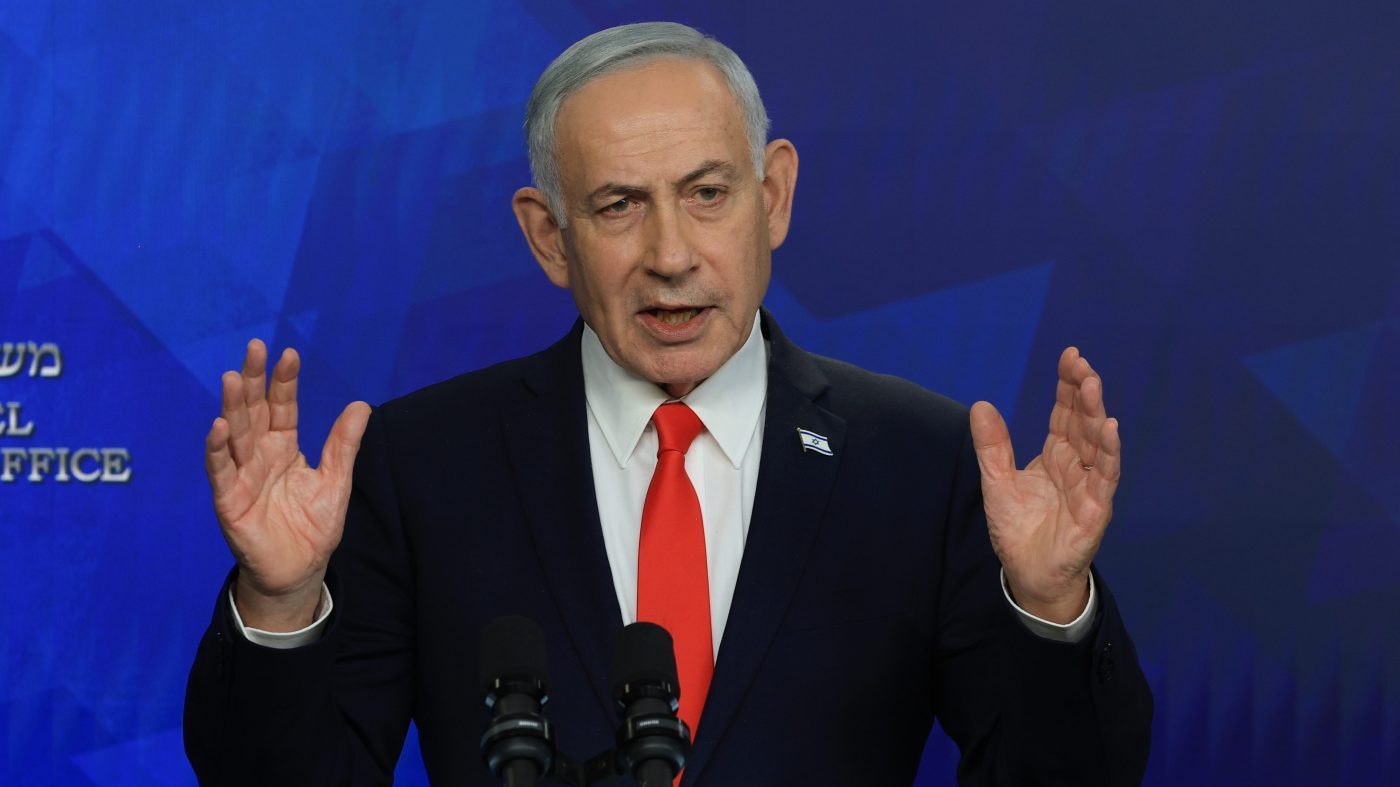
Israeli Prime Minister Benjamin Netanyahu is scheduled to address the United Nations General Assembly on Thursday, with the ongoing U.S.-Israel military campaign against Iran and the protracted conflict in Gaza expected to overshadow his remarks.
Netanyahu takes the podium a day after Iranian President Masoud Pezeshkian delivered a defiant speech, responding to President Trump's threats by declaring that Iran would "never bow our head" while also signaling openness to diplomatic engagement. Pezeshkian's address, which was marked by sharp pushback against U.S. pressure, set the stage for Netanyahu's appearance.
Palestinian Authority President Mahmoud Abbas is also slated to address the assembly via video link, after the United States denied him a visa to attend in person. The decision has drawn criticism, particularly given the devastating toll of Israel's military operation in Gaza, which was launched in response to Hamas's October 7, 2023, attack that killed over a thousand Israelis. Since then, tens of thousands of Palestinians have been killed in the enclave, according to local health authorities.
Netanyahu's appearance comes amid an active U.S.-Israeli military campaign against Iran, with strikes targeting Iranian nuclear and military sites. The operation has raised fears of a broader regional war, and Netanyahu is expected to frame Israel's actions as necessary for self-defense.
The Israeli leader also faces an outstanding arrest warrant from the International Criminal Court, which accuses him of war crimes and crimes against humanity related to the Gaza conflict. Netanyahu has consistently denied the allegations, calling them politically motivated.
Day three of the UNGA session begins at 9 a.m. EDT. Diplomats and observers are watching closely to see whether Netanyahu's speech offers any new signals on ceasefire negotiations or the future of Gaza governance, especially as Israel's current strategy in Gaza has been criticized for managing the conflict rather than resolving it.
Abbas's video address is expected to reiterate Palestinian demands for a ceasefire and a political solution, though his ability to influence events is limited. The denial of his visa has been interpreted by some as a snub, complicating U.S. claims of supporting a two-state solution.
As Netanyahu steps up to the world stage, the intersection of the Iran campaign and the Gaza war will test the international community's patience and its commitment to international law. His speech is likely to be a key moment in a week of high-stakes diplomacy at the United Nations.