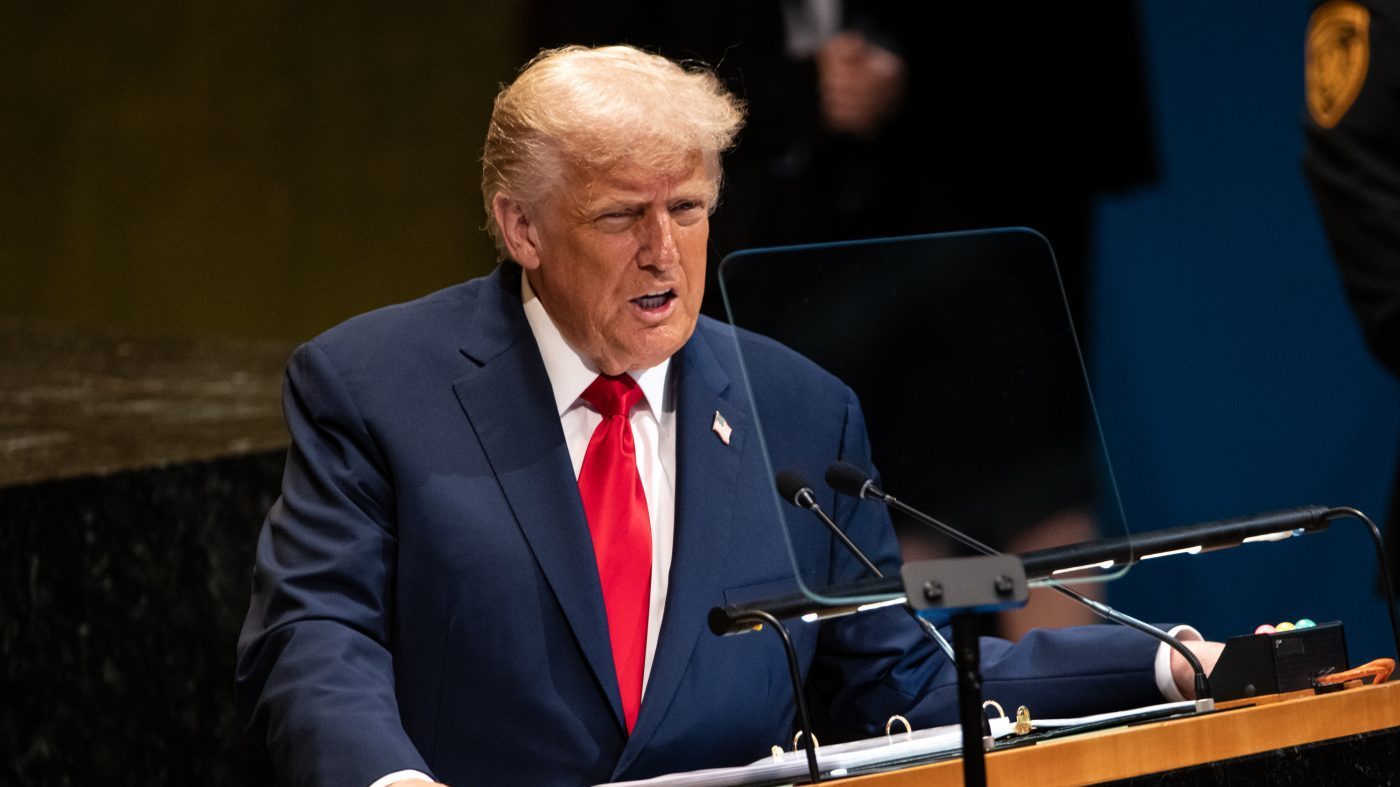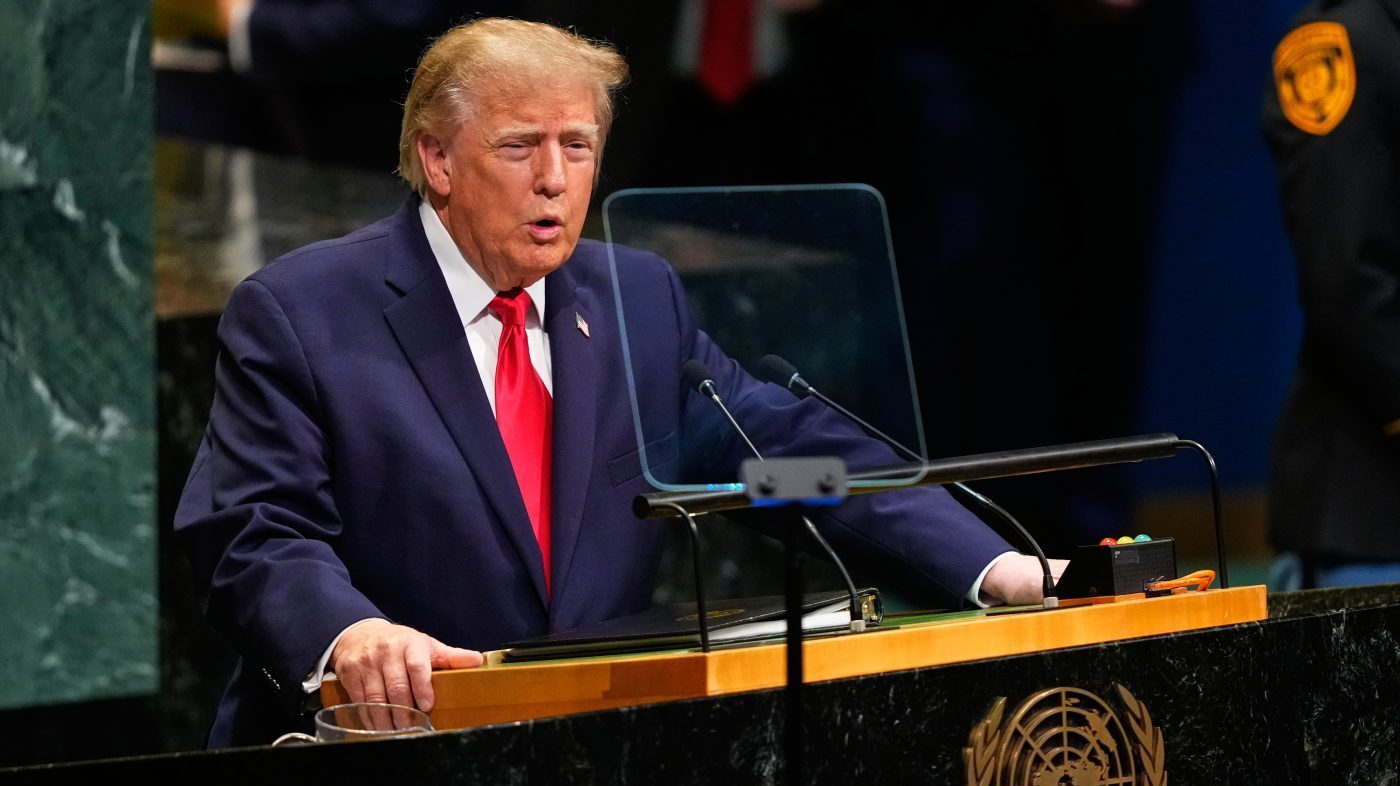
President Trump used his address to the United Nations General Assembly on Tuesday to lay out a stark ultimatum for Iran, saying he is weighing a major strategic choice between a negotiated settlement and a military campaign of "annihilation." Speaking before international delegates, including Iranian representatives, Trump framed the decision in dramatic terms, suggesting that a deal could allow Iran to "rebuild and create a far greater country" than it has ever been—perhaps "the greatest in the Middle East or even the world."
Alternatively, he warned, he could "annihilate the Islamic Republic, and do it quickly, never giving them a chance to kill and destroy people and countries again." He added, "Do I drive them into hell with no chance of survival and no hope of future greatness or generations?"
The president also expressed optimism that a deal could be reached after the November midterm elections, saying, "Because it doesn't make sense for them not to." He suggested that Iranian leaders are waiting to see how the midterms play out, but he insisted that their calculus is flawed. "They're waiting to see how I do in the midterm election. What they don't realize is that I'm not running. I did that already, and won in a landslide," he said, noting that he will remain in office for another two and a half years.
Trump declared that he will give "absolutely no credence" to the midterms when it comes to Iran policy. "It doesn't even enter my mind. The only thing that does is that Iran will never have a nuclear weapon," he said, drawing applause from the assembly.
The president's remarks come as the United States grapples with the economic fallout of the ongoing war in Iran. According to AAA, the national average for gas prices stood at $4.47 per gallon, with diesel averaging $6.52. These energy costs have weighed on American consumers and contributed to a challenging political climate for the White House.
Trump's approval rating has sunk to record lows, with a Reuters/Ipsos poll released Monday showing just 32% approval. Republican candidates in the midterms are also trailing Democrats on the generic ballot, signaling potential headwinds for the party in November.
In addition to his address, Trump's schedule at the UN is packed. He is slated to meet with several world leaders, including UK Prime Minister Andy Burnham, Japanese Prime Minister Sanae Takaichi, and Ukrainian President Volodymyr Zelensky. The president's itinerary reflects the breadth of international challenges, from the war in Ukraine to tensions in the Indo-Pacific.
Secretary of State Marco Rubio said Tuesday that while no formal meeting with Iranian officials is scheduled, Trump would be open to sitting down with them on the sidelines of the UN gathering. That openness, however, comes with the president's characteristic ambiguity, as he continues to oscillate between threats of force and offers of diplomacy.
The president's UN appearance is part of a broader high-stakes diplomatic push amid multiple global crises. His remarks on Iran echo his earlier signals that the speech would focus on Iran, cartels, and Greenland. Yet, his threat to "annihilate" a UN member state is likely to draw sharp criticism from many in the international community, even as he insists that his primary goal is preventing Iran from acquiring a nuclear weapon.
As the world watches, the coming weeks will reveal whether Trump's ultimatum is a negotiating tactic or a prelude to further military action. With midterm elections looming and his political standing weakened, the president's decision on Iran could reshape both his legacy and the geopolitical landscape.