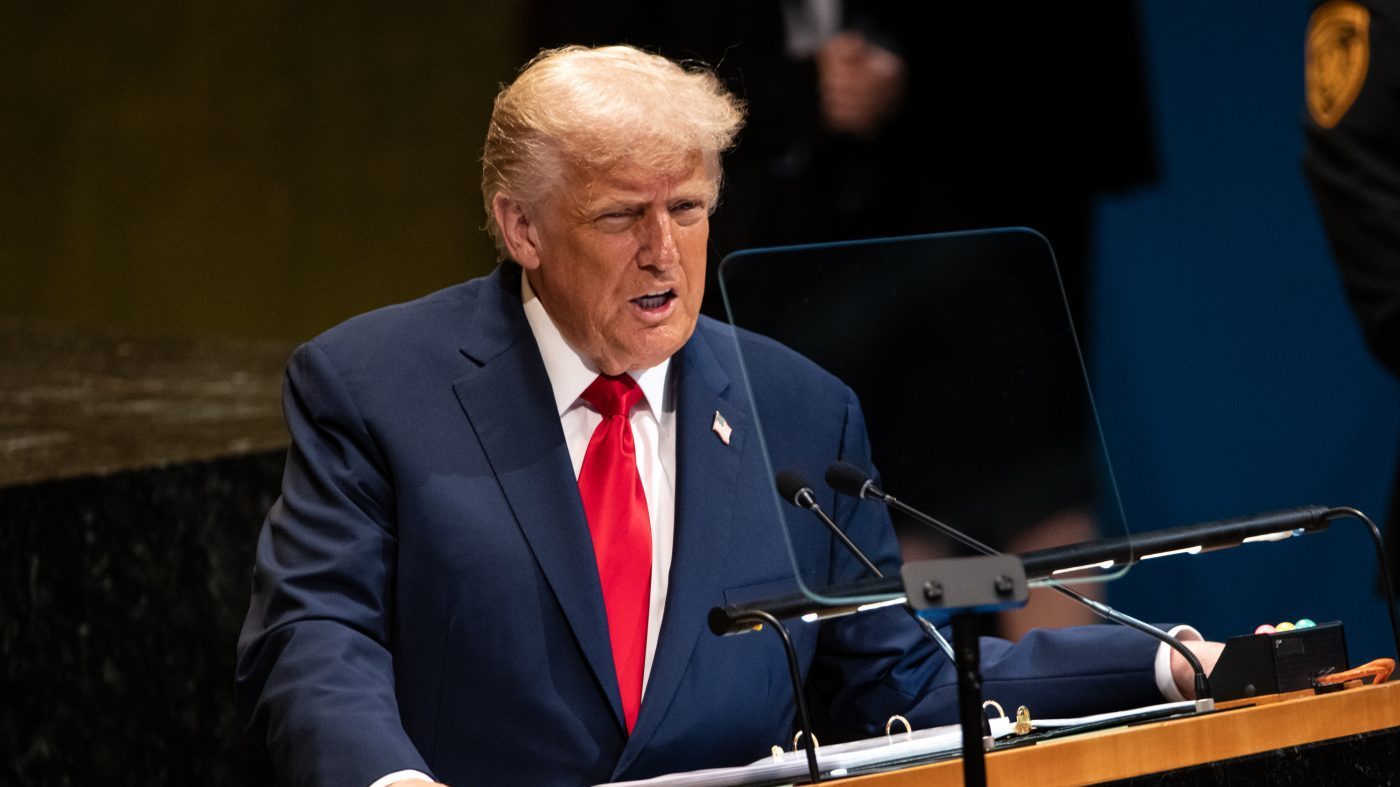
President Trump will use his United Nations address on Tuesday to make the case that his administration is wielding American power to tackle entrenched global problems and reorient international affairs to benefit the United States, according to a White House official.
The speech will focus on three flashpoints: Iran’s nuclear program, the threat posed by drug cartels, and U.S. strategic interests in Greenland. Trump is expected to argue that his approach will deliver a “much safer and more prosperous world for the American people,” the official said.
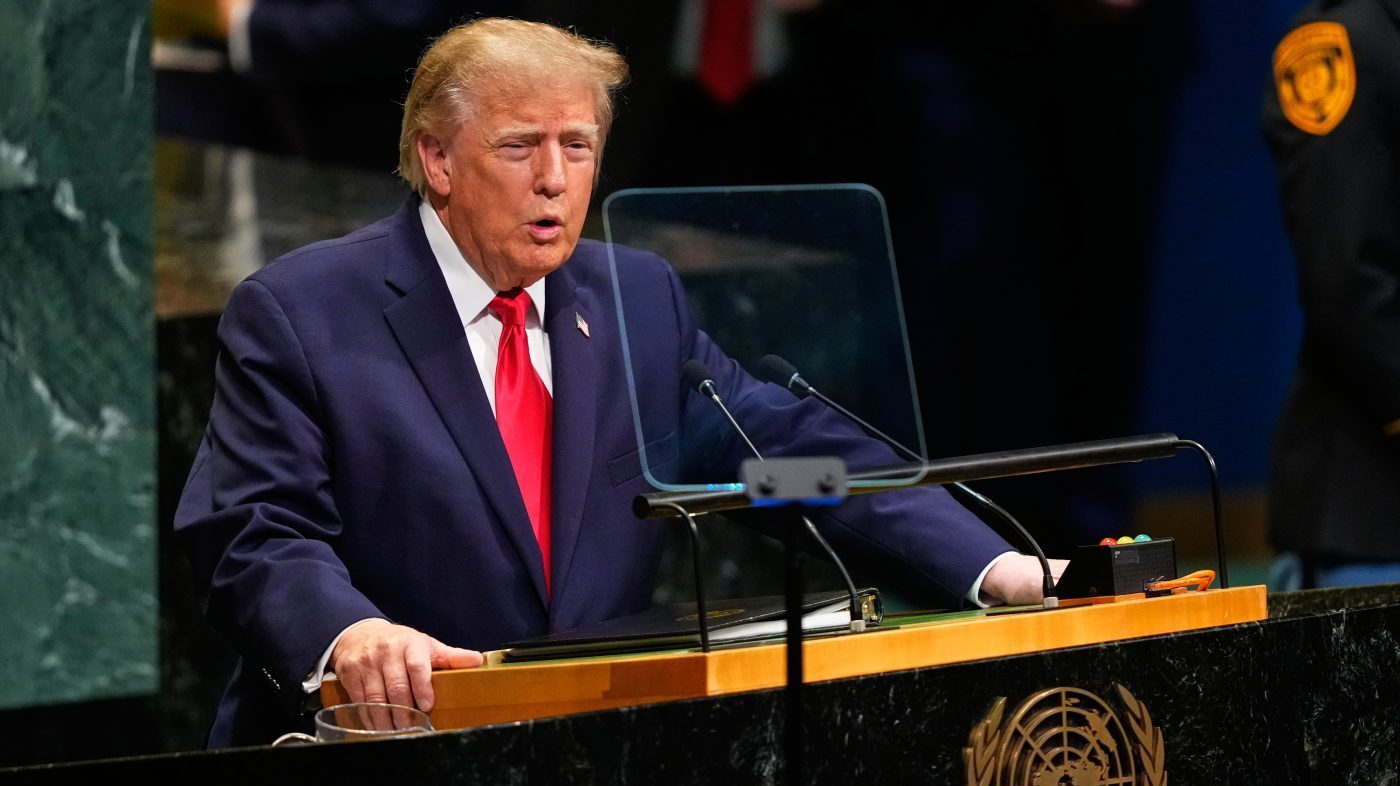
The president will also highlight his efforts to counter “violence, instability, and foreign interference” in the Western Hemisphere, while casting his administration as a bulwark against UN and other globalist institutions that he says encroach on American sovereignty or push a radical-left agenda.
Immediately after the speech, Trump will take part in a trilateral signing ceremony with Greenland and Denmark to formalize a new security agreement. The pact underscores his push to expand U.S. military presence in the Arctic.
Diplomatic Hurdles
The address comes as Trump faces mounting international pressure, particularly over the war in Iran, which has driven up energy prices in the U.S. and worldwide. Secretary of State Marco Rubio said Tuesday that while no meeting is scheduled, Trump would be open to sitting down with Iranian officials at the UN gathering. The possibility of such talks has fueled speculation about a diplomatic off-ramp, though no concrete plans have emerged.
Trump is also slated to meet with several world leaders on the sidelines, including U.K. Prime Minister Andy Burnham, Japanese Prime Minister Sanae Takaichi, and Ukrainian President Volodymyr Zelensky. The encounters could shape coordination on Ukraine, Indo-Pacific security, and post-Brexit trade.
As Trump takes the UN stage amid multiple wars and a running feud with the press, his speech will be closely watched for signals on how far he intends to push unilateral action. For a deeper look at the stakes, see Trump's UN appearance amid global conflicts.
The White House’s preview suggests Trump will not soften his America First rhetoric before a global audience. Instead, he plans to frame his policies as corrective measures against a world order that he argues has taken advantage of the U.S. That message will likely resonate with his base but could further strain ties with allies already wary of his confrontational style.
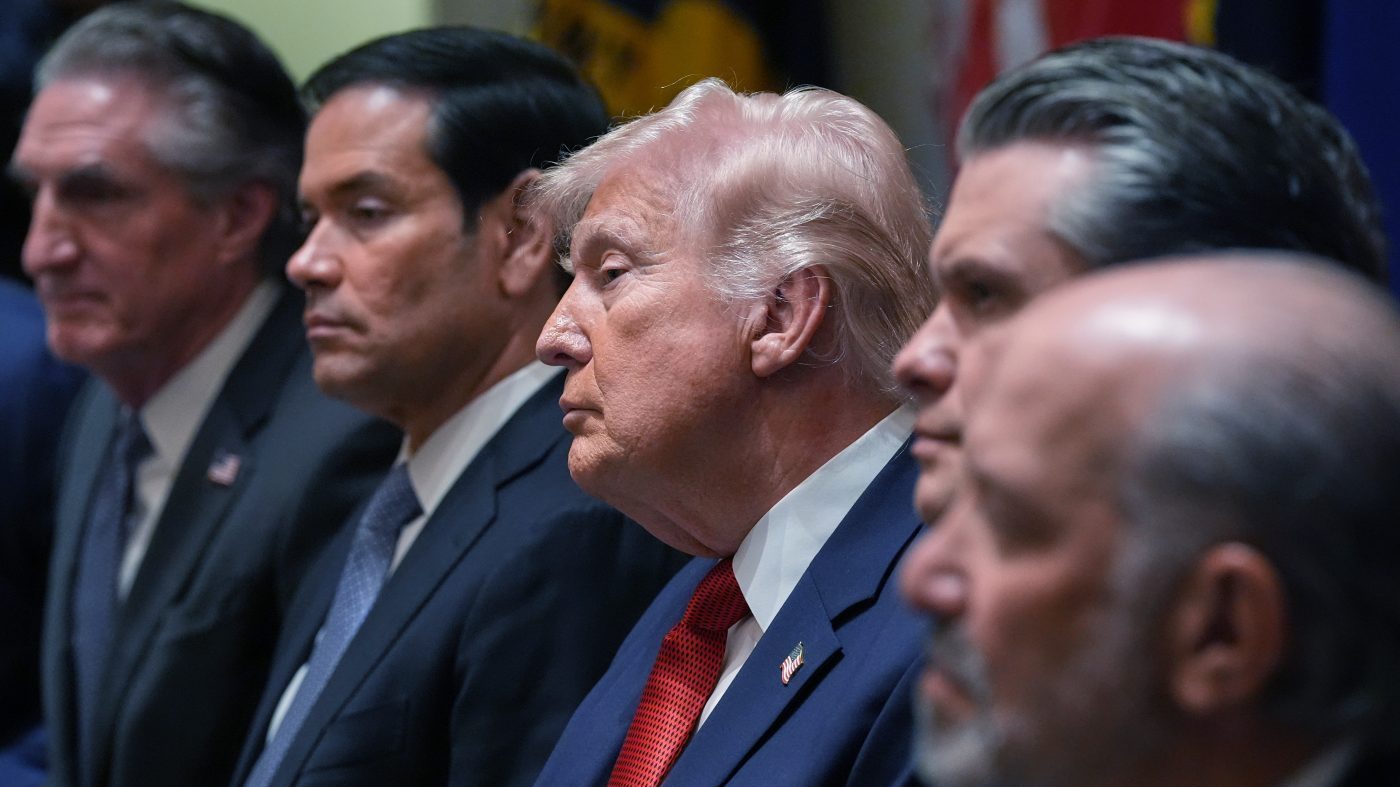
Rubio’s comments on a potential Iran meeting add a layer of uncertainty. While the administration insists nothing is set, the mere openness to talks marks a shift from the more hawkish posture that has defined recent months. Whether that translates into actual diplomacy remains an open question. For more on the administration’s stance, see Rubio's remarks on a possible Iran meeting.
The trilateral security agreement with Greenland and Denmark is a concrete deliverable that Trump can tout. It formalizes cooperation on Arctic defense and signals his intent to counter Russian and Chinese influence in the region. The signing will give the speech a tangible outcome beyond rhetoric.
With energy prices climbing and conflicts simmering from the Middle East to Eastern Europe, Trump’s UN address is a high-stakes moment to project strength and define his foreign policy doctrine. How he navigates the Iran question—and whether he can leverage the Greenland deal into broader strategic gains—will shape the next phase of his presidency.