As President Trump and Chinese General Secretary Xi Jinping open their high-stakes summit in Washington, former Senate Foreign Relations Committee staffer Ellen Bork argues that securing the release of detained American citizens must be the first order of business. Among those is Min Zin, a 53-year-old American expert on Myanmar, who has been held in China since June 3 after being arrested at Kunming airport upon arrival for an academic workshop. Beijing claims he is being investigated for "endangering national security," a charge Bork calls absurd, especially given his prior visits without incident.
Min Zin's background makes him a target for authoritarian regimes. As a teenager, he joined Burma's 1988 pro-democracy protests, which were violently suppressed but galvanized international attention. After moving to the U.S., he became a citizen and earned a Ph.D. from the University of California-Berkeley. When Myanmar eased restrictions in 2011, he returned and founded the Institute for Strategy and Policy-Myanmar, one of the country's first independent think tanks. The 2021 military coup forced him and the institute to relocate to Thailand.
Bork, who met Min Zin in January at his office in northern Thailand, describes him as thoughtful and focused on policy solutions to Myanmar's crises. His work has documented Beijing's growing influence in Myanmar, including the role of Chinese criminal networks in scam centers and China's interest in rare earth minerals. The ongoing civil conflict in Myanmar threatens China's strategic port at Kyaukphyu, which provides Beijing access to the Indian Ocean and reduces reliance on the Strait of Malacca.
Observers speculate that Min Zin's arrest was a calculated gesture to curry favor with Myanmar's junta. Former U.S. diplomat Daniel Swift suggests Beijing used him as an "offering" to demonstrate loyalty ahead of a visit by Myanmar's military leader Min Aung Hlaing. Indeed, Beijing announced the arrest and the visit on the same day, underscoring the diplomatic calculus.
While such moves may aid Beijing's relations with Myanmar, they should severely strain ties with Washington. American academics and tourists now face the risk of detention, and Beijing has shown it will reach across borders to harass critics. The U.S. State Department has designated Min Zin and Youlin Chen, an American seismologist held since 2024, as "wrongfully detained," a status that elevates their cases. China's foreign ministry dismissed the designation, insisting it is a rule-of-law state with no wrongful detentions.
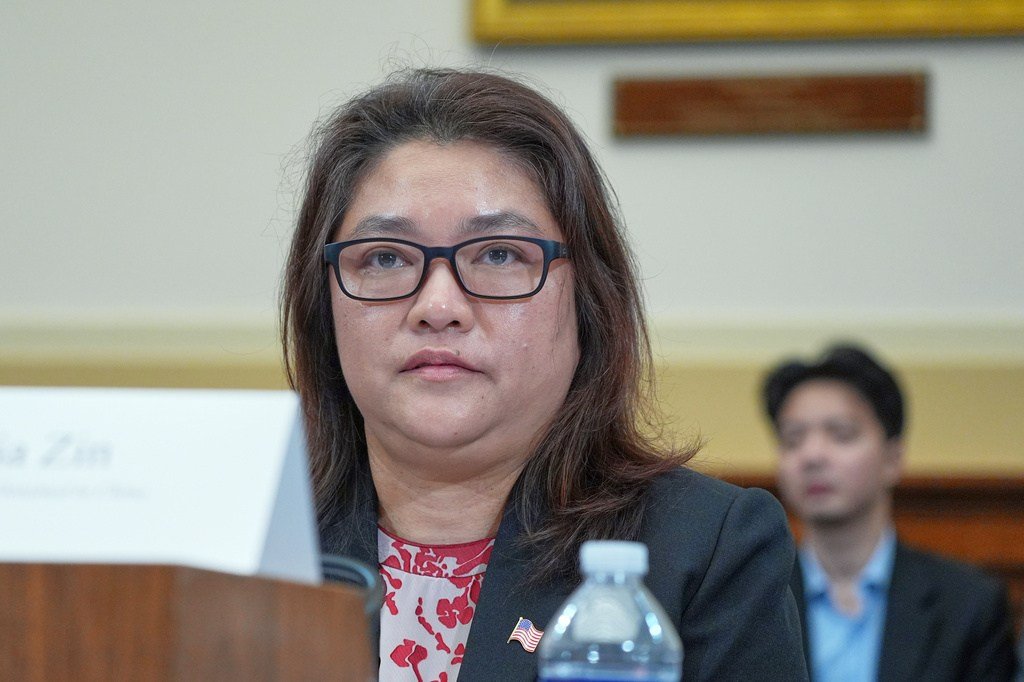
Min Zin's wife, Sylvia, testified before a House Foreign Affairs subcommittee in September, describing harrowing conditions: lengthy interrogations, a cell lit 24 hours a day, and denial of access to a lawyer. His Buddhist meditation has been interrupted, and he remains isolated. Such treatment reflects China's "not free" rating from Freedom House, which notes the Communist Party's control of the judiciary and lack of due process.
Trump should use the summit to deliver an unambiguous message: continuing to hold American citizens will have consequences. He must insist that Min Zin and Chen be released before Xi departs. As Trump and Xi meet amid tariffs, AI, and Taiwan tensions, human rights must not be sidelined. The administration has already faced bipartisan backlash over the lavish welcome for Xi, and failing to secure the release of detained Americans would amplify criticism.
Bork, who has written extensively on democracy and human rights in China, concludes that only tangible consequences will compel Beijing to act. The summit is the moment for Trump to demonstrate that the U.S. will not tolerate the detention of its citizens. As trade truce extensions dominate headlines, the fate of Min Zin and Chen must be a central, non-negotiable demand.