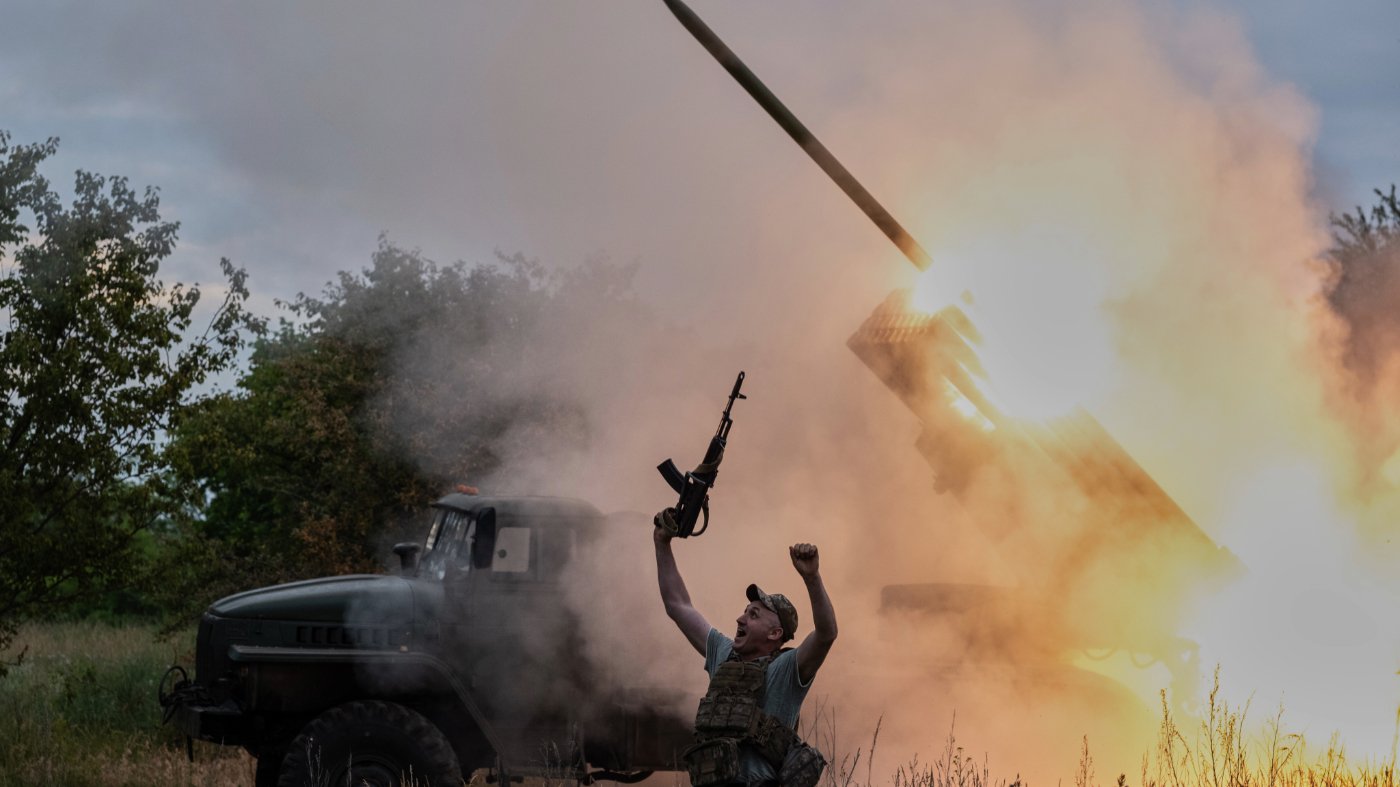
For over four years, Ukraine has framed its war against Russia as a defense of Western freedoms. But as the conflict drags on, that argument is losing its resonance across Europe and the United States.
Support for Kyiv hasn't collapsed, but the conviction behind it has eroded. Voters increasingly question whether this fight matters to them, whether the costs are justified, and whether “freedom” is more than an empty slogan.
Fading Conviction
Part of the shift is understandable. The war has become protracted, and other global crises compete for attention. Yet there's a more uncomfortable truth: The term “freedom” fails to move many because they no longer feel free themselves.
Data from the Allensbach Institute shows that in Germany, the share of citizens who feel free to express their political opinions dropped from 83% in 1971 to just 45% today. Among voters for the Alternative for Germany party, that figure stands at a mere 11%—a stark number given the party's popularity.
This erosion isn't limited to Germany. Gallup data over the last 20 years reveals that G7 countries have seen the biggest declines in citizens satisfied with their freedoms: the U.S. is down 16 points, France 15, the U.K. 13, and Canada 10.
The Paradox of Plenty
By global and historical standards, Western citizens remain remarkably free. Yet the daily experience of freedom isn't triumphant. Political polarization in the U.S. has turned neighbors against each other. In Europe, many feel governed by a distant, unelected bureaucracy. Grand language like “precious freedom” can ring hollow against these frustrations.
Russia exploits this discontent. Its propaganda targets the political left with Soviet-era claims that Western capitalism and imperialism are themselves forms of servitude. To the right, it presents Russia as an anti-woke bastion in a world obsessed with LGBTQ+ issues. The goal isn't a coherent truth but to corrode belief that Western freedom means anything worth defending.
Ukrainians have no such luxury. They see across the frontlines what the alternative looks like: Russian torture chambers, mass repression, and executions for speaking out. For them, the line between freedom and its absence isn't a debating point—it's the difference between two ways of living.
This distinction echoes a story from Herodotus. When a Persian envoy urged Spartans to submit to King Xerxes, pointing to Persian prosperity as proof, the Spartans replied: “You know how to be a slave, but you have never tasted freedom, to know whether it is sweet or bitter. If you had ever tasted it, you would have advised us to fight.”
Today, the West's problem is the mirror image. We've known freedom so long we've lost sight of its value. Endless arguments about its imperfections blur the line between having it and not. Ukrainians, by contrast, measure their commitment in the lives of their soldiers.
This is a good moment for Americans and Europeans to reassess freedom's fundamental place in society. Eighty years ago, hundreds of thousands of Americans fought to free the oppressed. Now, no one is asking troops to storm Normandy again. But supporting Ukrainians who defend their freedom can end Vladimir Putin's war and secure a fair result.
We urge Republicans and Democrats, free-market Americans and more socialist Europeans to return to core values of freedom and democracy. As debates over internal party dynamics and ideological shifts dominate headlines, the transatlantic alliance must unite to defend these principles.