At the second annual Freedom Conservatism conference held last week, wonks and activists of the conservative-libertarian fusionist stripe voiced cautious optimism that their brand of politics—focused on limited government, free markets, and individual liberty—can regain influence in a post-Trump environment. They aim to counter the big-government “conservatives” who gained prominence under former President Donald Trump.
“Ideas and political philosophies are actually a lot more like fashion than we might want to acknowledge,” said Paul Mueller, a senior research fellow at the American Institute for Economic Research, during a panel. “We’re coming a little bit out of a period where fusionism, the sort of freedom conservative, has been kind of out of fashion. I think it’s going to come back into fashion.”
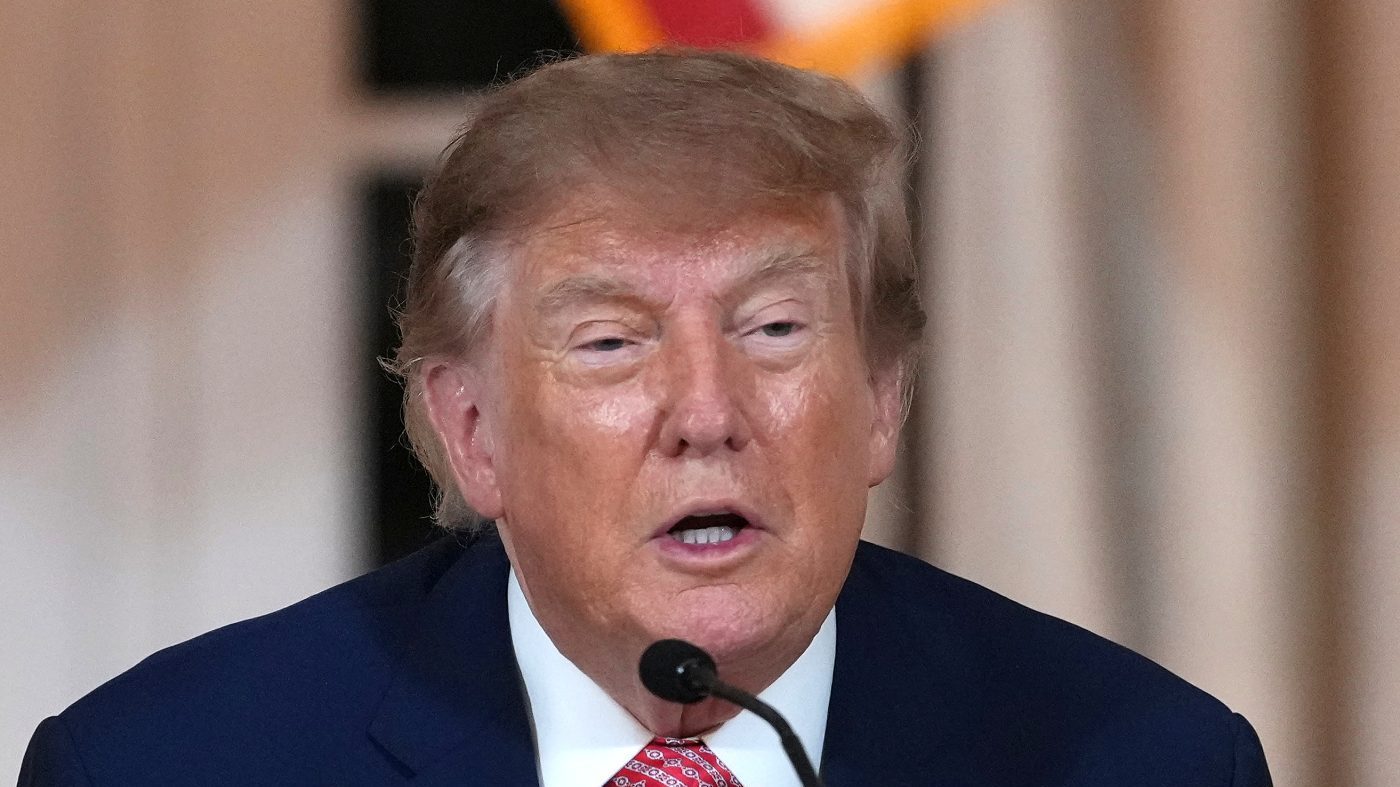
Fusionism, which blends libertarian economic principles with traditional conservative social values, has been overshadowed by the rise of economic populism and the aggressive use of government power that defined the Trump era. The movement’s proponents, sometimes called “FreeCons,” have struggled to hold sway against the “national conservatives” or NatCons, who embrace tariffs, industrial policy, and a strongman style.
Organizers and attendees at the conference, held in Washington, D.C., are now working to rebuild infrastructure and recruit the next generation of leaders to champion small-government conservatism. Akash Chougule, president of the Foundation for Research on Equal Opportunity and a key organizer, pointed to a significant drop in Trump’s approval ratings among non-college educated white voters—a core part of his base—as evidence of the NatCons’ vulnerabilities. That decline, Chougule argued, is “almost entirely due to national conservative-driven self-inflicted errors like the tariffs.” He added, “For that reason we see a lot of momentum for our movement to reclaim the mantle of conservatism.”
The conference featured a roster of notable speakers, including Sen. Rand Paul (R-Ky.), Rep. Rich McCormick (R-Ga.), radio host Erick Erickson, radio host Guy Benson, and National Review editor Ramesh Ponnuru. Panelists from organizations such as Advancing American Freedom, the American Enterprise Institute, Reason Magazine, Stand Together, the LIBRE Initiative, Americans for Prosperity, the Competitive Enterprise Institute, the State Policy Network, Independent Women, and the Mercatus Center filled out the agenda. Many of these groups are tied to the network built by Charles Koch and his late brother David Koch.
Contempt for the NatCons was palpable throughout the conference. One panel focused on “Strengthening FreeCon Infrastructure and Building the Next Generation of Leaders,” and panelists took direct aim at NatCon figures. One panelist dismissed Oren Cass, head of the populist American Compass, as someone who “could not competently explain what comparative advantage means.” Erick Erickson warned that the New Right’s call for “a new system, a new movement, a new strongman” amounts to a dangerous shift: “They mean to use our movement as a costume while they smuggle in the very ideas—the central planners, the tariffs, the strongmen, the grand designers—that conservatism exists to resist.”
Ramesh Ponnuru urged FreeCons to seek common ground with NatCons where possible. “If they say they want a trade policy that helps American workers, we should hear them out—but also insist that American workers include the ones who work in export industries, or who work in fields that use imported supplies,” he said. He also warned against the “caricature” of conservatives who are “dogmatically fixated on free markets, and only on that—to the exclusion of political realism or any concern for the cultural preconditions for a free society.”
Chougule emphasized that social conservatives have a place in the Freedom Conservative movement, and the conference explored what a “new fusionism” might look like. The answer, he said, is straightforward: “It is government’s job to protect our liberty.” A panel on “a new fusionism for the 21st century” debated the details, with some arguing that the government should not dictate “virtue,” leaving that to non-government institutions for fear of leftist overreach. Mueller noted the divide between national and local control, asking, “How are we going to run the parade? Who’s going to run the library? What books are going to be in the library?” In a more libertarian world, he mused, “we could just privatize everything… but we’re probably not going to move that way.”
The Freedom Conservatives’ push comes as the broader GOP landscape shifts, with Trump’s influence waning in some quarters. Recent developments, such as Trump’s estrangement from GOP senators threatening his legislative agenda, and the Texas runoff where Trump-backed Ken Paxton faces off against Senator John Cornyn, illustrate the party’s internal fractures. Whether fusionism can capitalize remains an open question, but its advocates are determined to try.