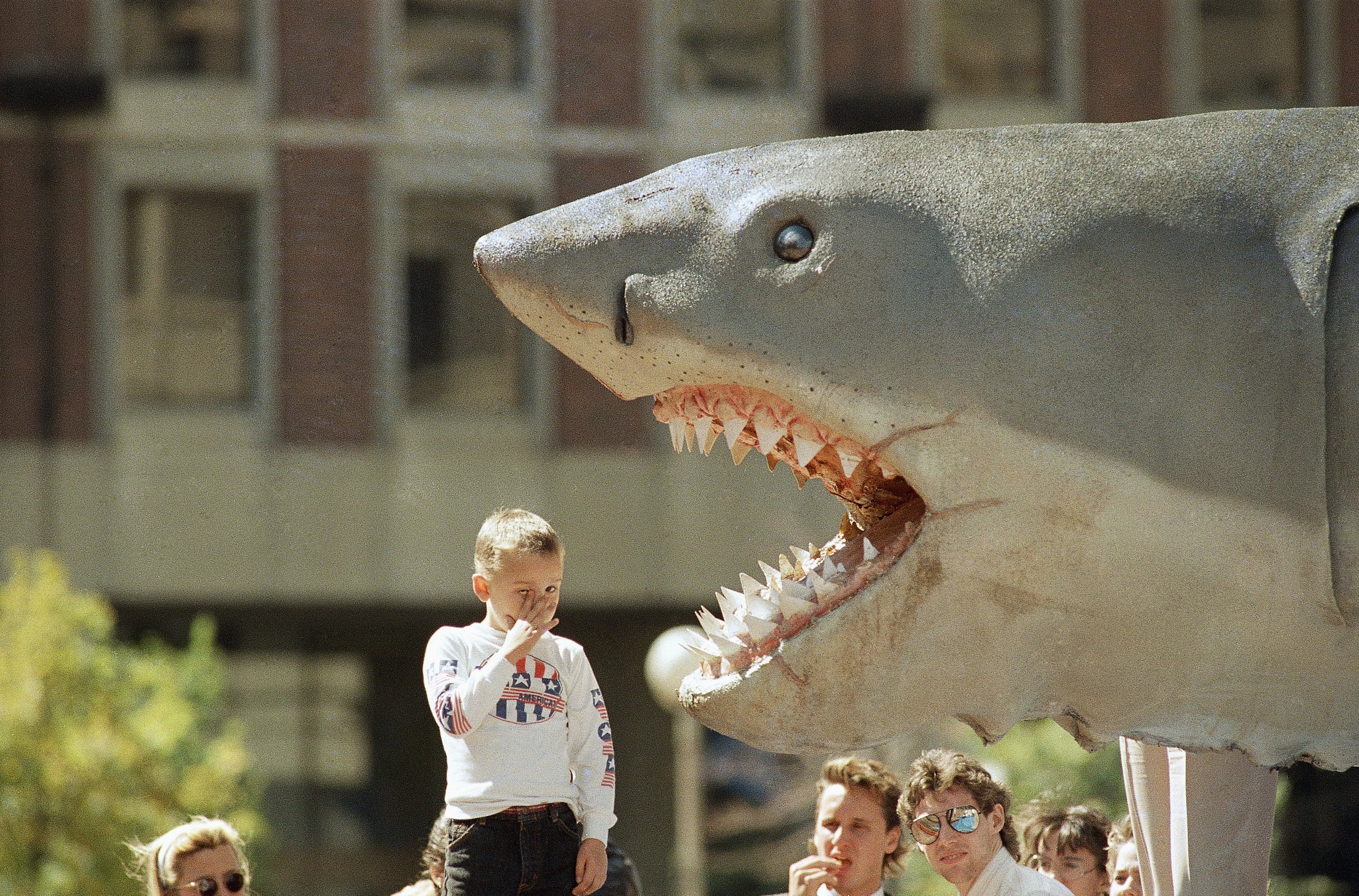
In a sharp new analysis, former Capitol Hill veteran Doug Branch draws a cinematic parallel between the 1975 classic 'Jaws' and Washington's broken budget process. Branch, now a senior fellow at the nonpartisan Fiscal Lab, argues that the real threat isn't the $41 trillion debt limit or $32 trillion in publicly held debt — those are merely the bloody aftermath. The true predator, he contends, is the congressional budget process itself.
Branch casts Amity Island's tourism-dependent economy as a stand-in for a Congress that prioritizes short-term political survival over fiscal discipline. Just as Mayor Vaughn refused to close the beach after the first shark attack, lawmakers repeatedly dodge hard spending choices, opting instead for procedural gimmicks that mask the growing fiscal threat.
A Broken System Since 1974
The numbers tell a stark story. Before World War I, the U.S. ran deficits in only 34% of fiscal years. That figure jumped to 79% after the war, and since the modern budget process was adopted in 1974, deficits have occurred in 92% of fiscal years. The only surpluses came between 1998 and 2001 under Presidents Bill Clinton and George W. Bush.
Budget resolutions — once the cornerstone of fiscal planning — have been adopted in just six of the last 16 years. For fiscal 2027, no resolution is expected. Instead, senior appropriators from both parties are reportedly meeting behind closed doors with leadership to hash out spending levels, bypassing the formal process entirely.
Reconciliation: The Opaque Escape Hatch
Today, the primary motivation for adopting any budget is to unlock reconciliation, a maneuver that allows Congress to bypass the Senate filibuster and pass legislation with a simple majority. In theory, reconciliation is meant to align spending and revenue with the budget to reduce deficits. In practice, Branch argues, that connection has been severed.
Reconciliation has been used for the 2001 and 2003 Bush tax cuts, the 2010 Affordable Care Act, the 2017 and 2025 Trump tax cuts, the Democrats' 2021 Inflation Reduction Act, and even funding for the Department of Homeland Security. 'There is no longer any pretense of a connection between reconciliation and deficit reduction or spending restraint,' Branch writes.
This echoes recent battles on Capitol Hill, where House GOP leaders face internal resistance over budget reconciliation plans that would expand spending rather than cut it. The tool has become a partisan cudgel, not a fiscal scalpel.
Past Reforms Were Mere 'Tiger Sharks'
Branch dismisses past attempts at fiscal reform as half-measures akin to catching the wrong shark. The 1985 Gramm-Rudman-Hollings Act and the 2011 Budget Control Act imposed spending caps and sequesters, but both were temporary fixes. 'Lawmakers could claim they made progress, and things were temporarily better, but the problem — the great white — still roams free,' he writes.
Since the 2008 financial crisis, Congress has abandoned the Hamiltonian norm of restraining spending after large outlays. The COVID-19 pandemic unleashed trillions more, and the damage is now visible: higher interest rates on mortgages and loans, reduced capacity for infrastructure and defense investments, and an inability to reform entitlement programs like Social Security and Medicare.
Time for a Bigger Boat
Branch's prescription is a fundamental overhaul of the 1974 Budget Act. 'We have gotten so used to the madness of operating under the 1974 Budget Act framework that we fail to recognize its carnage,' he says. 'In 'Jaws,' Chief Brody memorably said that 'We're gonna need a bigger boat.' In Washington, we are going to need a new congressional budget process.'
The argument lands amid a broader fiscal reckoning. The Supreme Court's $9.7 billion budget request and ongoing debates over defense spending and Iran war funding — including GOP resistance to Trump's $1.5 trillion defense push — underscore the stakes. Without process reform, Branch warns, the shark will keep feeding.