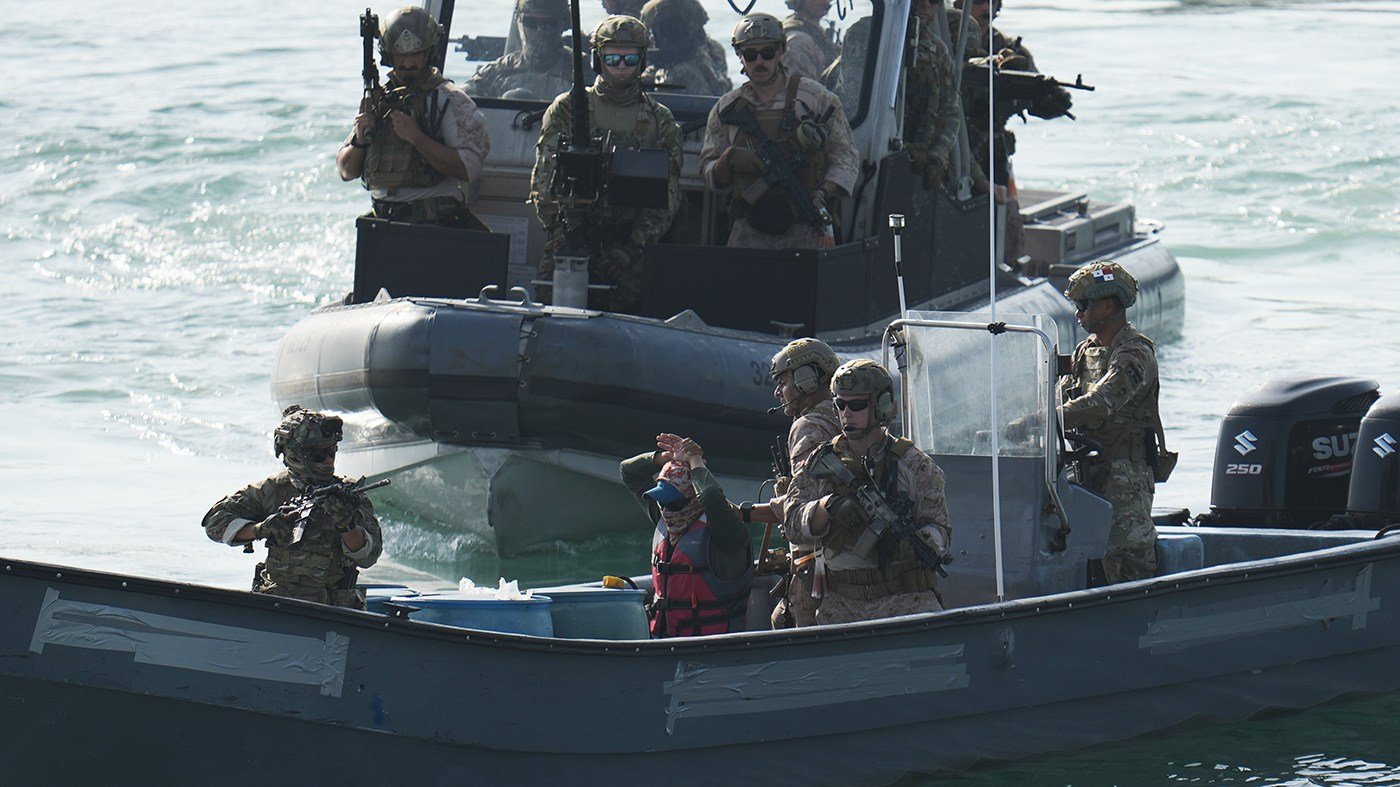
U.S. military forces conducted a lethal strike in the Caribbean on Sunday, killing three individuals aboard a boat alleged to be involved in drug trafficking. U.S. Southern Command released video footage of the engagement, stating the vessel was operating along routes commonly used by narcotics smugglers. The command has not yet provided details on the boat's point of origin or intended destination.
Escalating Campaign Draws Scrutiny
This incident raises the total number of fatalities from the Trump administration's ongoing campaign against suspected drug smuggling vessels in the Caribbean and Eastern Pacific to 181, according to Associated Press tracking. The operations, which intensified last fall, have seen a renewed surge in recent weeks. This escalation coincides with heightened tensions in the Middle East, though officials frame the maritime strikes as a distinct counter-narcotics effort.
The legal basis for these strikes continues to face scrutiny from some members of Congress and international law experts. Critics highlight the absence of judicial process and raise concerns about potential violations of freedom of navigation principles, as established under international agreements like the 1982 United Nations Convention on the Law of the Sea.
Administration's Legal Justification
In response to such criticism, the administration has increasingly framed its actions as counter-terrorism operations. Officials argue that targeted vessels are linked to criminal gangs that have been formally designated as Foreign Terrorist Organizations (FTOs). This classification, they contend, provides broader legal authority for the use of lethal force.
"This administration has designated these narco terrorists as foreign terrorist organizations," White House Press Secretary Karoline Leavitt stated during a briefing last year, defending the policy. "The president has the right to take them out if they are threatening the United States of America if they are bringing illegal narcotics that are killing our citizens at a record rate, which is what they are doing."
The strategy represents a significant shift in how the U.S. confronts drug trafficking networks, applying a framework traditionally reserved for militant groups. This approach has been employed in other theaters, such as a recent lethal strike in the Eastern Pacific that killed two alleged narco-terrorists.
The persistent campaign occurs against a complex geopolitical backdrop. While focused on the Western Hemisphere, the administration is simultaneously managing other international crises, including tense negotiations with Iran over a fragile ceasefire. The legal precedents being set by these maritime strikes could have far-reaching implications, intersecting with broader debates over executive power and international law, including evolving interpretations of preemptive action as seen in discussions on non-imminent threats justifying preventive strikes.
Domestically, the focus on border security and narcotics intersects with other law enforcement controversies, such as the case of an ICE officer charged with assault during a separate operation. The Sunday strike underscores the administration's continued willingness to employ lethal force abroad in its stated mission to stem the flow of drugs into the United States, a policy that remains as consequential as it is contentious.