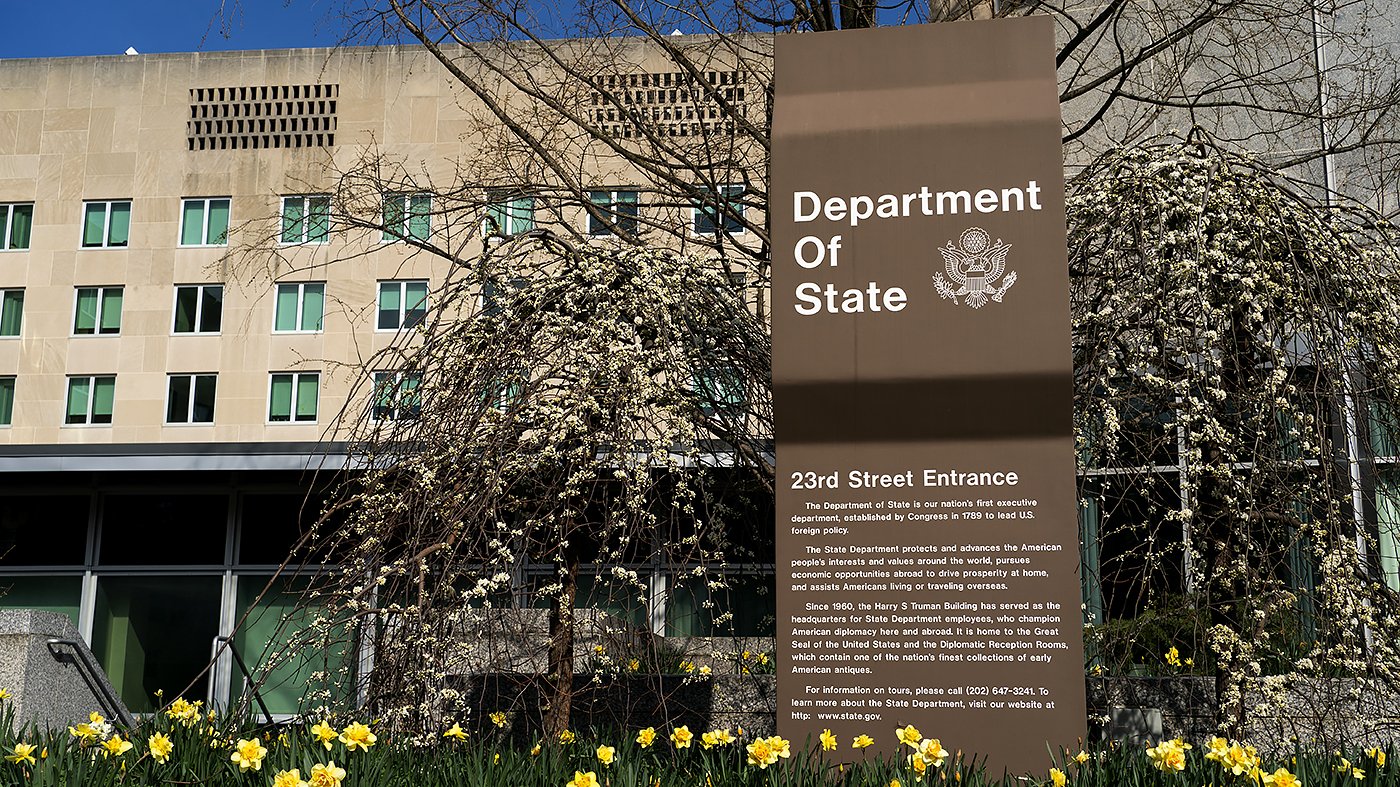
The State Department on Tuesday issued a “strong” advisory urging U.S. citizens to avoid travel to several African nations grappling with a rapidly expanding Ebola outbreak. The department explicitly told Americans not to visit the Democratic Republic of the Congo (DRC), South Sudan, or Uganda “for any reason,” while recommending that travelers “reconsider travel” to Rwanda.
The advisory follows a CDC ban on foreign travelers from three Ebola-affected countries, announced Monday after confirmation that an American physician working in the region had tested positive for the virus. Under the order, foreign passport holders who have been in Uganda, the Congo, or South Sudan within the past 21 days are barred from entering the United States.
The outbreak is caused by the Bundibugyo virus, a strain with a fatality rate ranging from 25 to 50 percent. No vaccine currently exists for this particular strain, heightening concerns among global health officials.
The CDC has not released the name of the infected American doctor, but the international Christian mission organization Serge identified him as Peter Stafford. According to Serge, Stafford has been working at a hospital in northeastern DRC since 2023.
The World Health Organization (WHO) declared the outbreak a “public health emergency of international concern” on Sunday. WHO Director General Tedros Ghebreyesus said during a Tuesday press conference that he did not make the decision “lightly” and that he is “deeply concerned by the scale and speed of the epidemic.”
Ghebreyesus noted that the WHO’s Emergency Committee convened on Tuesday to advise on temporary recommendations. He reported 30 confirmed cases in the DRC and two in Uganda, with over 500 suspected cases and 130 suspected deaths across the region. “These numbers will change as field operations are scaling up, including strengthening surveillance, contact tracing and laboratory tracing,” he said.
The WHO has directed affected nations to activate emergency systems and restrict international travel of patients or contacts. This health emergency comes amid separate concerns about a rare hantavirus outbreak on a cruise ship docked in the Netherlands. Both the CDC and WHO have stated that the Ebola outbreak does not pose a risk to the general public at this time.
“The outbreaks of Ebola and Hantavirus in the last two weeks show why international threats need an international response,” Ghebreyesus said. “They show why the world needs the international health regulations, and why it needs WHO.”
President Trump withdrew the U.S. from the WHO last year, citing the organization’s handling of the COVID-19 pandemic. The U.S. officially left the international body earlier this year after nearly 80 years of partnership, despite providing about a fifth of the WHO’s 2023 budget.