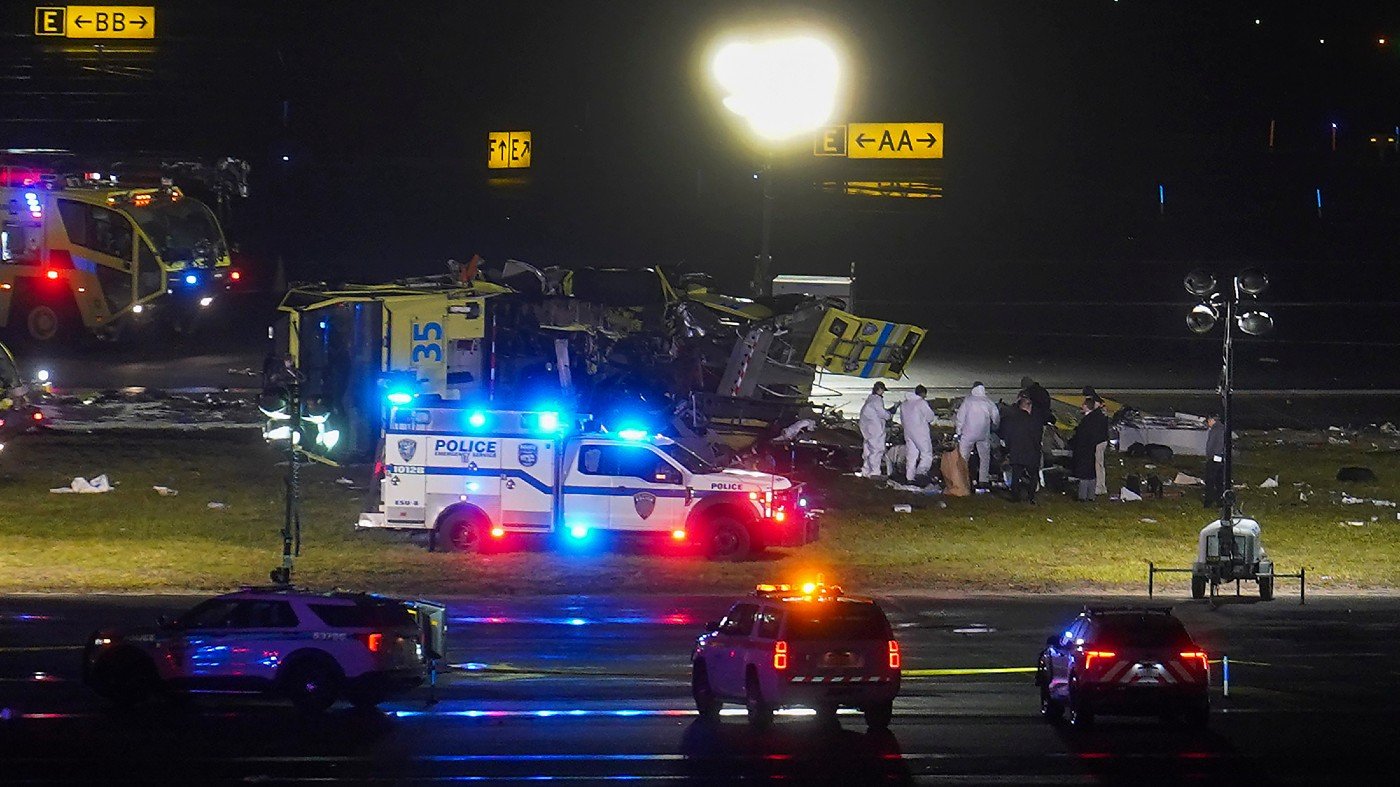
Fatal Runway Incident at New York's LaGuardia Airport
A catastrophic collision between a commercial jet and an airport fire truck on a runway at LaGuardia International Airport late Sunday resulted in the deaths of both pilots. The aircraft, a Jazz Aviation flight operating under the Air Canada banner, was in the process of landing when it struck the emergency vehicle, which was crossing the active runway to respond to a separate reported issue involving a United Airlines flight.
Kathryn Garcia, the executive director of the Port Authority of New York and New Jersey, confirmed the sequence of events. The crash killed the pilot and co-pilot instantly. Of the 76 people on board—72 passengers and 4 crew members—41 were transported to area hospitals for evaluation. Officials stated that a majority of those patients had been treated and released by Monday morning.

Investigation and Operational Impact
The National Transportation Safety Board has taken the lead in investigating the cause of the deadly incident, with assistance from the Federal Aviation Administration. In response, LaGuardia Airport authorities closed the facility until at least 2:00 p.m. Eastern Time on Monday to preserve the scene for federal investigators. The closure caused significant disruption to air travel in the New York metropolitan area, compounding existing pressures on the national aviation system. This incident follows other recent reports of strain on airport security and operations, including a deepening TSA staffing crisis that has forced unconventional deployments of personnel.
Air Canada and Jazz Aviation issued a joint statement Monday expressing profound sadness over the loss of the two employees. "Our deepest condolences go out to the entire Jazz community and their families," the statement read. The airline cautioned that it could not yet confirm a precise injury count or rule out additional fatalities, pledging to provide regular updates as their response teams arrived on site.
Context and Broader Implications
While the immediate focus is on the NTSB's probe, the accident raises immediate questions about runway safety protocols and ground vehicle operations at one of the nation's busiest airports. The incident occurs against a backdrop of intense global political and security tensions that often intersect with transportation and defense policy. For instance, recent weeks have seen major developments in U.S.-Iran relations and potential de-escalation in the Strait of Hormuz, a critical global oil chokepoint. Such international crises can indirectly affect domestic security postures and resource allocation.
The fatal collision will inevitably prompt scrutiny from congressional oversight committees and the Department of Transportation. Safety investigations of this magnitude often lead to hearings and potential policy reviews, especially concerning communication between air traffic control and ground crews. Officials are scheduled to provide more details in a forthcoming briefing on the LaGuardia tragedy.
This tragedy serves as a stark reminder of the complex, high-stakes environment of major airport operations, where split-second decisions and strict adherence to procedure are paramount. The outcome of the investigation will be closely watched by aviation regulators, airlines, and safety advocates worldwide.