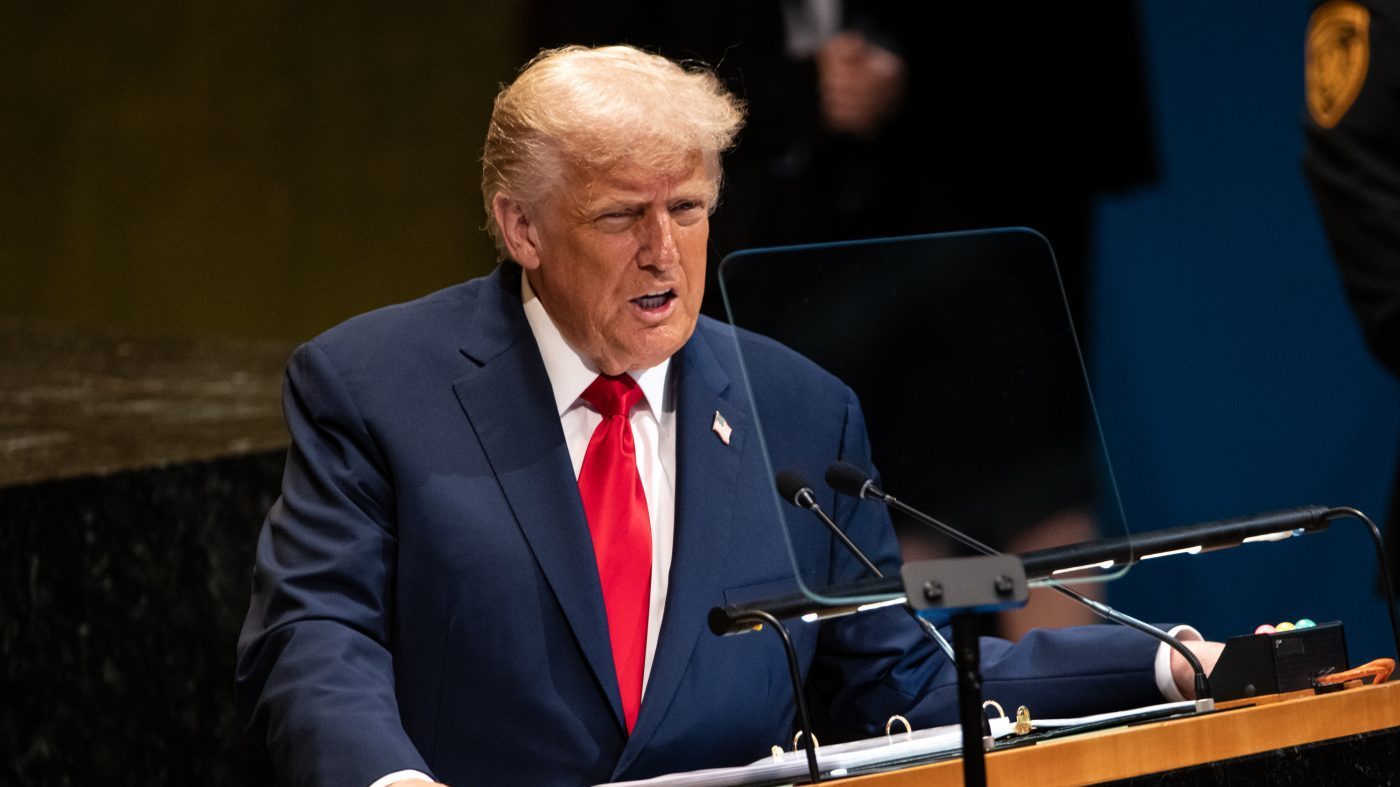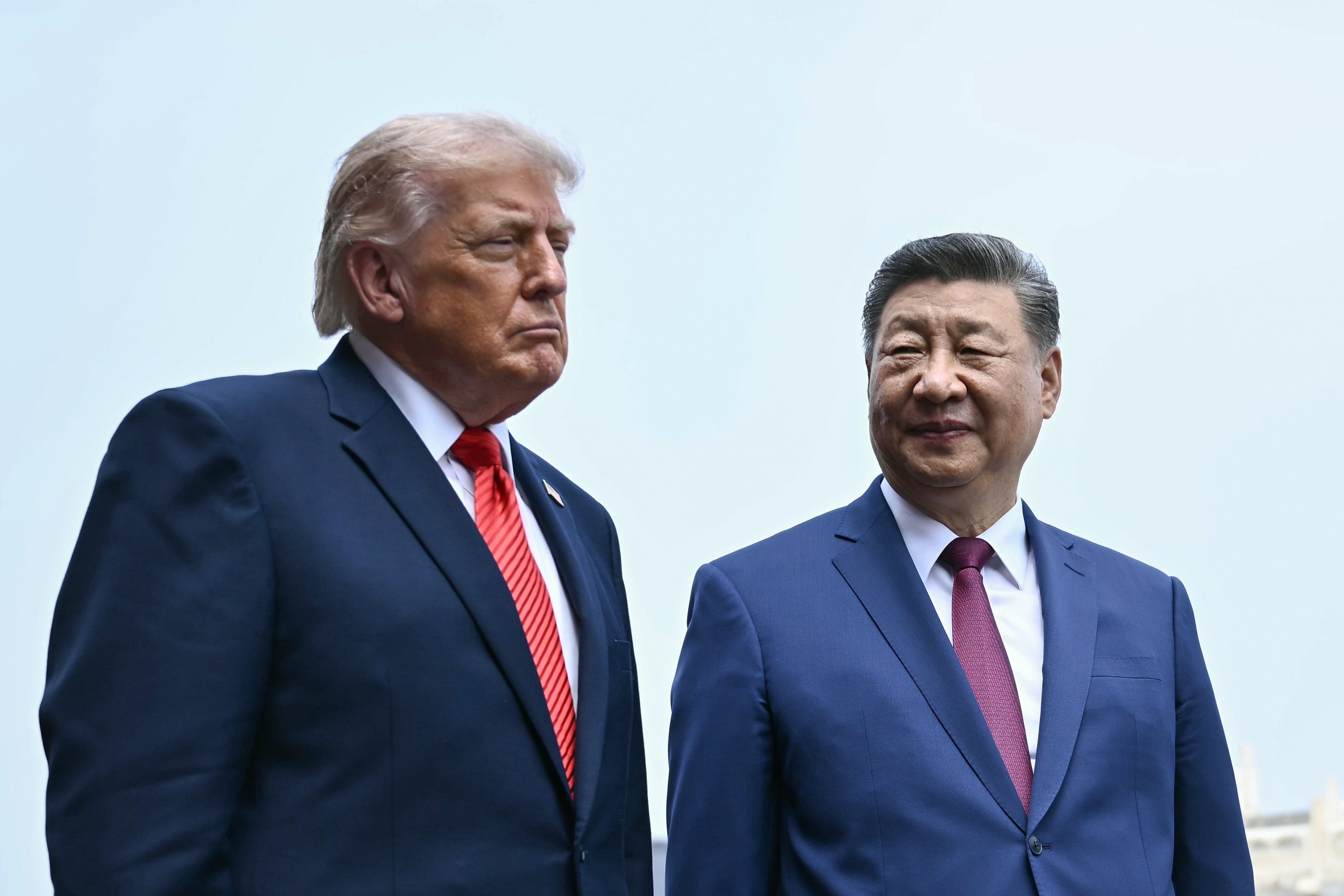
When President Trump sits down with Chinese leader Xi Jinping in Washington this week, the stakes could hardly be higher. Summits between the two powers have a history of producing tectonic shifts in international affairs, and this one—held on American soil just weeks before the midterm elections—offers Trump a rare home-field advantage. But as his party's electoral prospects dim, the president's leverage in confronting Xi on trade and Taiwan may be slipping away.
That dynamic has alarmed veteran China hands. Joseph Bosco, who served as China country director for the secretary of Defense from 2005 to 2006 and later as Asia-Pacific director of humanitarian assistance and disaster relief, argues in a new analysis that Trump must resist the temptation to trade a symbolic win on Taiwan for a modest trade deal. Xi, he warns, will likely seek some rhetorical concession that softens America's strategic and moral commitment to Taiwan's defense—a move that could further damage Trump politically.
History offers cautionary tales. Richard Nixon's 1972 Shanghai Communiqué set the stage for formal de-recognition of Taiwan under Jimmy Carter. Bill Clinton, despite advice to the contrary, announced the "three nos" during his 1998 visit to China: no U.S. support for Taiwan independence, no "Two Chinas" policy, and no support for Taiwan's official participation in international organizations. Each concession, critics say, eroded Taiwan's standing and emboldened Beijing.
Trump's approach has been different in style but not necessarily in substance. He has consistently praised Xi as a "great" and "friendly" leader, even after the COVID-19 pandemic—a crisis in which Xi's deception, according to Bosco, cost a million American lives. Only when the scale of the catastrophe became undeniable did Trump admit to being a little "unhappy." Yet Xi's charm offensive soon resumed, and in Trump's second term, all appears forgiven.
Now, with Trump's electoral redemption prospects seemingly vanishing, Xi may sense an opportunity. According to Bosco, the Chinese leader could dangle a modest trade victory in exchange for innocent-sounding language on Taiwan—for example, a joint pledge to cease sending weapons or forces to the Taiwan Strait to avoid confrontations like those disrupting navigation in the Gulf of Hormuz. Trump should reject any such offer outright, Bosco argues, and instead consider a "Hail Mary" of his own.
The bold play: once Xi lands in Washington, Trump should let it leak that he intends to propose a resolution that restores peace and security to the region. In his welcoming remarks, he should call on Xi to permanently renounce the use of force against Taiwan, in exchange for Taiwan's pledge not to declare formal independence for 10 years or until Xi leaves office, whichever comes later. In all other respects, Taiwan would retain its de facto independence and democratic system, with full U.S. military backing.
More provocatively, Trump should commit the U.S. not only to defend Taiwan but to recognize its independence immediately upon any Chinese use of force. This would defy Beijing's threat that "independence means war" and declare instead that war means independence. Such an explicit commitment would eliminate once and for all the policy of strategic ambiguity first articulated by the Clinton administration.
Whether Trump has the appetite for such a high-risk gambit is unclear. His focus has often been on domestic grievances—recently lashing out at critics and even alarming fellow Republicans with his fixation on monuments and media feuds ahead of the midterms. Meanwhile, some Democrats argue Trump enters the summit with no leverage on AI and manufacturing, further complicating his negotiating position.
As the two leaders meet, the world will be watching. The decisions made in Washington this week could shape the Indo-Pacific for decades. For Trump, the choice is stark: seek a short-term trade win that sacrifices Taiwan, or take a bold stand that redefines America's commitment to the island's defense. As Bosco puts it, fool me once, shame on you. Fool me twice—well, that's a risk Trump can ill afford.